.svg&w=384&q=75 "GoalGist logo")
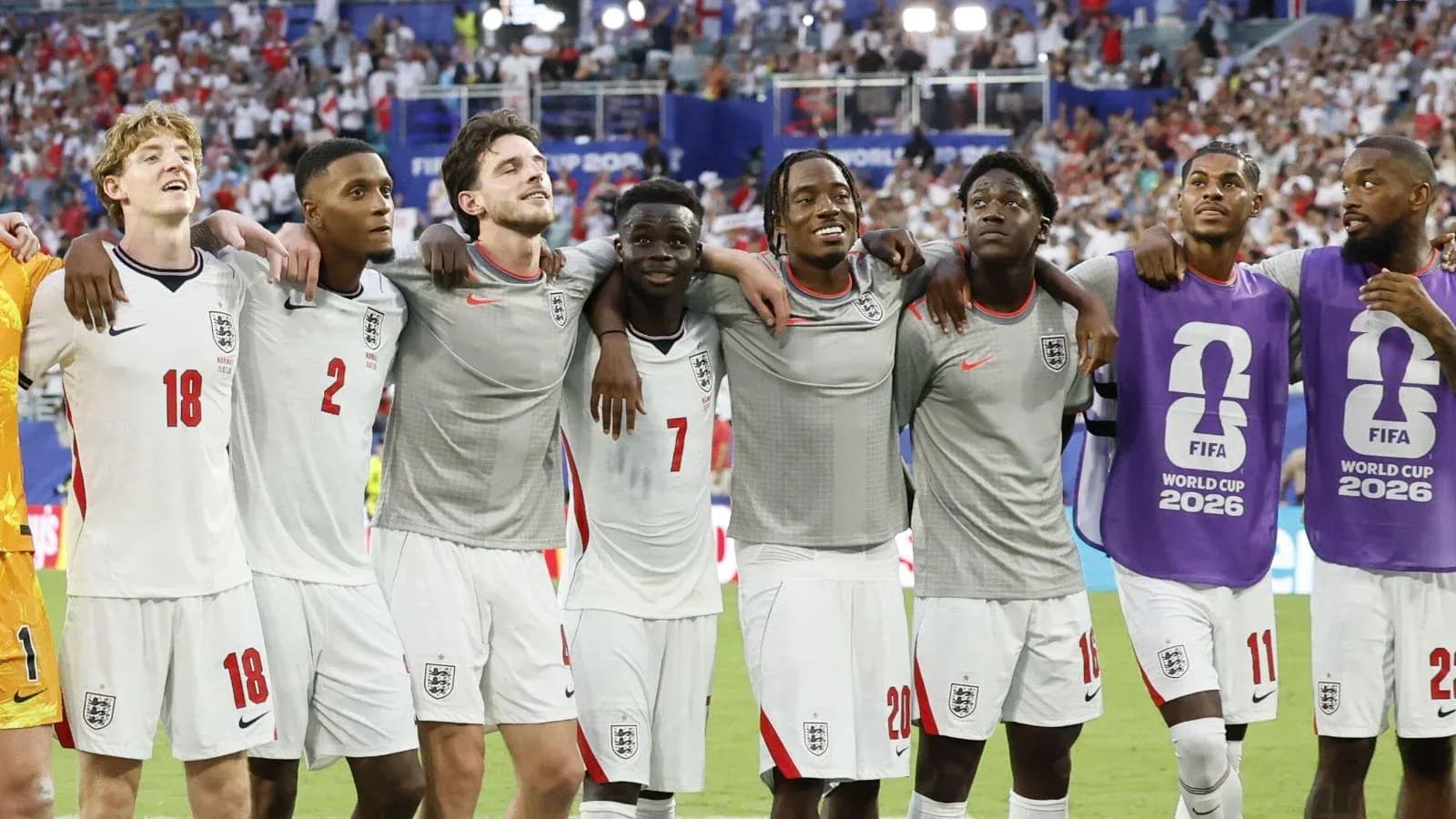
England’s World Cup Journey: A Glorious Failure or Real Progress?
Here is the uncomfortable truth for England: it still almost certainly isn’t coming home.
Cold numbers say this campaign is more likely to end with England trudging away in fourth place after defeats to Argentina and France than with them parading the trophy after beating Argentina and Spain. That’s the reality, however loudly the songs ring out in Atlanta tonight.
And yet, almost regardless of what happens against Lionel Messi and company, this is already England’s second-best men’s World Cup. Ever. Outside Europe, it is their best by a distance. Somehow, that point has slipped through the cracks of the national conversation.
This was a squad that carried the familiar scent of a standard England World Cup: a decent run, a quarter-final exit, and the inevitable search for a single scapegoat to carry the blame for another “nearly” summer. Instead, they have pushed beyond that ceiling. Expectations have been quietly, decisively, surpassed.
It hasn’t been smooth. It rarely is. England have laboured at times, misfired in spells, and looked like a team wrestling with their own potential. But that’s the story of this World Cup, not just England’s version of it. Spain were dreadful against Cape Verde. France spent an hour against Senegal – and then the entirety of their semi-final – playing like a side trapped in treacle. The difference is that England’s stumbles are replayed, re-analysed and re-litigated in a country that lives every touch.
For all the angst, England have never sunk to Spain-in-Cape-Verde territory. They have only occasionally dipped to the depths France plumbed. Argentina, for all the aura and all the Messi mystique, have enjoyed a far kinder knockout route to this stage than England. The champions’ path has been smoother; England have had to grind.
To downgrade this run now would require something England almost never deliver at major tournaments: a genuine humiliation. A hammering. And history suggests that is not on the cards.
Strip out the nonsense of the third-place play-off – a game that exists in a strange, consequence-free vacuum – and England have lost by more than one goal just once at a major tournament since 1988. One proper beating in nearly four decades of World Cups and European Championships.
Even that outlier, the 4-1 defeat to Germany in Bloemfontein, comes with an asterisk burned into the national memory. England were second-best, no question, but they should have gone in at half-time level. Frank Lampard’s “ghost goal” still stands as one of the great officiating howlers, a moment so egregious it helped drag football into the age of goal-line technology and the long, uneasy embrace with VAR.
Look at the record with clear eyes. Since the start of the 1990s, England have missed only two major tournaments. They have not won any of the 17 they have contested. Yet in all that time, only once have they been properly dumped out, the result a foregone conclusion long before the final whistle offered mercy. For a nation that specialises in heartbreak, they rarely collapse. They just fall short.
So why doesn’t this feel like a landmark? Why isn’t “second-best World Cup ever” part of the daily discourse?
Part of it is geography. Italia ’90 and the home-soaked drama of 1966 loom large. Tournaments in Europe feel closer, more vivid, more mythic. This one, staged far from England’s traditional comfort zone, doesn’t carry the same nostalgic glow. But in pure football terms, reaching a semi-final outside your own confederation is a bigger achievement than doing it on familiar soil. This is, objectively, England’s best World Cup away from Europe.
Another part of the tension comes from north of the border. Scotland’s frustration is understandable. Four exits from the same tournament is a brutal run, and the temptation to downplay England’s progress is irresistible.
The gripe has centred on the draw. Scotland ran into Brazil and Morocco in the group; England, the argument goes, have coasted. That’s not how seeding works.
If you sit in the lower pots, you are meant to face the heavyweights. That is the trade-off. Scotland’s misfortune was real, but it was also baked into their ranking. The real “unlucky” seeded teams are those who pull another top-10 nation in their group, as Brazil did. The more common outcome is exactly what England got: no other top-10 side in the pool.
Look at the numbers, the same FIFA rankings that are now being weaponised to dismiss England’s route. Croatia were ranked 10th at the time of the draw. They were the danger team in pot two. From pot three, Panama were the highest-ranked opponent England could have faced. Only Norway sat above them, and Norway couldn’t be drawn with both England and Croatia in the same group anyway.
So yes, the stat is technically true: England have not faced a side officially ranked in the FIFA top 10. But that’s a quirk, not a conspiracy. Croatia sit on that borderline. Mexico at the Azteca is a top-10 level examination by any sensible football measure. And anyone claiming, with a straight face, that there are 10 better international teams than Norway right now is stretching the rankings past breaking point.
Strip away the noise and you’re left with this: England have walked almost exactly the path expected of a top seed. No miraculous opening of the bracket. No freakish collapse of giants to clear their way. They topped their group, as they should, and earned a third-placed opponent in the last 32. They met Mexico, as forecast, in the last 16.
In a knockout bracket that has delivered the top four seeds to the semi-finals, the nearest thing to a shock has been Norway’s win over Brazil – a result that said more about Norway’s organisation and clarity than any supposed weakness in the field.
So here England stand, on the brink of something extraordinary and yet probably destined for something less. To win this World Cup, they must first outlast Argentina’s tournament-hardened will, then dismantle Spain’s club-level cohesion and structure. Back-to-back. Under pressure. With the weight of history pressing on every decision.
The odds are against them. The likely outcome remains defeat, perhaps two of them. But if that is how it ends, it will be a failure wrapped in something England have rarely managed in 60 years of hurt: genuine glory.
Not the hollow kind that comes from a plucky quarter-final and a noble penalty exit. Something bigger. A run that has stretched the country’s expectations, tested its patience, and still left its team standing among the last four.
If it all collapses now, it will still rank as the most glorious failure England have known on this stage.
And if, against the numbers and the logic, they find a way past Messi and then Spain?
Then the conversation about what’s “coming home” will have to change completely.

