.svg&w=384&q=75 "GoalGist logo")
Can England Afford to Start Declan Rice and Elliot Anderson Together?
The argument has been bubbling for days now: can England really afford to start Declan Rice and Elliot Anderson together?
It cuts to the heart of what people want this team to be. Supporters are calling for England to step higher, take more risks, flood the pitch with creativity. Two No10s instead of two No6s. Less caution, more chaos.
But strip away the noise and you’re left with a simple truth: Rice and Anderson are among the best central midfielders in the Premier League. Different profiles, same level. Both bring serious quality.
Anderson can unpick a defence with his passing range. Rice covers ground like few others, driving play, breaking lines, dragging his team up the pitch. The frustration is that, for their clubs, both usually sit a little deeper, dictating from the base rather than arriving to finish moves. One of them, at least, has to be given licence to break that pattern.
The idea behind pairing them is obvious. Two disciplined midfielders provide the safety net for adventurous full-backs, allowing England to overload wide areas without leaving the back door wide open. On paper, it’s sound.
But football matches don’t live on paper.
If the game drifts, if England are still prodding at a low block after an hour without reward, the approach has to change. That’s the moment for bold substitutions, not another 15 minutes of sterile dominance.
Managers live and die by those calls. Get the changes right and you’re hailed as a genius. Get them wrong and control evaporates, the shape breaks, and suddenly a game you were managing turns into a frantic chase with bodies thrown forward and space everywhere.
That’s the danger against this DR Congo side. They are no Panama. They carry far more threat on the counter and have absolutely earned the right to be here. England cannot ignore that.
But they also cannot play with the handbrake on.
The passes into tight spaces, the risky balls between the lines, the shots from distance – they won’t all come off. They’re not supposed to. The point is to keep asking the question, to keep knocking at the door until something gives.
This will likely be another low block, another match where England see plenty of the ball and spend long spells camped in the opposition half. That demands variety. More efforts from outside the box. A willingness to shoot when the crowd groans and the obvious pass is backwards.
England also need a different mentality to the one they showed at times against Ghana and Panama. This is knockout football. Lose and you’re out. The shirt gets heavier in these games, especially when the narrative says you “should” win.
Plenty of those stories end badly. Ask anyone who was in France in 2016 when England met Iceland with the same expectation and went home stunned. Nights like that stay with players. They should.
Full concentration isn’t a cliché in this context. It’s the minimum requirement.
DR Congo have the tools to punish any lapse. Their AFCON campaign underlined that, and several of their key men are well known to Premier League audiences. Yoane Wissa stands out in attack – relentless movement, constant menace, the sort of forward who never lets defenders settle.
His club form at Newcastle hasn’t exploded in the way he would have hoped, but on this World Cup stage he has come alive. DR Congo lean on him heavily. He gives them an edge.
Behind him, there is steel and speed. Axel Tuanzebe, fresh from a strong AFCON showing, anchors their defence with a blend of recovery pace and calm. He doesn’t always look rapid at first glance, but when space opens up, he eats it. That allows his team to hold a higher line, to be braver.
Tuanzebe has fought through injuries to get here. The way he prepares, the way he trains, the way he carries himself – it all feeds into the player you see on the pitch: vocal, organised, leading that back line, talking teammates through moments. You don’t come through the Manchester United system, reach their first team and survive that environment without serious ability and character.
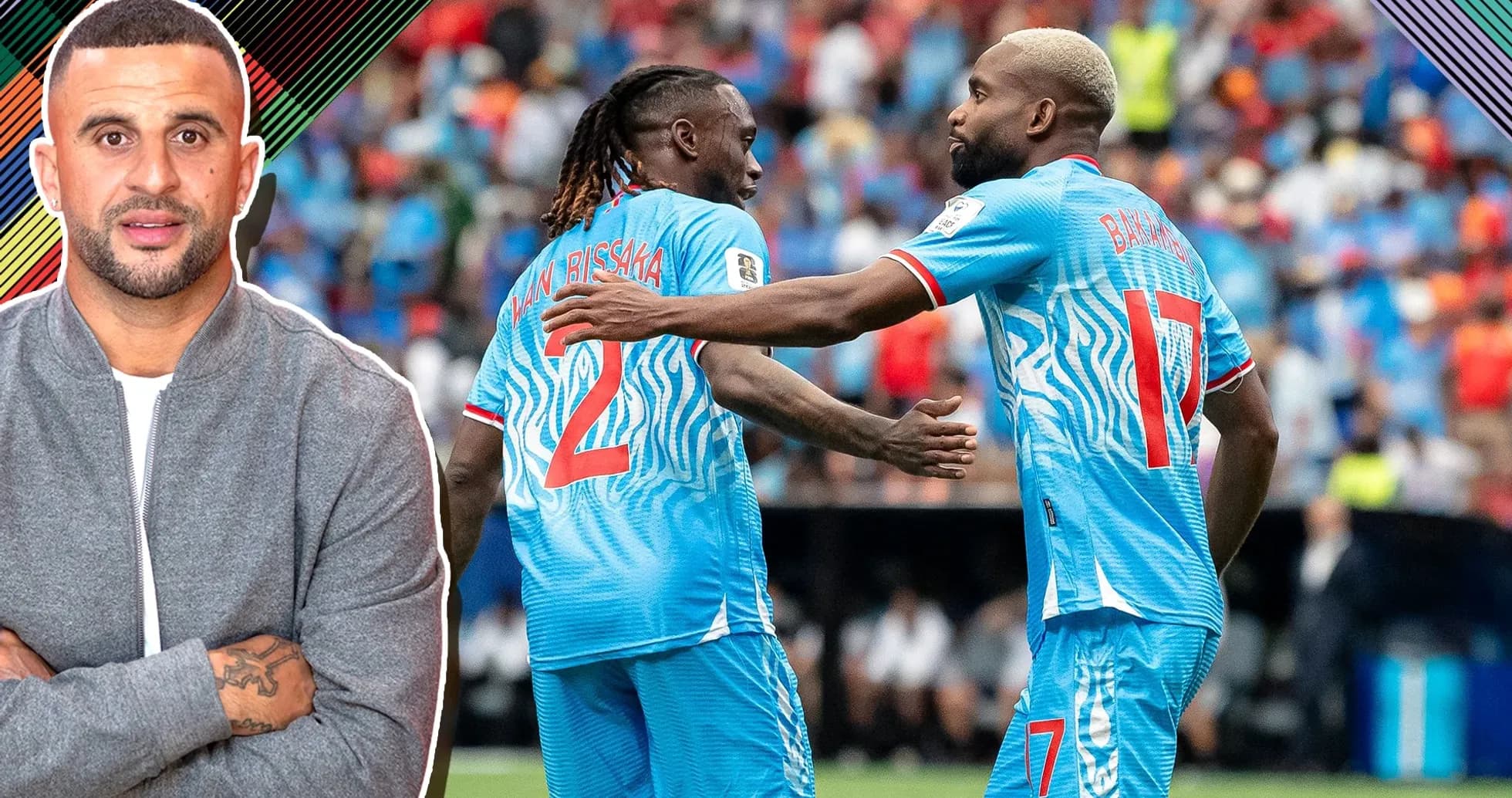
He can slot in at centre-back or right-back without fuss. The problem for him is that on the right, DR Congo have a specialist: Aaron Wan-Bissaka.
Wan-Bissaka is a defender’s defender. Tough, stubborn, almost impossible to shift in one-on-one duels. At Manchester City they used to call him “Go-Go Gadget” because you think you’ve skipped past him and then, out of nowhere, a telescopic leg hooks the ball away. Time after time. He times those challenges with unnerving precision and takes real pride in that side of the game.
He thrives on facing elite attackers. If Marcus Rashford starts, the sub-plot writes itself: old Manchester United team-mates, endless training-ground duels now transported onto a World Cup stage. Rashford knows exactly what’s coming. Stopping it is another matter.
All of that feeds into one conclusion. England have the talent to win this, the structure, the depth. They also have opponents with enough quality to punish any complacency, any timid approach, any repeat of old scars.
This should be England’s game.
It will be anything but straightforward.

