.svg&w=384&q=75 "GoalGist logo")
England's Four Goals Mask Defensive Concerns Against Croatia
England 4-2 Croatia. On paper, a statement start. On the pitch, it was far more complicated than the scoreline suggests.
Thomas Tuchel’s side found a way to overwhelm Croatia in spells, yet still managed to leave the door ajar twice in a first half that will bother every defensive coach in the building.
Rooney zeros in on England’s soft underbelly
Wayne Rooney has lived enough tournament football to know a warning sign when he sees one. His focus went straight to Croatia’s first goal, a move that sliced through England with alarming ease.
“We could do so much better with the first goal,” he said, dissecting the sequence. Jude Bellingham, usually so sharp, was “a bit flat-footed” as the defender nipped in. John Stones, Rooney argued, should “stay on his feet”. There was “no real danger” with Jordan Pickford well positioned, yet the keeper committed early, dived in, and dragged Nico O’Reilly into emergency cover.
From there Croatia did the rest – a neat set, a clean cut-back, a tidy finish. Clinical from their perspective, but preventable from England’s.
Rooney’s eye then went, inevitably, to the man in goal. Pickford got a full hand to the shot. “Could Jordan Pickford do a bit better? I don’t know,” Rooney said, before adding the line that will stick: “I’m always critical of goalkeepers. I think if Jordan is getting a hand on it like he does then he’ll be disappointed.”
The message was clear. England scored four, but they gifted belief at the other end.
Richards: England “played into Croatia’s hands”
Micah Richards saw the same flaws, but framed them in terms of control and positioning. For him, both Croatian goals belonged in the “avoidable” category.
“What England did was played into their hands,” he said. By dropping off and allowing Croatia’s technicians time on the ball, England invited exactly the kind of patterns Croatia thrive on.
The frustration for Richards was that the energy was there. England were “all over Croatia” physically, yet they did not squeeze high enough, often enough. “If you get ten or fifteen yards further forward, you don’t even get into those situations,” he argued.
That gap between intensity and structure is where this game lived for long stretches. England had legs, they had running power, and, crucially, they had options off the bench. Richards believes that “having the flexibility of the energy off the bench is going to be pivotal going forward.” The raw materials are in place. The question is whether Tuchel can knit them into something more secure.
Stones, Konsa and a decision for Tuchel
At the heart of that debate sits England’s central defensive pairing. John Stones and Ezri Konsa were given the nod, a blend of ball-playing experience and quiet authority on paper. On the grass, it never quite settled.
Stones, short of minutes at Manchester City last season, saw plenty of the ball here. He took responsibility for building from the back, stepping out, dictating angles. It was brave and at times impressive, but it came with risk. When England lost their structure ahead of him, those risks were exposed.
Alongside him, Konsa – a regular under Tuchel – showed glimpses of his usual composure. There were clear, simple interventions, moments where he read danger early. Yet he, too, looked short of rhythm with this particular partner. The line never felt entirely in sync, and Croatia exploited the uncertainty.
Now comes the selection dilemma. Does Tuchel stick with Stones and Konsa for Ghana, banking on understanding growing with minutes? Or does he turn to Marc Guéhi to steady things, reshaping a defence that already looks under scrutiny despite a winning start?
It is not a theoretical question. Tournament football does not wait for chemistry to develop.
Gordon’s debut and a dressing room message
Amid the tactical debate, there was a personal milestone. Anthony Gordon’s World Cup debut, the kind of night he has “dreamed about as a kid”, arrived in a game that swung wildly before England finally imposed themselves.
“It has been a crazy couple of weeks and that just topped it off,” he told BBC Radio 5 Live. Yet he quickly pushed the spotlight away from himself. “Special, but it is not about me. Self-centredness is a disease and I don’t want to be a part of that.”
His words offered a glimpse into the mindset Tuchel wants. Gordon name-checked Marcus Rashford, Bukayo Saka and Morgan Rogers, stressing the impact of the wider group. “It is about the team,” he said. “Rashy came on and made an impact, Bukayo and Morgan. It is a collective.”
On the match itself, Gordon did not sugar-coat the wobble. “A difficult first half – their goal came from nowhere and stunned us a little bit. We came out really strong in the second half and got what we wanted. They were really good and that can’t be underestimated when you look at the game.”
The honesty matched the performance: raw, imperfect, but with a clear belief that England have more to give.
Rashford reminds everyone of his value
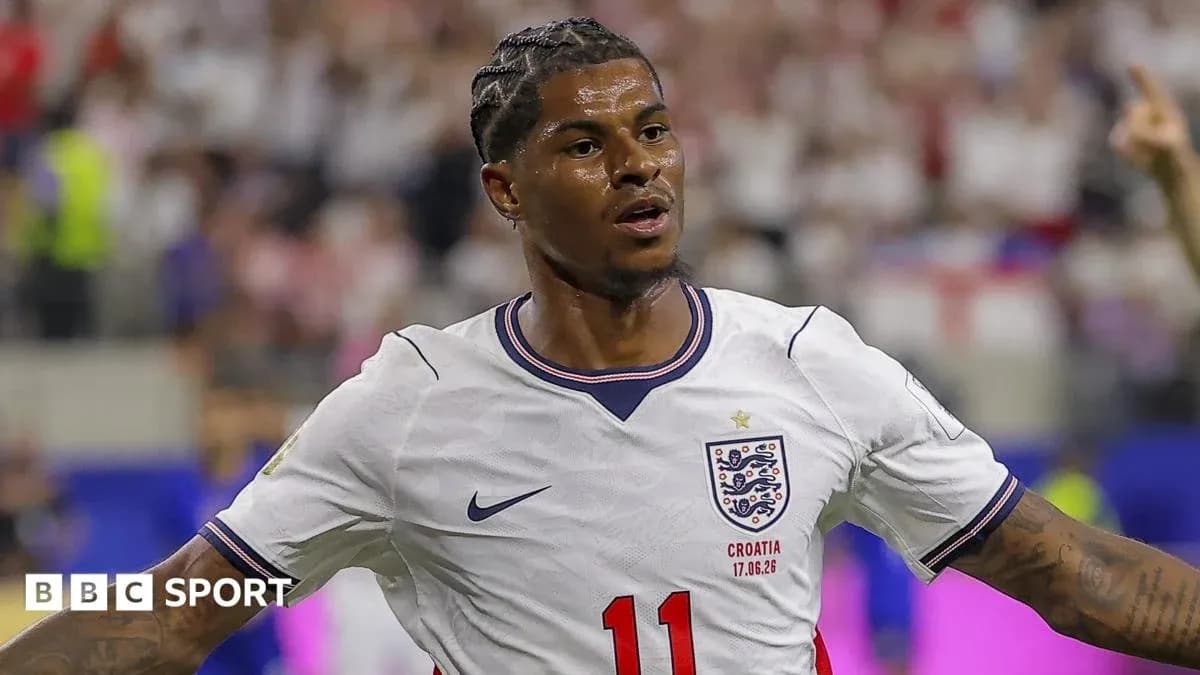
One of the substitutes Gordon praised may have altered more than just the flow of the match. Marcus Rashford came on, scored, and shifted the tempo, a reminder of the threat he still carries when the stage is big and the lights are bright.
For Rashford, every touch right now is weighed against his club future. On 1 July he reverts to being a Manchester United player after Barcelona declined to trigger a £26m clause to buy the 28-year-old.
United’s stance is firm. They want £40m, and they will not entertain another loan to Barcelona, which is exactly what the La Liga side are pushing for. Rashford’s £325,000-a-week contract, with two years left to run, narrows the list of potential buyers to a handful of clubs who can absorb both fee and wages.
United cannot force him out. They know it, he knows it. As things stand, they expect him back after his mandatory three-week post-World Cup break, just in time for a training camp in the Republic of Ireland.
There is time for the picture to change. Performances like this only sharpen the focus. Every decisive run, every finish, every reminder that Rashford still bends games in his direction feeds into the summer’s negotiations.
England, though, will not complain if the uncertainty fuels him. They have four goals on the board, three points in the bank, and a forward rediscovering his edge. The defending? That will decide how long this adventure lasts.

