.svg&w=384&q=75 "GoalGist logo")
England, Croatia, Ghana, Panama: World Cup Group Analysis
England arrive with the weight of a nation that no longer settles for plucky near-misses. This is their 17th World Cup, and the ghost of 1966 still hangs in the background, but the mood is different now. Gareth Southgate nudged them back among the contenders; Thomas Tuchel has been hired to finish the job.
Tuchel brings Champions League pedigree and a sharper edge. The squad he inherits is balanced and deep, with Declan Rice at its core. Rice is the metronome and the shield, the player who knits together a side that can dominate the ball and still bite in transition.
The danger for England is not a lack of talent. It is fear. Too much caution, too many safety-first decisions, and another tournament could drift by. Tuchel’s task is to loosen the handbrake without losing control.
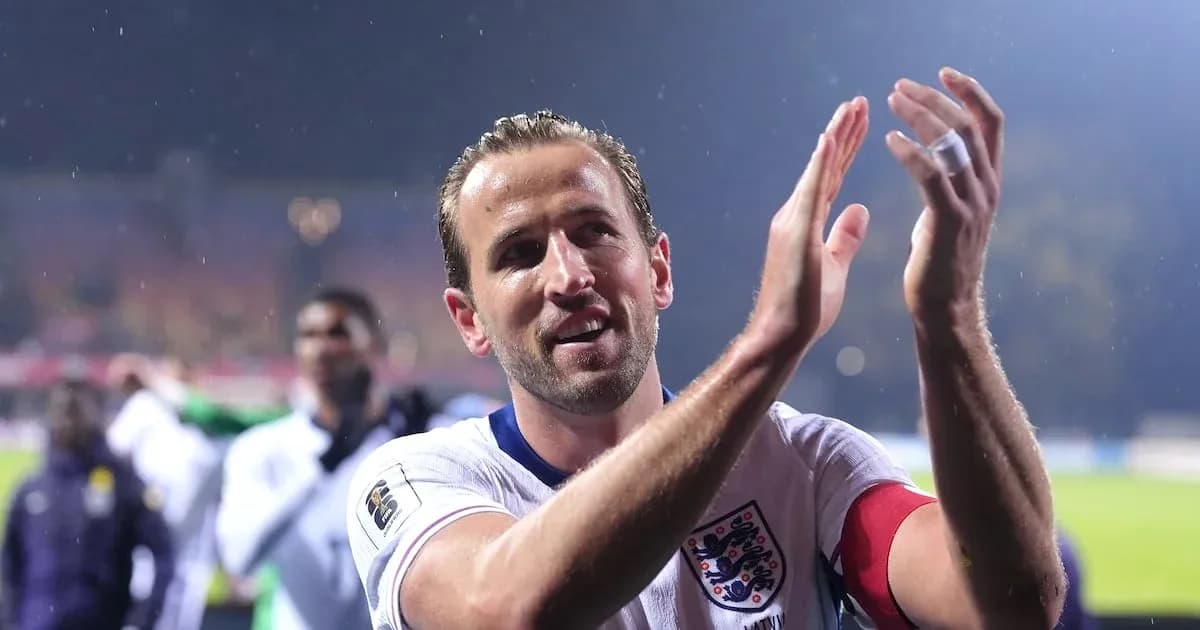
Up front, Harry Kane is the certainty everything else revolves around. Bayern Munich’s No 9 has been operating at a level few strikers can match this season. He is already England’s all-time leading scorer and sits on eight World Cup goals. He scores from everywhere, in every way, and he now leads a side that expects to be in the final conversation, not just the last eight.
Croatia: Modric, Dalić and one more push
Croatia return as the team that refuses to obey the odds. This is their seventh World Cup, and the last two editions have been extraordinary: a final in 2018, a semi-final after that. Zlatko Dalić remains on the touchline, Luka Modric still pulls the strings. Together they go again.
This time, the climb looks steeper. Several key figures are past their peak, the legs a little heavier, the recovery a little slower. Yet Croatia have something that travels well in tournament football: control. Their slow, possession-heavy style suits the heat and the grind. They suffocate games, drain tempo, and wait for the moment to strike.
If Modric is the mind, Joško Gvardiol is the muscle. Outstanding at the last World Cup, the Manchester City defender has grown into one of the most complete centre-backs in the game. He returns from a broken shin, but his presence remains central to Croatia’s hopes. Win your duels, keep your shape, let the midfield do the rest – it’s a familiar script, and they know their lines.
Repeating another deep run would be a shock. Croatia have made a habit of shocking people.
Ghana: Talent, tension and Queiroz’s iron grip
Ghana’s fifth World Cup arrives with a familiar frustration. The talent is there; the chemistry is not. They have stumbled into the tournament off the back of five straight friendly defeats before a draw with Wales finally stopped the slide. The pieces look good on paper, yet the picture never quite comes together.
To fix that, the federation turned to Carlos Queiroz, a veteran of international football and a coach who builds from the back. His teams are disciplined, compact, often stubborn to break down. For Ghana, that means structure first, risk later.
The problem is the loss of Mohammed Kudus. Without him, the side loses a burst of unpredictability, a player who can break a game open with a single touch. Defensive organisation may keep them in matches, but someone still has to win them.
That responsibility now leans heavily on Antoine Semenyo. Fresh from a 17-goal Premier League season with Manchester City and the decisive strike in the FA Cup final, he has proved he can deliver on the biggest domestic stages. Internationally, it has not clicked yet: three goals in 34 games for Ghana. The gap between club form and national-team output is stark. If Queiroz can unlock the Manchester City version of Semenyo, Ghana’s ceiling rises fast. If not, they risk another tournament of “what ifs.”
Panama: Scar tissue and a simple target
Panama know exactly how cruel this level can be. Their World Cup debut in 2018 brought a 6-1 hammering by England, with Kane scoring twice. That kind of defeat leaves a mark. It also leaves a benchmark: they know how far they have to climb.
Under Thomas Christiansen, Panama have quietly improved. Their recent results have been solid enough to lift them to 33rd in the Fifa rankings, a position that raised eyebrows around the world. Then came a 6-2 friendly defeat to Brazil, a sharp reminder of the gulf that still exists to the elite.
The ambition this time is modest, but not meaningless. A first World Cup point would be a landmark achievement, a sign that 2018’s lessons have been learned. For a team still shaping its identity on the global stage, even a single result can change the way a nation sees its football – and the way the rest of the world sees them.
In a group laced with history, scars and ambition, that might be the smallest target. It could also be the hardest to hit.