.svg&w=384&q=75 "GoalGist logo")
Derek McInnes' First Night in Charge of Rangers
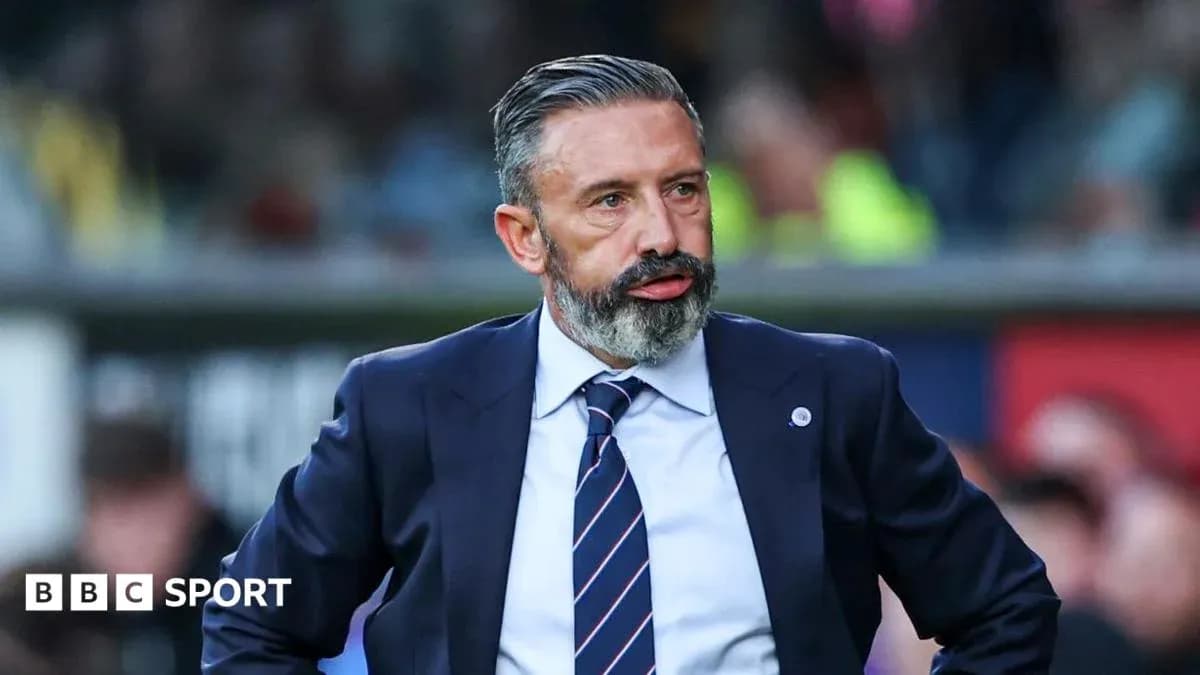
Derek McInnes’ first night in charge of Rangers did not bring fury, walk-offs or grand statements. It brought a draw, a few sharp truths and the unmistakable sense of a club still somewhere between eras.
Same scoreline as 12 months ago, very different soundtrack.
A flat start to a new era
At Tannadice, on a night that should have crackled with new-boss energy, Rangers instead stumbled through an opening 45 minutes that looked painfully familiar. Dundee United, sharper and more cohesive, took a deserved lead when Lachlan Rose struck in the first half, punishing slackness and hesitation in a Rangers side still learning each other’s names.
McInnes had handed debuts to goalkeeper Ivor Pandur, centre-back Ben Godfrey and former Hearts pair Cammy Devlin and Lawrence Shankland. It was a bold, decisive selection – but it looked like a team introduced in the tunnel rather than over a pre-season.
Rangers were stretched, loose and anything but compact. Dundee United found pockets between the lines, turned Rangers’ back line, and carried the greater threat. The new manager watched it all, arms folded, absorbing.
He did not explode.
McInnes calm as questions surface
“It’s one game,” McInnes told Sky Sports after the 1-1 draw. No grand judgements, no public scalping of his players. He talked about time, about a squad in transition, about the certainty that they would improve.
The message was clear: this is a rebuild, not a quick fix.
His assessment of the performance, though, was blunt enough. “It’s disappointing – we’ve dropped a couple of points, but we weren’t good enough to get all three,” he said. The standards he expects were nowhere near met.
Former Rangers striker Steven Thompson echoed the manager’s restraint on BBC Radio Scotland. An away point, first game, difficult venue – not the disaster some might be tempted to paint. He urged patience, pointing out that McInnes will be judged more fairly once his squad is complete and his work on the training ground takes hold.
“He will have learned a lot from his players tonight,” Thompson said. That, perhaps, was the real value of the evening.
Tactical flaws laid bare
Others were less forgiving. Andy Halliday, another ex-Ranger, zeroed in on the structure.
“No matter how many defenders you play with, the main fundamental is being compact, and I thought Rangers were the furthest thing from compact,” he said on Sportsound.
His verdict cut to the heart of the display. For long spells, Dundee United’s players looked more comfortable, more assured in possession, more dangerous in the final third. Aside from Thelo Aasgaard, Halliday felt the best individuals on the pitch wore tangerine, not blue.
Rangers did improve after the break. The tempo lifted, passes began to stick, and Aasgaard – one of the few bright sparks – dragged them level with a well-taken equaliser. The goal felt like a turning point, the moment when a stuttering performance might finally gather speed.
It never truly did.
Rangers pushed, but the pressure came in waves rather than a sustained storm. Their lack of width and penetration on the flanks left attacks funnelling into congested central areas. When chances did appear, they lacked the ruthlessness to finish the job.
At the other end, they were almost punished. Jesse Randall had the chance to win it late on, only to loft a tame dink straight at Pandur. Rangers escaped with a point, and they knew it.
New faces, old problems
This was supposed to be a glimpse of McInnes’ Rangers. In one sense, it was. Pandur, Godfrey, Devlin and Shankland all started, while summer signings Dan Neil and Ross McCrorie came off the bench. There were flashes of what this team might become – more physical, more combative, with clearer roles in midfield.
Yet the same old issues lurked in the wide areas. Djeidi Gassama started on the left but failed to impose himself and was withdrawn at half-time. By the closing stages, Rangers had Mohamed Diomande and Aasgaard operating narrow, searching for pockets rather than hugging the touchline and stretching Dundee United’s defence.
McInnes did not hide from that problem.
“I thought second half as the game got stretched, we had opportunities to play in the spaces and we need people with the ability to go past [defenders],” he said. He wants a winger who can isolate a full-back, attack him, turn the game. At Tannadice, he did not have one.
“We still would like a winger to go get at people, make a difference and get people on the back foot,” he added. “We never quite had that and we’re working hard to bring those types of players to the club. Our strikers are all dependent on service. We’re working hard and we know what we want.”
The transfer message could hardly be clearer.
Recruitment urgency and early pressure
If the need for attacking width is obvious, the defensive picture is no calmer. Godfrey went off with a hamstring complaint, immediately raising questions over his availability for the Europa League qualifier against Jagiellonia Bialystok. At the same time, uncertainty lingers over whether new signing Olwethu Makhanya will receive his visa in time for that trip.
Rangers are in the market for defensive reinforcements. They have to be. The season is barely underway and already the back line is patched together.
McInnes spoke about keeping shoulders to the wheel, about doing the simple things better. The clichés fit because the problems are basic: compactness, concentration, cohesion. These are not issues solved by one marquee signing. They come from repetition, clarity and time.
Time, though, is not something Rangers managers are traditionally afforded in abundance.
The new era has begun not with a statement win, but with a reminder of how much work lies ahead. The question now is not whether Derek McInnes understands that. It’s how quickly he can turn this work in progress into a team that looks and feels like Rangers again.