.svg&w=384&q=75 "GoalGist logo")
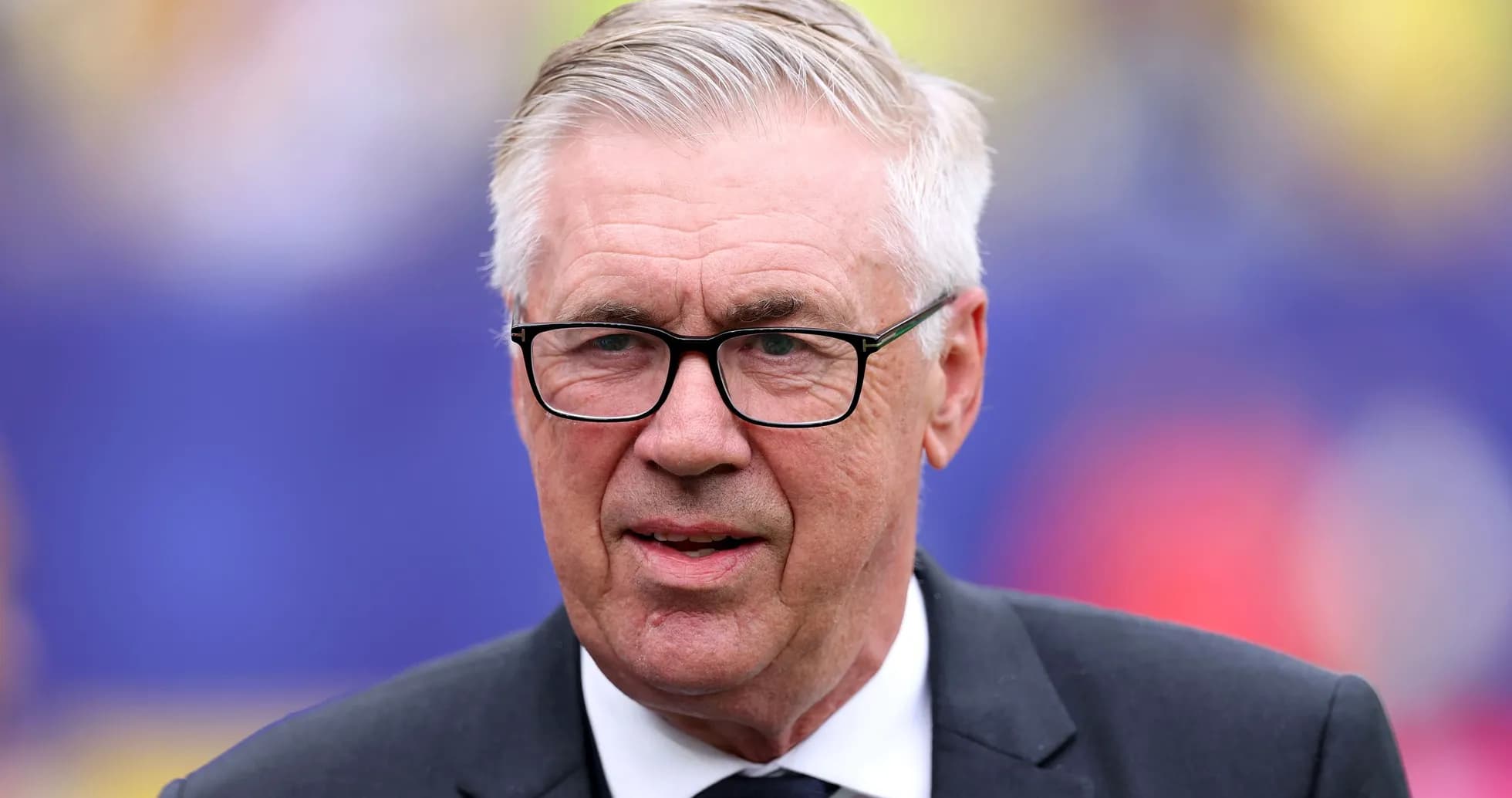
Carlo Ancelotti Starts New Era with Young Brazil Squad
Carlo Ancelotti has torn up the old script and started again with Brazil.
Stung by a miserable World Cup and a shock round-of-16 exit to Norway, the Italian has responded not with tweaks, but with a full-scale reset. His latest squad for exhibition games against Australia and India is one of the youngest Brazil have named in years – and that is entirely by design.
Big names out, new era in
The headline is brutal: Alisson is out.
The Liverpool goalkeeper, long an automatic pick, has been left at home. So too have seasoned midfield anchors Casemiro and Fabinho. Neymar, of course, is missing after his recent international retirement, a symbolic break from the previous decade.
Ancelotti promised change in the immediate aftermath of that World Cup collapse. This is him cashing that cheque.
He has deliberately targeted players eligible for the 2028 Olympic Games, building a group that he believes can mature together and peak at the 2030 World Cup. This is not a stopgap squad for a couple of friendlies; it is the first draft of Brazil’s next generation.
The coach did not hide how much the last tournament scarred him.
“The World Cup was a disappointment for us and for me personally,” Ancelotti admitted, as quoted by ESPN. “The pain of the defeat lingers much longer. Now, however, we are motivated by the fact that we have time to prepare for a new cycle and get ready for the upcoming competitions.”
That “new cycle” has now been given names, faces and, crucially, responsibility.
Alisson warning wrapped in opportunity
Dropping Alisson is a statement, but Ancelotti was careful to frame it as a pause, not a permanent goodbye.
“We know Alisson very well, and when the competitions, like the Copa America, come, if he remains being the best goalkeeper in Brazil, Alisson will play. Right now, however, we have to prioritise the younger ones.”
The message is clear: reputation alone no longer guarantees a place. The short term belongs to Hugo Souza, Pedro Morisco and Otavio, who have been handed the gloves for this tour. The long term is still open, but the door has been pushed wide for a new No. 1 to emerge.
Youth with a spine of stars
This is not a kids-only experiment, though. Ancelotti has kept a hard core of elite talent to guide the group through the turbulence of transition.
Real Madrid forward Vinicius Junior stays on as the face of the attack. Barcelona winger Raphinha is alongside him, while Chelsea striker Joao Pedro returns after missing the World Cup, eager to stake his claim in a very different Brazil.
At the back, Paris Saint-Germain captain Marquinhos remains the defensive reference point, and new Arsenal signing Bruno Guimaraes anchors a remodelled midfield. They are the bridge between eras.
“I chose these players to help with this change in direction,” Ancelotti explained. “They are crucial for the future and will help the younger players improve. One thing is certain: a player who is 34 or 35 years old isn’t the future; they are the present. If a player of that age is ready to play in a major tournament, they will be in the national squad.”
That line underlines his stance: age will no longer be a barrier if form demands selection, but the default setting has flipped. The squad is now built around tomorrow, not yesterday.
The new Brazil, on the road
The first test for this revamped side comes far from home.
Brazil will head to Australia for a double-header of friendlies. They face the Socceroos in Townsville on 25 September, then again in Brisbane four days later. For many of the youngsters, it will be their first taste of senior international football, and they will have to learn fast.
Then comes something historic.
On 3 October, the five-time world champions travel to Kolkata for their first ever match in India, a country where Brazil shirts flood streets and fan parks every World Cup. The Selecao will finally step onto Indian soil in front of millions who have followed them from afar for generations.
Those nights in Townsville, Brisbane and Kolkata will not decide trophies. They will, however, shape careers – and perhaps the spine of Brazil’s 2030 World Cup team.
The squad in full
- Goalkeepers: Hugo Souza, Pedro Morisco, Otavio
- Defenders: Arthur Dias, Wesley, Marquinhos, Gabriel Magalhaes, Douglas Santos, Jair, Matheuzinho, Maurio Junior, Vitor Reis
- Midfielders: Bruno Guimaraes, Andrey Santos, Danilo Santos, Dougals Luiz, Breno Bidon, Gabriel Bontempo
- Forwards: Endrick, Joao Pedro, Estevao, Pedro, Raphinha, Rayan, Samuel Lino, Vinicius Junior
Ancelotti asked for time and space to build “a new cycle.” Now he has his raw materials. The real question is whether this bold bet on youth can turn Brazil’s World Cup pain into the foundation of their next great team.