.svg&w=384&q=75 "GoalGist logo")
Canal Saint-Martin Violence Before French Cup Final
The Canal Saint-Martin should have been humming with the usual late-night Paris soundtrack – laughter, music, clinking glasses. Instead, on the eve of the French Cup final, it turned into a battleground.
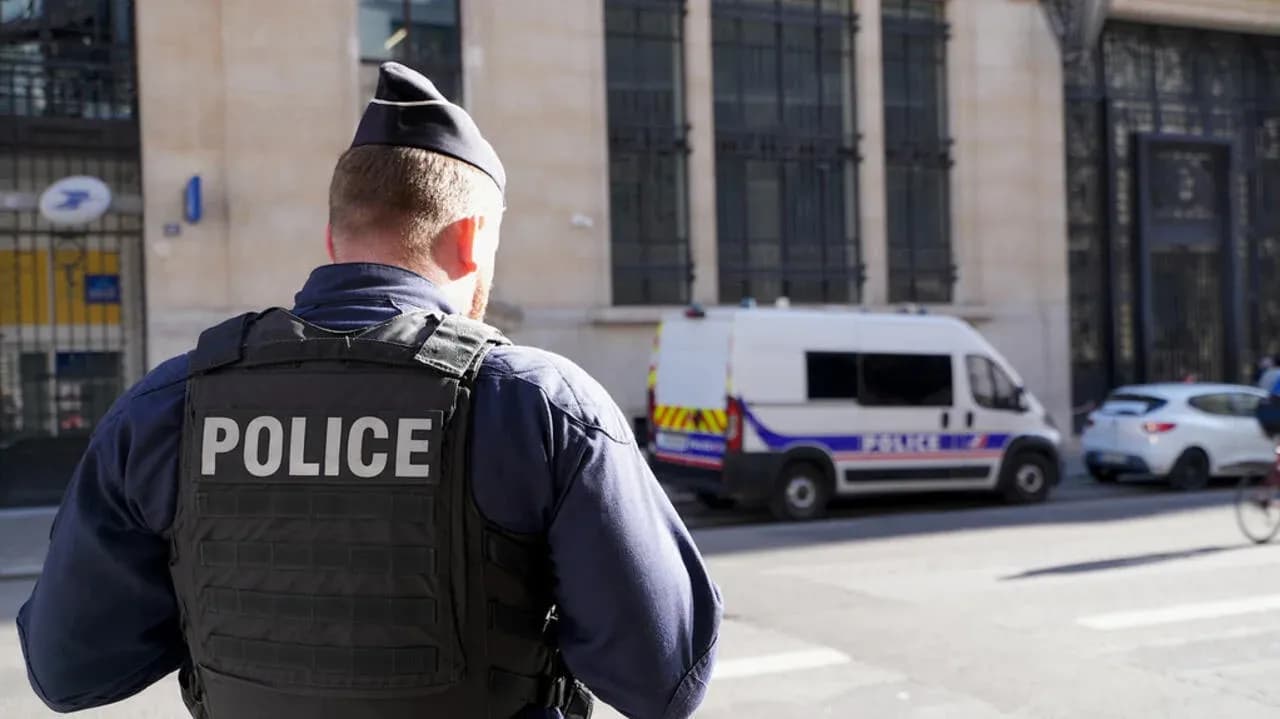
By the time police moved in late on Thursday, 65 people were in custody and six were injured, one of them seriously, after a mass brawl involving OGC Nice supporters in the 10th arrondissement.
Witness videos circulating on social media showed masked figures surging towards a bar, chairs flying through the air, bottles smashing. Police later said around 100 Nice fans had converged on the area, “clearly looking for a fight”.
The damage was grim. One person was struck in the throat by a shard of glass. Another was stabbed in the back. A blood-stained bread knife with a 20-centimetre blade lay abandoned on the ground. Some of those hurt, police sources stressed, had nothing to do with football at all. They were simply in the wrong place at the wrong time.
Officers seized knives, other improvised weapons, balaclavas and padded gloves. It was the kind of haul that turns a “high-risk” classification from a bureaucratic label into a chilling reality.
“This is everything we dislike about football – namely violence – when a French Cup final is supposed to be a celebration,” said Philippe Diallo, head of the French Football Federation, on France Info radio. He described the troublemakers as “fringe groups”, insisting the majority of Nice fans were only due to arrive in Paris on Friday.
At City Hall, the reaction was blunt. Paris mayor Emmanuel Grégoire accused some Nice supporters – “some of whom are known to have links to the far right” – of “accosting and violently attacking” Parisians.
The timing could hardly be worse. Friday night’s final at the Stade de France, already tagged as high risk because of the animosity between Nice and local giants Paris Saint-Germain, will now unfold under even heavier scrutiny. More than 2,000 police officers are being deployed around the national stadium.
A final under a dark cloud
On the pitch, the storylines could not be more different.
Lens arrive from the north in full colour, a club from a football-obsessed former mining town riding a wave of optimism. They finished second in Ligue 1 behind PSG, pushing the champions harder than anyone expected and coming close to a first league title since 1998. They are already guaranteed a place in next season’s Champions League.
The Coupe de France is the missing piece. Lens have never lifted it, losing all three of their previous finals. Victory for the “Sang et Or” – Blood and Gold, named for their red and yellow shirts – would crown a season that has reconnected the club with its glory years and its working-class roots.
Nice, by contrast, stumble into Saint-Denis with the weight of a crisis on their shoulders.
Their Ligue 1 campaign collapsed into a fight for survival: just two wins in their last 24 league games and a finish in the relegation play-off spot. A 0-0 draw at home to bottom side Metz last week ended in chaos, with furious fans invading the pitch, throwing smoke bombs and forcing players to sprint for the dressing room.
The punishment was swift. Nice must play the home leg of their upcoming relegation play-off against Saint-Etienne behind closed doors. A season that began with lofty ambitions under Britain’s Ineos ownership has unravelled into a stark battle to stay in the top flight.
The warning signs had been there. Dumped out of the Champions League in the preliminary rounds in August, Nice never recovered. In November, hundreds of angry supporters confronted players, staff and management outside the training centre. The stand-off pushed several players to seek exits in the January window. The disconnect between club and fanbase has been widening ever since.
Now, with the Stade de France awaiting, the club finds itself at a crossroads. A trophy on Friday, a relegation play-off next week. Glory and jeopardy in the space of a few days.
Club president Jean-Pierre Rivère did not pretend otherwise when he looked ahead to the final.
“It is still a final, so of course we will give our all. But the two matches that come after are more important,” he admitted. “We want to stay in Ligue 1. That is our only ambition.”
History lurking in the background
Nobody is tipping Nice against this Lens side. Not after the season they have had. Not with the off-field turmoil and the on-field fragility.
Yet history hangs over the occasion in a way that will not be lost on long-time supporters. The last time Nice won the Coupe de France was 1997. That year, they were also relegated.
The symmetry is uncomfortable. Another Cup run in a season of struggle, another final framed by anxiety about the drop. For a club that has spent the Ineos era talking about European nights and long-term projects, the reality is brutally simple: survive first, dream later.
Lens, meanwhile, sense an opening. A chance to end decades of waiting, to plant a flag at the Stade de France and send their fans back north with a story they will tell for generations.
The stage is set: one club chasing a perfect ending to a near-perfect season, the other trying to find a moment of light in a year of darkness. The violence in Paris has already stained the occasion, dragged the conversation away from tactics and line-ups and towards knives, balaclavas and police cordons.
What happens over 90 minutes at the Stade de France will not fix French football’s problems with fan disorder. It will not erase the images from Canal Saint-Martin. But it will decide something just as stark for Nice: whether this turbulent campaign is remembered for a cup shock, a fall from grace – or both.

