.svg&w=384&q=75 "GoalGist logo")
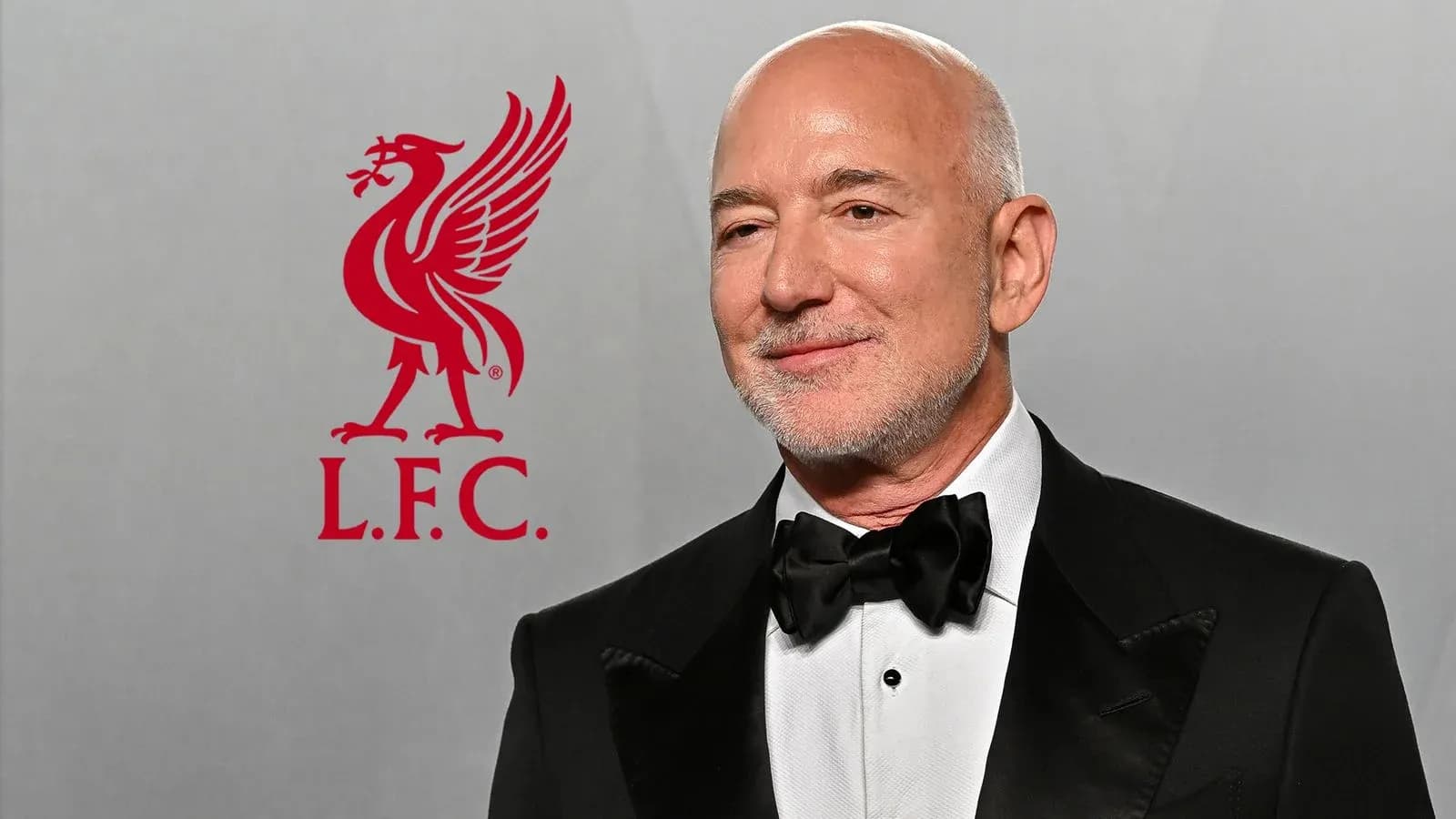
Bezos Nears Liverpool Stake in Billionaire Consortium
Liverpool are on the brink of welcoming some of the world’s richest men into the boardroom, with Jeff Bezos part of a heavyweight consortium closing on a deal to buy roughly a one-third stake in the club.
Fenway Sports Group (FSG), the club’s owners since 2010, are preparing to announce the transaction as early as this week, with one source suggesting it could yet roll into next week if final details drag. The numbers, though, are already clear enough: this is one of the most lucrative minority deals football has ever seen.
The investor group is led by Amit Bhatia, the British-Indian entrepreneur and former Queens Park Rangers shareholder, and includes Bezos and Facebook co‑founder Eduardo Saverin. Between them, they would instantly become one of the most powerful ownership blocs in world sport.
A valuation that rewrites the record books
Their proposed investment values Liverpool at around £4.4bn ($6bn). For a club FSG bought for £300m in 2010, when Liverpool were financially strained and drifting, it is a staggering illustration of how far the Anfield institution has travelled in 16 years.
One insider now expects the stake to creep above the 30 per cent mark, slightly higher than first anticipated. Even so, it remains a minority holding, with FSG retaining overall control. For now.
The deal would also underline the scale of FSG’s financial success. After years of steady squad building, on‑field trophies and relentless commercial growth, Liverpool have been propelled into the top tier of global sports valuations. Only a handful of clubs in any sport have ever been priced higher.
Bezos steps into football’s inner circle
Bezos, whose fortune Forbes estimates at over £207bn ($280bn), has never previously been seriously linked with a football club. His business empire has long stretched from Amazon to Blue Origin and The Washington Post, but not into the game that dominates European weekends.
That is about to change. His presence in the Liverpool consortium signals just how firmly elite football now sits in the portfolios of the ultra‑wealthy. Sport is no longer just a passion project or a trophy asset; it is an “asset class” in its own right, with global media rights, data, and brand reach to match.
Saverin, worth an estimated £23.7bn ($32bn), is no stranger to the Premier League market either. In 2022 he was part of a consortium that tried and failed to buy Chelsea during the post‑Ukraine sanctions auction. This time, he looks set to gain a significant foothold in English football.
The man fronting the bid
At the head of the syndicate is Bhatia, 46, whose background blends high finance and sport. An investment banker by training, he runs AyBe Capital, a multi‑asset firm with interests across technology, media, property, consumer retail and health.
He is also deeply connected to industrial wealth: Bhatia is married to Vanisha Mittal Bhatia, daughter of Indian steel magnate Lakshmi Mittal. Until recently, he held a stake in QPR, giving him first‑hand experience of the demands and scrutiny that come with running a football club in England.
Last month, FSG acknowledged the group’s interest, saying: “An investment consortium led, managed, and represented by Amit Bhatia has expressed interest in making a strategic minority investment in Liverpool Football Club.” They have refused to elaborate since, declining to comment on the timing or finer details as talks have progressed.
A spokesman for Bhatia’s consortium has also declined to comment publicly.
Power, money and the question of control
If and when the deal is signed, Liverpool will effectively be co‑owned by a trio of billionaires whose combined wealth dwarfs that of most rival ownership groups. The natural question follows: how long will a minority stake satisfy investors of that scale?
The arrival of such a powerful consortium will inevitably stoke expectations that they may one day push for outright control of the club. For now, the structure is framed as “strategic” and “minority”, giving FSG both fresh capital and the chance to stay in charge of the project they rebuilt.
Yet football rarely stands still. Liverpool’s last equity sale came only in 2023, when Dynasty Equity bought a small stake that valued the club at more than £3.3bn ($4.5bn). Barely a year on, that benchmark looks outdated.
As the numbers swell and the names get bigger, one thing becomes clear: Liverpool are no longer just competing with Europe’s elite on the pitch. They are sitting at the top table of global capital too. The next move, and who ultimately calls it, could shape Anfield’s future for a generation.

