.svg&w=384&q=75 "GoalGist logo")
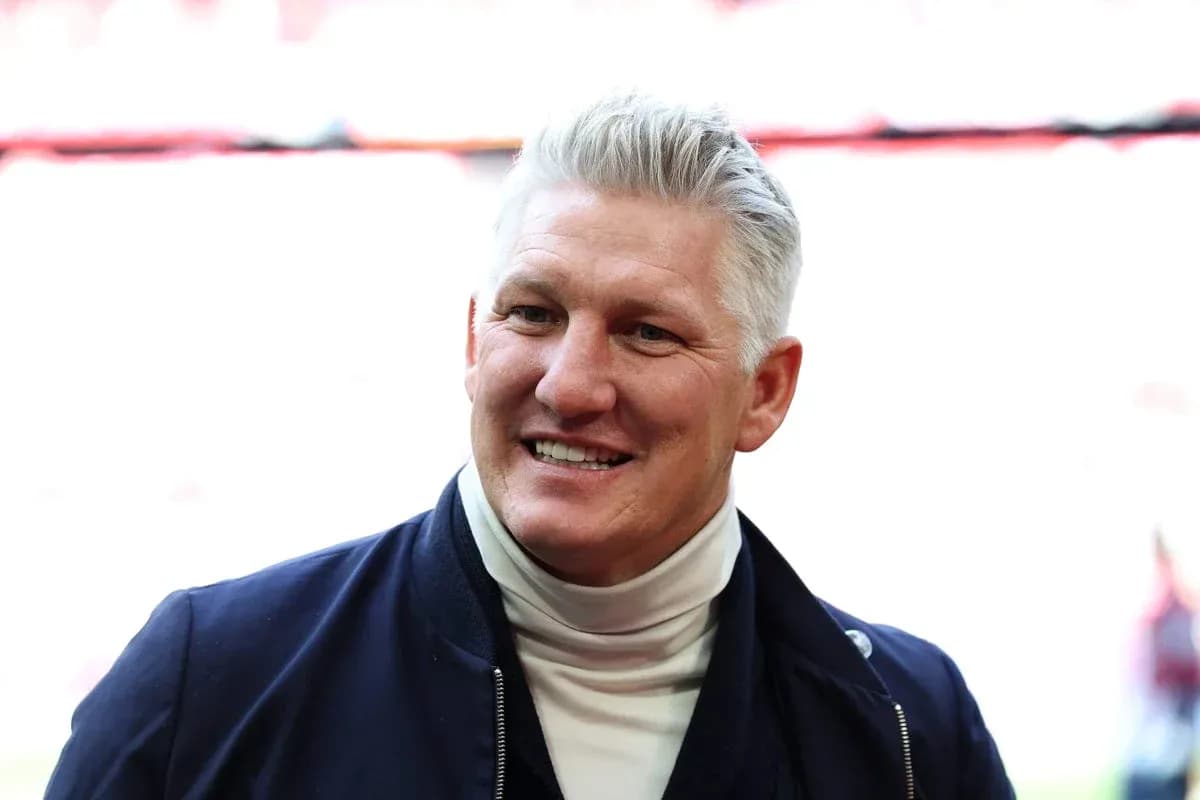
Bastian Schweinsteiger Defends Controversial Comments on African Football
Bastian Schweinsteiger has moved to defend himself after a storm of criticism over remarks he made about African football during Germany’s World Cup campaign.
Working as a pundit for German broadcaster ARD, the former Bayern Munich midfielder described African football as “wild”, “unorthodox” and “perhaps not tactically driven” ahead of Germany’s group-stage match against Ivory Coast in Toronto last weekend. The phrasing lit a fuse.
“Football analysis. No more and no less”
On Friday, ARD released a statement on Schweinsteiger’s behalf in which the 41-year-old World Cup winner attempted to draw a clear line between his analysis and any personal judgement.
“I was talking about football, not about people,” he said, stressing that his words were intended solely as a tactical observation. “This is a football analysis. No more and no less. There’s no way I wanted to offend someone.”
The message was simple: judge me as a pundit, not as a provocateur.
ARD stands firmly behind its pundit
ARD’s head of sport, Axel Balkausky, stepped in with a strong defence of one of the broadcaster’s star names, insisting the remarks had been misread.
“Bastian Schweinsteiger expressed his expectations regarding the Cote d’Ivoire team’s playing style,” Balkausky said. He framed the comments as a summary of Schweinsteiger’s “experiences and observations made from recent matches”, not a sweeping judgement on a continent.
“This wasn’t about the individuals, but rather a footballing assessment,” he added. “I cannot find any form of racism in this, nor in the choice of words.”
The broadcaster’s stance was unambiguous: this was analysis, not abuse.
Fae’s disappointment cuts deep
The most forceful response came from Emerse Fae, Ivory Coast’s head coach, speaking in the glow of his side’s 2-0 win over Curacao on Thursday.
Asked about Schweinsteiger’s comments in his post-match press conference, Fae did not hide his emotion. This was not just another pundit he was talking about. This was someone he had admired.
“I think it’s sad,” Fae said. “He was a very good player, a great player. I’ve always loved him personally. As a midfielder myself, I always liked the way he played and how he understood the game. So much so, in fact, that a friend who used to train with me knew how much I liked him and would call me ‘Bastian’.”
The respect was genuine, almost affectionate. That is what made the fallout sting.
“So when I heard this comment, I was disappointed. Disappointed in the man,” Fae continued. “When you know football as well as he does, it’s odd that he would speak in a way that we could call racist, if we’re calling a spade a spade.”
From admiration to accusation in a few sentences. Fae’s words crystallised the anger many felt: that a player of Schweinsteiger’s stature, with his understanding of the game and his global experience, should know better.
Call for a face-to-face
Balkausky responded directly to Fae’s criticism in ARD’s statement, attempting to lower the temperature and shift the conversation from confrontation to dialogue.
“If the coach of the Ivory Coast, Emerse Fae, would exchange directly with Bastian, his suspicions would be revised in a very short time — I’m sure of that,” he said.
The suggestion was clear: let them sit down, talk it out, and see whether intent and interpretation can be brought closer together.
“Maybe there will be such an opportunity in the course of the tournament?” Balkausky added.
In a World Cup that often claims to celebrate diversity and unity, the question now is whether two men who once shared a bond through midfield craft can find common ground again — or whether this episode will linger as another reminder of how easily football’s language can cut across the grain.