.svg&w=384&q=75 "GoalGist logo")
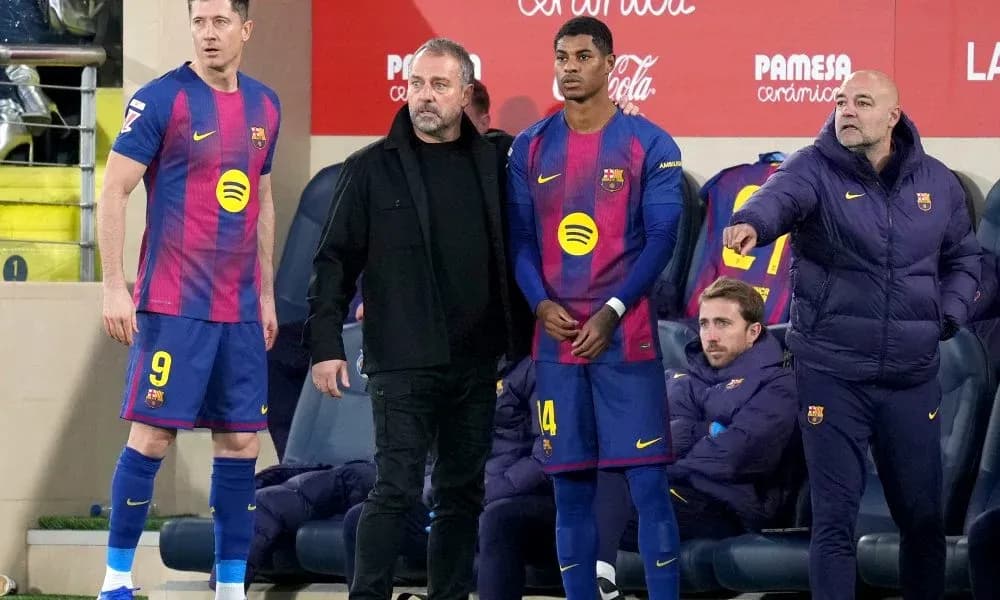
Barcelona's Decision on Marcus Rashford: A Tactical Choice
Barcelona’s refusal to turn Marcus Rashford’s loan into a permanent deal was never a punishment for his form under Hansi Flick – and that’s exactly what makes the decision so striking.
According to Fabrizio Romano, the call came down to tactics, not tension.
Rashford delivered – and still walked away
Rashford’s numbers in Catalonia were not the figures of a failed experiment. On loan from Manchester United for the 2025/26 season, he finished with 14 goals and 15 assists in all competitions, directly involved in 29 goals.
He was not a guaranteed starter every week, but he was influential. When Barcelona lifted La Liga and the Spanish Super Cup, Rashford had played his part. He offered end product, big moments, and a presence in the final third that gave Flick another dimension in attack.
Inside the dressing room, there was no drama. Romano reports that Flick respected Rashford, appreciated his attitude and built a strong relationship with him across the season. The German staff viewed his contribution positively, both in training and in matches.
So why walk away from a forward with those numbers and that rapport?
Because Flick wanted something different.
Flick’s blueprint: more than goals
The decision, Romano explains, was rooted in the way Flick wants his front line to function without the ball as much as with it.
Rashford’s output was undeniable, but Flick was searching for a forward who could stretch across the entire attacking line and still hit the intensity he demands when Barcelona are defending. It was about covering zones, pressing triggers, and the constant defensive work that underpins his high-energy approach.
In short, the profile mattered more than the statistics.
Barcelona were not simply weighing up whether Rashford’s 29 goal contributions could be repeated. They were asking whether he was the ideal fit for the system Flick intends to build over the next cycle.
Their answer pointed elsewhere.
Why Anthony Gordon got the nod
That answer was Anthony Gordon.
For Flick and his staff, the key factors were versatility and defensive bite. They wanted someone who could play across the front, switch flanks seamlessly and still deliver the work rate required to protect the structure behind the ball.
Gordon ticked more of those boxes.
Barcelona’s coaches viewed the English winger as better suited to the constant running, pressing and positional flexibility that Flick demands from his wide players. His ability to operate on either side and still maintain that intensity made him the preferred option when the club had to choose.
So Barcelona did not simply decide that Rashford was not good enough. They decided that Gordon was a closer match to the tactical blueprint.
In the end, it was less a rejection of a productive season and more a ruthless, system-first call from a manager determined to shape the attack exactly in his image.