.svg&w=384&q=75 "GoalGist logo")
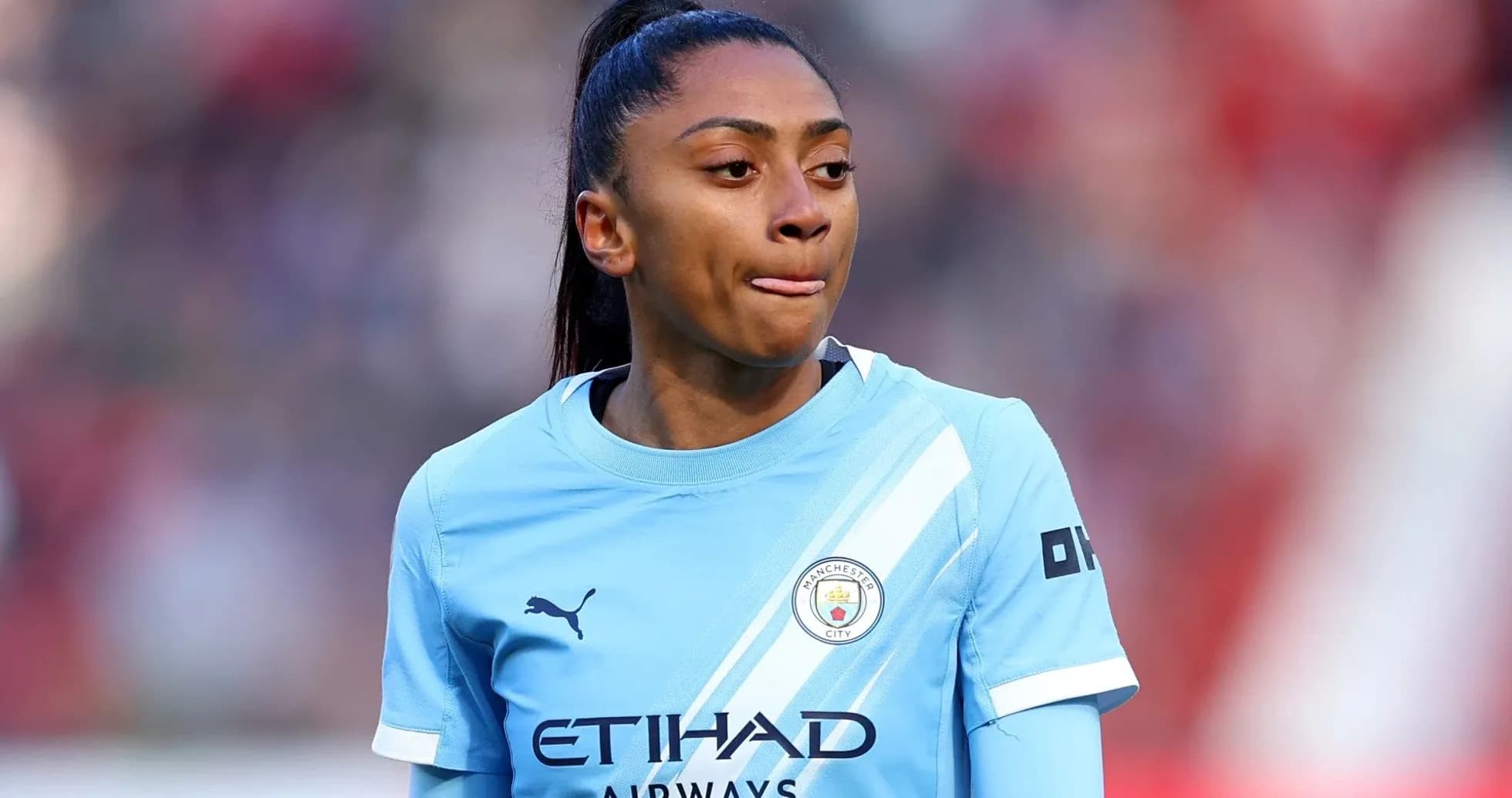
Barcelona Signs Kerolin for €1.5m: A Bold Move
Barcelona push transfer boundaries again. This time, for Kerolin.
The European champions have reached an agreement to sign the Brazil star in a deal worth around €1.5m (£1.28m/$1.7m), a fee that will place her among the most expensive players in the history of the women’s game. Only Grace Geyoro, now of London City Lionesses, and potentially Chelsea’s Alyssa Thompson sit above her in that ranking.
For a club that has spent the last few years walking a tightrope with Financial Fair Play, this is a statement as much as a signing.
A record chase that wouldn’t die
Kerolin to Barca first surfaced earlier this month, via journalist Victoria Leite. The early story was simple: Barcelona wanted her badly, Manchester City said no.
Two bids went in. Both were rejected. The second would have eclipsed the £400,000 ($470,000) Barcelona paid for Keira Walsh in 2022, the fee that still stands as the club’s women’s transfer record.
Then came the complication. Sport reported that Kerolin’s contract at City contained a release clause of over €1m (£857,000/$1.14m), a figure Barca either could not or would not trigger. On paper, that looked like the end of it.
It wasn’t.
Leite later revealed that the two clubs were working to “find common ground and finalise the transfer”. That common ground has now landed well beyond the initial clause, with the agreed €1.5m package pushing Barca into territory they have never reached before on the women’s side. Kerolin is expected to sign a four-year deal in Catalunya this week.
City cash in on a rising star
From Manchester City’s perspective, this is a brutal piece of business logic.
Kerolin has just delivered a superb campaign. In her first full season at the club, after arriving from North Carolina Courage in January 2025, she racked up 14 direct goal contributions in the Women’s Super League. Only Khadija Shaw, Alessia Russo and Vivianne Miedema outperformed her in that metric as City claimed their first WSL title in a decade.
She is 26. She was under contract until 2028. City did not come into this summer intending to sell a player entering her prime.
But the numbers change the conversation. A fee of this size, for a forward in a squad already loaded with attacking options, is hard to ignore. City still have Shaw, Miedema, Mary Fowler, Lauren Hemp, Aoba Fujino and Iman Beney. They have also added England international Beth Mead in this window.
With that kind of depth, City can bank the money, reassess later in the window if they want another attacker, and know they have time and funds to act. From their side, the decision is painful on the pitch but rational on the balance sheet.
Barca’s attack, rebuilt on the fly
For Barcelona, Kerolin is not a luxury. She is a necessity.
The champions have been stripped of some of their most recognisable attacking talent. Two-time Ballon d’Or winner Alexia Putellas has left for London City Lionesses. Salma Paralluelo, fresh from a two-goal performance in the Champions League final, walked away on a free despite being offered a new deal.
Those departures cut deep. They also forced Barca to rethink what their forward line looks like.
There is still quality in abundance. Claudia Pina, Ewa Pajor, Kika Nazareth and Caroline Graham Hansen, who has just signed a new contract, give the front line an elite spine. Young talents Sydney Schertenleib and Vicky Lopez are growing into bigger roles and bring energy and unpredictability.
Kerolin changes the temperature. She brings proven, top-level, game-changing ability into a group that, this summer, has largely been supplemented by younger prospects. She is ready-made for knockout nights, title deciders, those suffocating away games where one flash of quality decides everything.
If Barca want to stay at the summit of Europe while transitioning part of their squad, these are the profiles they need to land. And they have paid accordingly.
The price of staying on top
The fee, though, cannot be separated from Barca’s wider reality.
Transfer values in the women’s game have surged, and a Brazil international with two years left on her deal at a title-winning club was never going to come cheap. Even so, the size of this outlay will raise eyebrows around a club that has been forced into painful decisions to satisfy FFP.
Only last summer, several first-team players departed so the club could comply with financial rules. A wave of top academy talent also went out the door, sacrificed to ease the pressure.
Now comes another test of their internal planning. Barcelona have major renewals looming. Patri Guijarro, arguably the best holding midfielder in the world, is tied down only until 2027 and is drawing interest from Lyon and leading English clubs. Pajor, the focal point of the attack, is entering the final year of her contract. Rising star Esmee Brugts is in the same situation.
At the same time, the club has just watched Putellas, Paralluelo, Mapi Leon and Ona Batlle all leave for nothing. Those exits hurt twice: the loss of talent on the pitch and the absence of transfer income off it.
Barca cannot afford a repeat. Not if they want to remain competitive and solvent.
So the Kerolin deal cuts both ways. On one side, it is an aggressive, ambitious move to keep the team at the top of Europe. On the other, it tightens the financial squeeze on a board that must now find room to secure Guijarro, Pajor, Brugts and others before the cycle repeats.
Kerolin will arrive in Catalunya as one of the most expensive players in the history of the women’s game. The question is simple: will Barcelona’s boldest bet yet help them dominate the next era, or force them into even tougher choices a year from now?