.svg&w=384&q=75 "GoalGist logo")
Australia's World Cup Triumph: Grella's Dismissal and Irankunda's Rise
Mike Grella lit the match. The Socceroos poured on the petrol.
Days out from a World Cup group clash that could define both nations, the former US international is back in the crosshairs after his pre-tournament dismissal of Australia was dragged out and replayed to a very different soundtrack.
“They have no shot of doing anything at the World Cup,” Grella declared on CBS Sports Golazo. “They are the weakest team in the group… There’s no shot Australia can compete with the US.”
That was before Vancouver. Before Nestory Irankunda. Before Patrick Beach. Before a nation that supposedly “had no players anyone recognised” stunned Turkiye 2-0 and kicked the World Cup door off its hinges.
Now the clip is everywhere, looping on social media with a very Australian kind of glee.
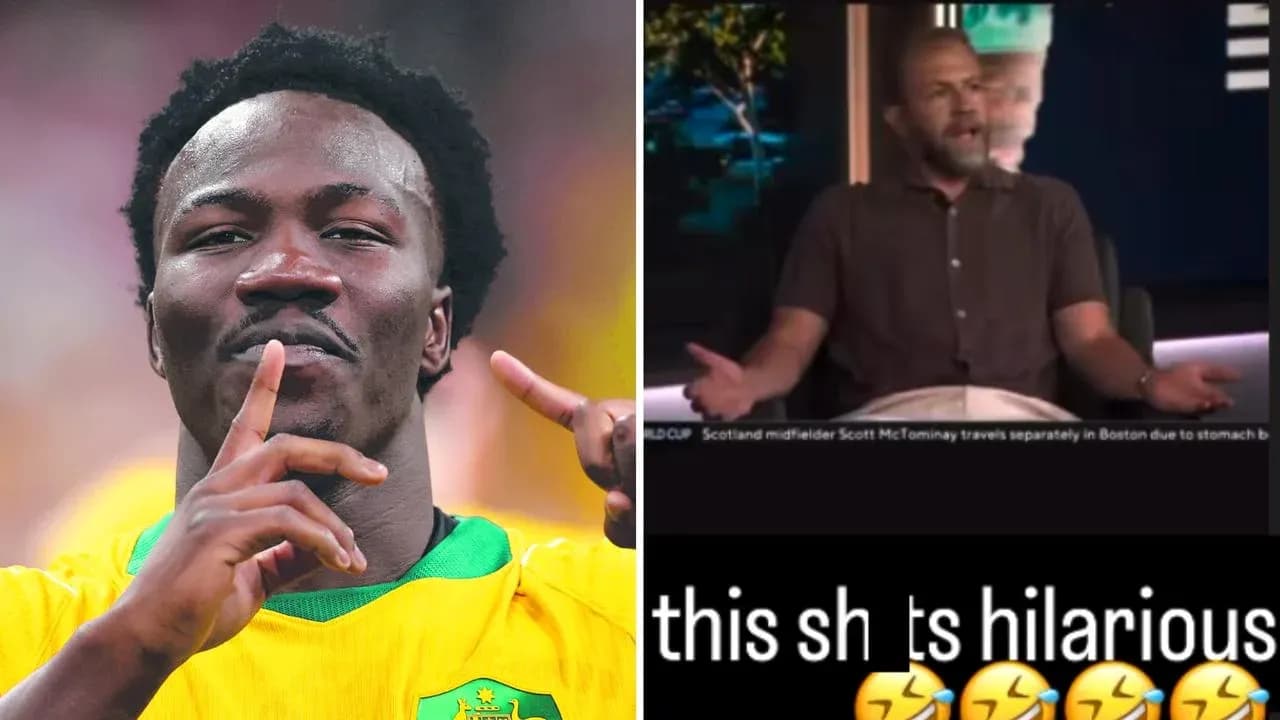
Former AFL player Dan Gorringe reposted the segment, laughing and promising “we’re gona f*** you up”. Grella then doubled down publicly, sharing the post himself with, “Yo this sh*t’s hilarious” and “see you Friday”, accompanied by the universal badge of the unbothered – strings of crying-laughing emojis.
If he wasn’t on Australia’s bulletin board before, he is now.
Irankunda explodes onto the world stage
The noise really started in Vancouver.
Tony Popovic’s side, written off as a “lay up” by Grella, delivered one of the most streetwise, disciplined performances of the opening round to bank just the fifth World Cup win in Australia’s history.
Irankunda and Connor Metcalfe scored either side of half-time, but it was the manner of the victory that turned heads. Beach, a World Cup debutant few Australians would have recognised in the street, produced a string of superb saves. Irankunda, the 20-year-old Watford winger, supplied the electricity.
His story travelled fast.
The BBC’s Chris McKenna framed it as the latest chapter in “an incredible journey” for a former refugee who, only a year ago, was learning from Harry Kane at Bayern Munich. In England, where Irankunda now plays his club football, the interest was instant and intense.
The Sun splashed him across their website with the headline: “Watford star born in refugee camp scores historic World Cup goal,” placing the Socceroos front and centre, even ahead of Scotland’s win earlier in the day.
FourFourTwo went further, asking the question that guarantees attention in the UK: “The new Michael Owen?” The comparison came from the nature of his goal, reminiscent of Owen’s famous solo strike against Argentina in 1998 – raw pace, direct running, fearless execution.
In Vancouver, the commentary captured the mood in a single line: “It’s a Nestory moment in Vancouver!”
It felt like one.
Popovic’s plan, Postecoglou’s praise
In the UK and Ireland, the reaction carried a distinctly Australian accent. Ange Postecoglou, on duty with ITV, watched his country’s new star tear up the touchline and nodded in appreciation.
“It doesn’t matter what level of football you play at, in the park or World Cup, that is fantastic speed,” the former Socceroos and Tottenham manager said on air. “A massive moment. Sometimes in World Cups, you just need a good couple of weeks and your whole world can change. Let’s hope that is the start for him.”
It may be the start for more than just Irankunda.
Popovic’s side, unfashionable and largely unfamiliar to casual observers outside Australia, now sit in a position of real strength. The Athletic’s projections give them an 85 per cent chance of escaping the group, a number that would have sounded fanciful when the draw was made and Grella was scoffing at a team he “didn’t recognise”.
Those same comments are now being replayed to a US audience that suddenly feels a little less comfortable.
“Grella’s going to be hired as their motivational speaker at this point,” former US midfielder Benny Feilhaber joked on CBS Sports Golazo. “He willed them to three points yesterday.”
Former US defender Jimmy Conrad didn’t argue.
“Everybody keeps discounting Australia and that seems to be not the right thing to do,” he said. “So, thanks Grella. We appreciate that.”
‘Never underestimate true Australian grit’
To really understand how Popovic pulled it off, CBS turned not to an American but to The Athletic’s senior football writer Simon Hughes, who was in Vancouver.
“They were street wise,” Hughes said. “Some of the darker arts in the game, they weren’t afraid to get involved in that side of it.”
In his post-match column, he urged readers to “never underestimate true Australian grit” and expanded on that theme in his television analysis.
“Australia, what really impressed me about them, was they really understood what their limitations were and they got the maximum out of what they could do,” he said. “You know what, I think they deserved to win. The game isn’t always defined by who had the most shots and the most possession. Sometimes it can be quite misleading.
“I always felt like Australia had control of what was going on. Occasionally they needed the goalkeeper to step in and do his thing, but that’s what goalkeepers are there for. People forget this.
“It was a really encouraging performance. I really felt in Vancouver yesterday that they really had the fans behind them. That’s a massive thing in World Cup football.
“A lot of nations’ fans turn up and want the team to do well, but Australia really, really believed they could effect this game and make an imprint on this tournament.
“I think they’re going to be quite difficult to stop. The US, if they underestimate them, might have a few problems.”
Problems that Grella, loudly and publicly, insisted did not exist.
The world’s second team?
Scroll through social media now and a pattern emerges. Neutral fans, from Europe to Africa to the Americas, are adopting the Socceroos as their second team.
Some latch onto the defending, joking that Australia’s back line looks like Arsenal’s title-winning rearguard or branding Popovic’s approach “Haram Ball” – the tongue-in-cheek label for ultra-defensive, “anti-football” tactics. Others can’t take their eyes off the speed in transition.
Comedian and football obsessive Trevor Noah captured the fascination on the Men in Blazers podcast.
“Australia has giants at the back. You don’t just swing the ball in and hope for the best against Australia,” he said. “If there’s one thing the Socceroos know how to do, it’s compact their defence, make sure that nothing gets in. You score by keeping it on the floor against these boys and they didn’t pick that up.
“And their new attack up top is completely different to what we’ve seen in years before from like the (Tim) Cahill and Harry Kewell days.
“This was fast. It was like a lightning quick counter-attack and can I tell you, that boy (Jordan) Bos, number five. Yo, yo, I want to see which team he’s (playing for next)... that man is silky on the ball!”
It’s not just the football doing the work.
Off the pitch, a pre-tournament video has resurfaced and is gathering momentum. In it, players talk about their backgrounds and how this Socceroos squad reflects modern Australia, underlining the message: “our diversity is our strength”.
For a global audience tired of polished slogans and hollow branding, it feels genuine. It matches what they see on the pitch – a team of different stories and styles pulling in the same direction.
That authenticity, paired with the upset in Vancouver, is why Australia suddenly look like the feel-good story of this World Cup.
Next up is the USA in Seattle at 5am AEST on Saturday. The co-hosts, once so sure of themselves, now walk into a game framed by their own pundit’s words.
Grella called Australia a “lay up”. The question now is simple: who gets dunked on when the whistle blows?