.svg&w=384&q=75 "GoalGist logo")
Artificial Intelligence in Football: Revolutionizing Recruitment and Player Management
In modern football, the search for an edge never stops. Clubs spend millions chasing marginal gains, and now a growing slice of that hunt runs through artificial intelligence.
Some of it looks slick and futuristic. Some of it is still messy and experimental. All of it is changing how the game is run behind the scenes.
From Arsenal blog to AI engine
Ask Omer Bracha how this all started and he’ll take you back to his couch, not a boardroom.
A devoted Arsenal fan, he began as a blogger, filing long, detailed pieces on the Gunners from home. He mixed the eye test with numbers, flagged under-the-radar players and, to his surprise, caught the attention of people inside the game.
Scouts and club staff started dropping into his inbox.
“‘How do I know about that on a player?’” they asked him. Bracha’s answer? It wasn’t some secret database. “It's just ChatGPT,” he told them, laughing.
If a basic large language model could impress professionals, he wondered, what were clubs actually using?
The answer: a lot of data, very little order.
Over the last decade, football has lurched from scarcity to saturation. Wyscout exploded out of Genoa in the early 2010s and was quickly joined by a pack of rivals. Now clubs drown in numbers scattered across platforms that don’t talk to each other.
“In the past 10 years, this industry has moved from complete scarcity to data overload,” Bracha says. “There are so many different data providers.”
His company, Marquee, was built to strip that chaos down.
Marquee plugs into clubs around the world as a kind of outsourced analytics department. It automates the “glorified spreadsheet processes,” pulls in data from multiple platforms and turns it into something decision-makers can actually use.
This isn’t, Bracha insists, Football Manager with a nicer interface. At a price, Marquee generates tailored recruitment profiles, ranking potential signings not just on ability but on how they fit a club’s system and style.
Clubs don’t have to follow the recommendations. Many still lean on gut feel and long-held scouting networks. Yet Marquee has already found its way into a handful of Premier League recruitment rooms, and has been publicly endorsed by Barcelona and MLS side Chicago Fire.
Whether it’s unearthing the next superstar is another matter. But it has become part of the ecosystem, and it’s not going away.
When the machine spots the limp
Data doesn’t just shape who clubs sign. Increasingly, it shapes who they dare to play.
In FC Cincinnati’s MLS clash with Nashville SC last year, the club’s tech flagged something odd in Matt Miazga’s movement. An “irregular movement pattern” appeared minutes before the center back asked to come off.
The system didn’t stop the injury. The data isn’t live, and no one forced him to play on. But the machine saw the problem before anyone else did.
Working out when he could come back, fully fit, is where another branch of AI steps in.
Springbok Analytics, an offshoot from the University of Virginia, has a standing challenge for its clients: send us your most complicated injury. Most of the time, that means hamstrings.
Football still hasn’t cracked them. A 2020 NIH study found hamstrings make up 12 percent of all professional soccer injuries, with re-injury rates swinging wildly between four and 68 percent. They tend to go late in halves, when fatigue bites, and clubs still argue over the best way to rehab them.
“We’ve got all the new technology that exists every which way,” says Matt Brown, Springbok’s Analytics Director. “Hamstring injuries have not gone down. They've gone up.”
Brown believes the problem isn’t just medical. It’s mathematical.
Quantifying muscle strength, balance and atrophy is painfully slow. Traditionally, doctors wade through “thousands and thousands of slices” of 2D MRI images, stacking and interpreting them to build a 3D view of the muscle.
At Virginia, scientists developed hyper-specific MRI techniques to help pediatric surgeons treat cerebral palsy, creating precise 3D models to plan tendon lengthening. When that worked, Springbok took the same idea into sport.
The NBA signed on in 2023. MLS chose Springbok for its Innovation Lab this year.
Now, AI pre-processes those gray MRI slices, automatically drawing muscle boundaries and spitting out a “3D digital twin” of an athlete’s leg in hours rather than a week.
“You want to scan a player at the time of injury, two months later, six months later,” Brown explains. “Track atrophy and see if you're getting the stimulus and the changes that you're going after with muscle.”
Springbok doesn’t treat injuries and it doesn’t promise to prevent them. It gives medical teams sharper, faster measurements, then steps aside.
“We are the support system,” Brown says. “We are providing you the measurements. But you're trained in this. You've done 10 years of this. You have your own thesis.”
A 10‑second glimpse into a teenager’s future
At youth level, the questions are different but just as fraught.
Every day at the Philadelphia Union academy, staff wrestle with the same dilemmas: what level can a kid handle? How much first-team exposure is safe? How do you balance talent with a growing body that might not be ready?
MLS clubs test strength, size, likely height and projected peak performance. It’s painstaking, and often inconsistent.
Fit:Match wants to cut that process to 10 seconds and a smartphone.
The method is brutally simple: take four photos of a player from different angles. The phone calculates height, body mass, wingspan and a full suite of body measurements. Then it projects likely height, growth maturation and a basic picture of what full physical development might look like.
Founder Haniff Brown calls it “ChatGPT for soccer” with a half-smile. The comparison fits. A clunky, time-consuming process at pro clubs is compressed into a 30-second output.
Brown didn’t come from sport. He came from fashion, where he used instant body scans to help customers buy clothes that actually fit.
“How can we allow a user to upload a body profile of himself so that he doesn't have to buy four shirts and return the three that don't fit?” he asks. “You'll just buy one and boom.”
Hospitals and healthcare firms soon took notice. Then, in 2024, a European club asked him to scan its academy. Brown saw a bigger opportunity.
He set one non-negotiable: the whole assessment had to take under 15 seconds.
“Coaches don't like assessments that take too long,” he says. “They want the kids going back, doing their drills. The longer and more complicated the assessment is, the less likely they are to use it.”
The club bought in. Others followed. A key selling point? Standardization.
Brown’s team saw different coaches at the same club measuring the same player and coming up with different numbers. Fit:Match removed the human variance. Four photos, half a minute of processing, one detailed, consistent profile.
Now, parents can upload their children’s photos when they register for academies. Fit:Match generates a digital twin; MLS gets the data on the back end.
That helps clubs place players in age groups that suit their development, not just their birth certificate.
“A player who is a 14-year-old but an early developer is far different from a player who's 14 and a late developer,” Brown says. “Now MLS can scientifically tell that, and then make better pathways for those late developers so that they don't drop out of the ecosystem.”
The ethical fault lines
All of this sounds seductive. Faster scans. Cleaner data. Smarter recruitment. A clearer picture of a teenager’s future.
It also drags football into uncomfortable territory.
AI doesn’t just tweak existing processes; it can reshape them. It can influence who gets signed, who gets promoted, who gets released. It can expose the limits of long-serving staff and, in some cases, make them expendable.
“The first step was getting people comfortable,” Brown admits.
Marquee learned the same lesson. The company had to position itself as a partner, not a replacement.
“It's more about them, to be fair, to kind of feel comfortable with everything that we do together,” Bracha says. Only once they rack up “successful stories together” will they trumpet them.
Bracha is blunt about the financial logic, though. Building an in-house AI stack is expensive and slow. Buying one in is not.
“From an ROI perspective, it will always be faster, quicker, righter to go to us,” he says. Salaries are among a club’s biggest costs. “Do they want to hire more to build such a thing or just buy externally? It's like the AI’s most common question nowadays: build or buy? In this case, I think buy.”
The catch? Outsourcing brains doesn’t guarantee wins.
When the hype meets the table
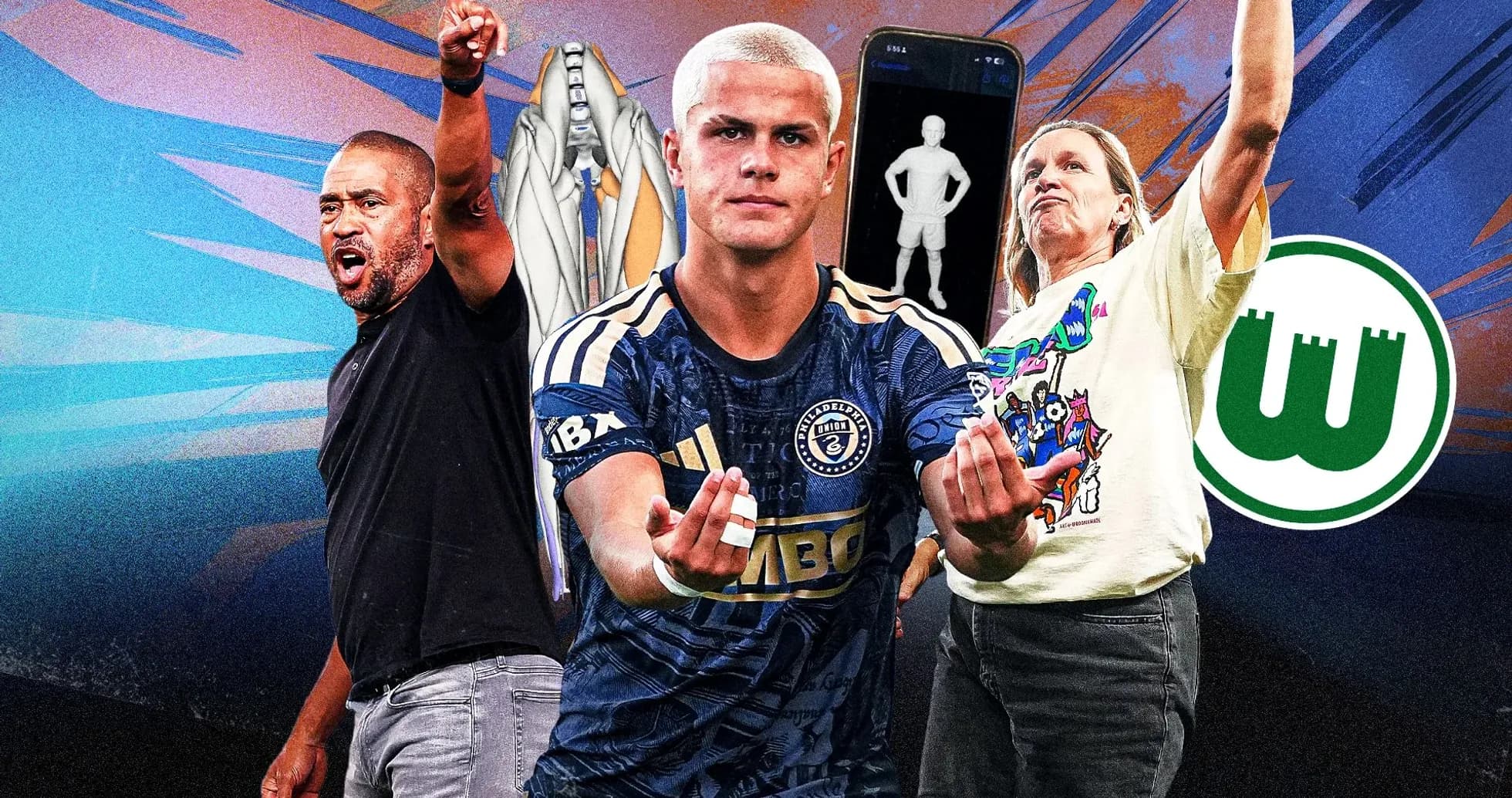
Wolfsburg were early AI evangelists. The club claimed it was saving around €1 million a year by automating admin and injury-prevention work.
On the pitch, things went badly. Results dipped, criticism soared, and the PR push around AI jarred with what fans saw every weekend.
Wolfsburg have doubled down regardless. Sevilla now lean on IBM WatsonX to manage their data. Other clubs quietly experiment with open models. Some coaches tinker with ChatGPT on the side, testing matchups or formations.
One of the boldest public users has been Seattle Reign head coach Laura Harvey. Speaking on the Soccerish podcast with Lori Lindsey and Christina Unkel, she said she asked ChatGPT a simple question: “What formation should you play to beat NWSL teams?”
For two of the league’s then-14 sides, the answer came back: play a back five.
Harvey didn’t just copy and paste the suggestion. She took it to her staff, debated it and then rolled out a five-defender system. The Reign finished fifth, climbing eight places from the previous season.
Did ChatGPT mastermind the turnaround? Of course not. But it planted a seed that grew into a tactical shift on the pitch. For AI believers, that’s enough to call it a small victory.
There are plenty of dead ends too. Ideas that look great on a screen and get thrown out on the grass. Models that don’t travel well from one league to another. Data that clubs simply don’t trust.
Maybe that’s the point. AI is becoming another tool, not a magic wand. It sits alongside the scout in the stands, the physio in the treatment room, the coach on the touchline.
And in a sport where margins are razor-thin and patience is even thinner, the moral debate rarely lasts long.
“We’re all looking for any advantage we can get,” says Fraser, speaking for a whole industry.
The real question now is which club finds the edge that everyone else ends up chasing.