.svg&w=384&q=75 "GoalGist logo")
Arsenal's Dressing Room Dynamics: Martinelli's Situation Explained
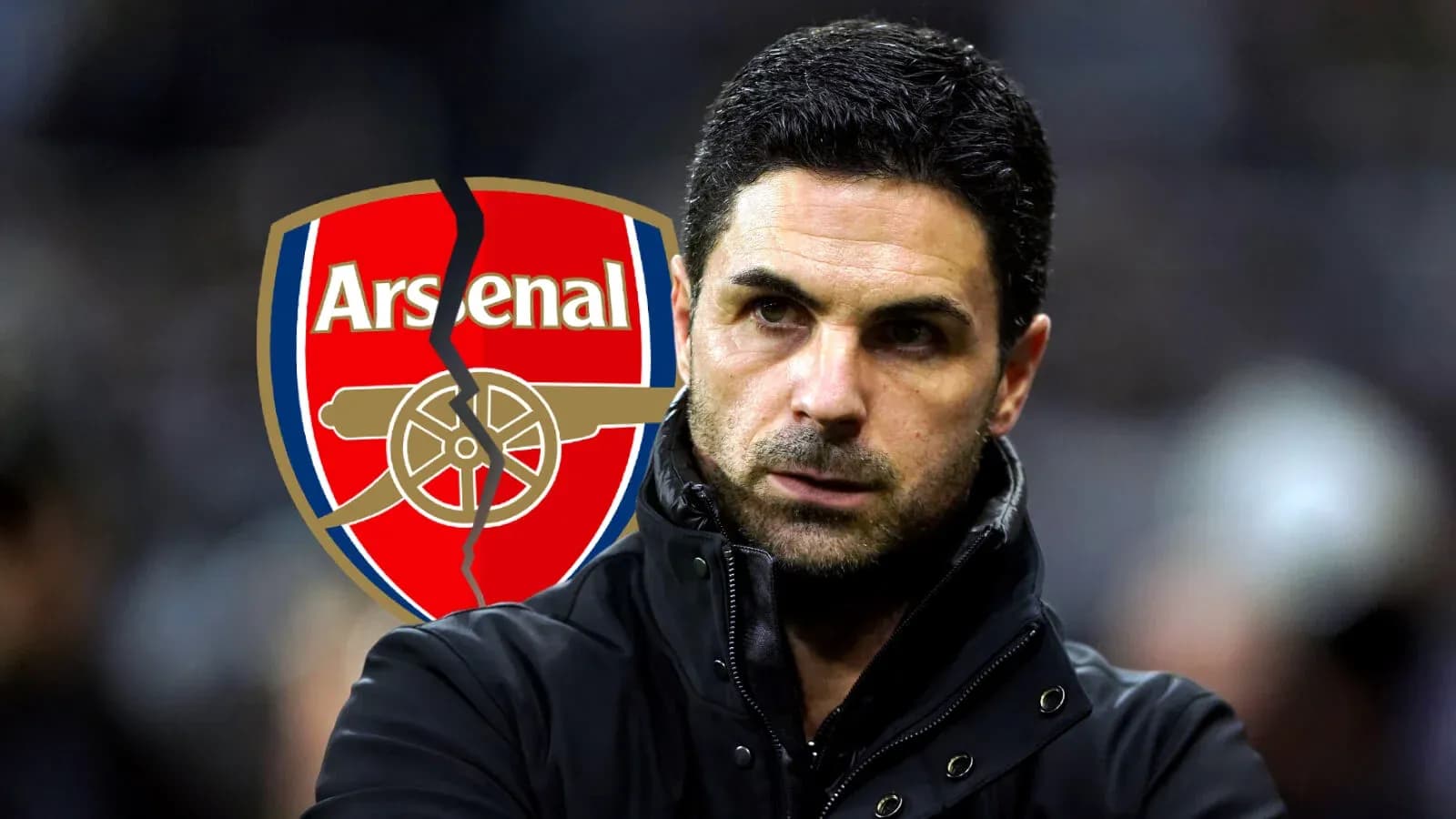
The story goes like this: Arsenal’s dressing room has turned on Mikel Arteta, senior players are “unhappy”, and Gabriel Martinelli suddenly has half the squad marching behind him in protest over his treatment.
Except that version collapses the moment you look at the source.
This supposed revolt has been spun out of ESPN Brasil, then aggressively inflated by several UK outlets. The Daily Mirror website ran with: “Gabriel Martinelli has Arsenal stars on his side after being pushed out by Mikel Arteta.” The Daily Star followed: “Arsenal stars ‘side with Gabriel Martinelli’ as Mikel Arteta tries to force him out.” Goal.com pushed it further: “Arsenal squad ‘unhappy’ with Mikel Arteta as Gabriel Martinelli nears £40m Al-Hilal transfer.”
Strong words. Big claims. So what’s the foundation?
All three point back to one translated paragraph from ESPN Brasil. The crucial line?
“At the start of this season, the Brazilian wasn’t even included in Arsenal’s matchday squad and didn’t even receive a medal for winning the English Super Cup after beating Manchester City 3-0, something that even caused some discomfort among other players in the team.”
That’s it. Twelve words about “some discomfort” among teammates, tucked away at the bottom of a day-old piece, have been turned into a full-scale mutiny in the headlines.
Is it really shocking that a popular player of seven years, apparently being eased out ahead of a sale, might draw sympathy from his colleagues? It would be stranger if Gabriel Magalhaes or Declan Rice were delighted to see him frozen out. Dressing rooms are tight spaces; players notice when one of their own is left out of a medal ceremony.
The leap from “discomfort” to “squad unhappy” and “side with Martinelli” says more about the need for drama than it does about Arsenal’s internal politics.
The Martinelli Price Tag Debate
Strip away the noise and there is a genuine football question here: what is Gabriel Martinelli actually worth in this market?
John Cross in the Daily Mirror put it bluntly when comparing the Brazilian’s mooted £50m fee to Tottenham’s eye-watering £85m move for Savinho:
“Why on earth have they not been able to get better value on Martinelli? If Savinho goes to Tottenham in an £85m deal, why is Martinelli cheaper? The £50m price just does not seem enough.”
On the surface, it looks like a fair challenge. Arsenal are champions, Martinelli is a known Premier League quantity, and wide forwards cost a fortune. But context bites hard.
Martinelli scored one league goal and registered four assists last season. For a winger in a title-winning side, those numbers are a problem, not a selling point. His contract situation doesn’t help either: one year left, plus an option for another 12 months. That’s control, but not the kind of long-term leverage that lets a club name any price they want.
In that light, £50m starts to look reasonable. Clubs like Chelsea and Manchester City have built entire departments around player trading and extracting maximum value from squad players. Arsenal are not yet in that tier of salesmanship.
Then there’s the comparison ESPN Brasil made: “This is a player whose stats measure up against the likes of Yildiz.” Except Kenan Yildiz is four years younger and coming off a Serie A season with ten goals and seven assists. That’s not a flattering benchmark for a 23-year-old who has stalled.
Even ESPN’s own piece asks the key question: “Martinelli has pace, is dangerous but has he really kicked on in the past two seasons?” The honest answer is no. Which is exactly why £50m, in this market, is not some act of charity.
The Medal, the Optics, and the Reality
The flashpoint detail that set this narrative rolling was simple: Martinelli was not in the matchday squad at the start of the season and did not receive a medal for the 3-0 English Super Cup win over Manchester City. That, ESPN Brasil say, “caused some discomfort” among other players.
From the outside, that looks brutal. A long-serving player, frozen out on day one, then left empty-handed while his teammates lift a trophy. Symbolism matters in football. It sends messages, intentional or not.
But the leap from “this felt harsh” to “the squad is turning on Arteta” is enormous. Players can be uneasy with how a teammate is treated and still be fully aligned with the manager’s broader decisions. Sympathy for Martinelli does not equal rebellion.
What it does underline is the cold edge of elite football. Arsenal are trying to move a player on. They’ve decided to back other options in wide areas. The way that looks from the outside is rarely pretty.
The Transfer Market Madness Around Them
While Arsenal’s internal story was being stretched, the wider transfer market carried on distorting reality.
Tottenham are closing on Savinho for £85m, a fee that looks wild on its own but is clearly linked to the deliberately low price in the Omar Marmoush deal. Clubs are not just signing players; they are balancing books, shifting value and gaming accounting rules. Martinelli’s £50m sits in that same warped ecosystem, but without the creative structuring that inflates other deals.
At the same time, the Daily Mirror website floated another Arsenal headline: “Mikel Arteta sets one condition for £130m Julian Alvarez transfer as Arsenal plan emerges.”
One condition for a £130m move sounds dramatic. The actual line? Arteta “will demand assurances the Argentina star wants to move to Arsenal.” That’s not a condition. That’s the bare minimum any manager requires before launching a nine-figure bid.
The pattern is familiar: simple truths, dressed up as high drama.
Newcastle, Time-Wasting and a Different Kind of Blame Game
Elsewhere, the Premier League’s first weekend brought its own flashpoints. At the Daily Mail, Ian Ladyman turned his attention to new Newcastle coach Matthias Jaissle after a late penalty denied his side victory against Liverpool.
Ladyman argued Jaissle was wrong to blame referee Stuart Attwell for the decisive spot-kick, pointing out that Lewis Hall’s contact on Victor Munoz was “clear.” He then went further, suggesting the manager’s own substitution had invited trouble.
Jaissle replaced Yoane Wissa with Fabian Schar in the final minute of added time. Ladyman framed it as a classic time-wasting change that backfired: Attwell simply added 30 seconds, and within 15 of those, Munoz ran at Hall and won the penalty.
New guidelines this season insist players must leave the pitch within 10 seconds of their number going up or risk a booking. The old art of dragging out substitutions is being squeezed. Under that lens, Ladyman called such changes “even more pointless than ever.”
There is, of course, another footballing reason to swap a forward for a defender when you’re protecting a lead. Sometimes it’s about shape, not seconds. But nuance rarely survives in the post-match blame game.
United’s “Transfer Plan” and the Price of Hesitation
Up north, Manchester United’s window was being rebranded as strategic genius. “Manchester United’s transfer plan has paid off with £45million boost,” claimed the Manchester Evening News.
The argument runs like this: Carlos Baleba might have cost around £115m last summer; now United are closing on him for £70m. On paper, that’s a £45m saving and proof of a smart long-term plan.
The reality is more awkward. Baleba has just come off a season of underperformance. United are still paying huge money, just slightly less huge, and doing so after the campaign has already started. They’ve already lost to promoted Hull on opening day, with Youri Tielemans exposed in midfield.
Calling that a “transfer plan” feels generous when last summer’s thinking also involved alternative targets like Elliot Anderson, Mateus Fernandes or even Sandro Tonali. This is not a grand design paying off. It looks more like a club improvising its way through another expensive rebuild.
Noise, Narrative and What Really Matters at Arsenal
Strip everything back, and Arsenal’s situation is far simpler than the headlines suggest.
Martinelli is on the brink. A £50m fee is on the table. His output has stalled, his contract is running down, and Arteta has made a hard call. That hurts in the dressing room. Of course it does. Players are human, not spreadsheets.
But discomfort is not mutiny. Sympathy is not insurrection. A manager’s authority is not crumbling because a few teammates feel for a friend who didn’t get a medal.
The real test for Arsenal this season won’t be whether they can ride out a week of noisy headlines. It will be whether the decisions they are making now – who they sell, who they trust, who they chase for £130m – actually move them closer to the title they want to keep.