.svg&w=384&q=75 "GoalGist logo")
Argentina’s Holiday Controversy After Silver Finish
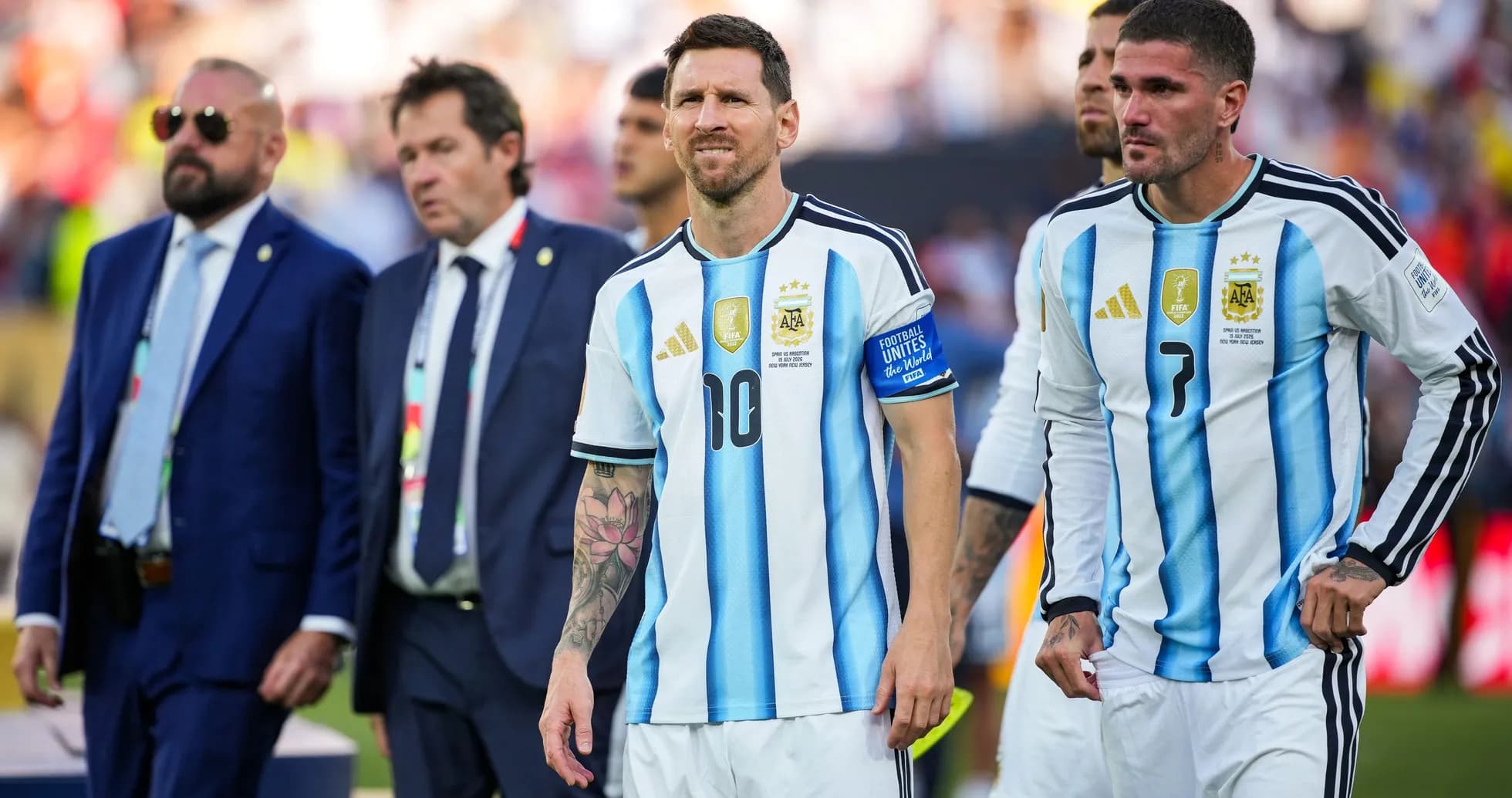
Argentina flew home without the trophy, beaten 1-0 by Spain in extra time in New York, undone by a Ferran Torres strike and a rare, blunt performance that did not yield a single shot on target. Yet it was not the defeat that lit up the country’s political and sporting debate. It was what came next.
President Javier Milei announced that the players and staff would be allowed to choose a day to be declared a national holiday in recognition of their campaign. Runners-up. No world crown retained. A day off all the same.
The reaction was instant — and fierce.
A Holiday for Second Place?
The Albiceleste’s display in the final offered little to cling to. Lionel Scaloni’s side, usually so ruthless in decisive moments, looked strangely flat, unable to trouble Spain’s goal across 120 minutes. The dream of defending the world title died with barely a murmur in the opposition box.
Against that backdrop, the idea of a celebratory holiday landed awkwardly.
Posting on X, Milei wrote: “Given the concern about the celebrations for the achievement reached by the Argentine National Team, I inform the population that, depending on what the Players and the Technical Staff decide regarding the day to celebrate, it will be declared a national holiday.”
The wording only sharpened the divide. Many citizens saw it as a step too far for a second-place finish, some even wondering if there had been a mistake or technical glitch. Others questioned the timing, arguing the squad would rather slip quietly back to their clubs than ride through Buenos Aires on an open-top bus without the trophy.
Milei himself had not attended the final, choosing to stay away for superstitious reasons. That detail added another layer to the controversy: a president absent from the biggest match, yet ready to sign off on a national holiday for coming up short.
Messi Defended, Legacy Intact
As the criticism mounted, Milei moved to defend the team, and Lionel Messi in particular. In another post, he wrote: “Thank you so much, players. [We fought] until the end with our boots on. Argentina always at the top.”
That sentiment captures a truth that the raw numbers of the final do not. This was a group that had carried the weight of a nation through yet another gruelling tournament, led by a 39-year-old captain who has already given Argentina everything a footballer can reasonably give.
Yet even that emotional shield could not fully protect the decision from scrutiny. For a football culture steeped in the idea that only first place really counts, celebrating second with a national holiday feels like a jarring break from tradition.
A Team at a Turning Point
Beyond the politics and the public anger lies a football reality that Scaloni and his staff cannot ignore. This campaign likely marked the end of an era.
The veteran core that delivered a World Cup and defined a generation is edging toward the exit. The coaching staff now face the hard task of phasing in new blood while the old guard steps away, not in triumph this time, but in the quiet of a losing dressing room.
It is widely expected that Messi has played in his sixth and final World Cup. The Inter Miami forward has not officially announced his international retirement, yet at 39, the assumption is clear: if this was not goodbye, it was close.
Argentina, then, stands at a crossroads. A silver medal, a polarising holiday, a legend nearing the end. The trophy stayed in someone else’s hands, but the decisions made in the coming months — on the pitch and in the presidential palace — will decide how long the Albiceleste remain “always at the top,” and how they choose to remember a campaign that finished one step short.

