.svg&w=384&q=75 "GoalGist logo")
Argentina Prepares for World Cup with Scaloni's Strategic Insights
Lionel Scaloni walked into the press room with the calm of a man who’s been here before. Argentina are tuning up for another World Cup tilt, Honduras the next stop on the road, and the coach sounded exactly as he wanted his team to look: assured, alert, and quietly ruthless.
Injuries under control, no risks in friendlies
The main cloud over this Argentina camp has been injuries. Several players are working on their own, away from the main group, and the concern outside has been growing. Inside, not so much.
“The players who are training separately are improving. They're doing well, and we don't want to take risks in these friendly matches. We'll see how they continue to progress,” Scaloni said, drawing a clear line between preparation and recklessness. These games matter, but not as much as what comes next.
One name, of course, towers above the rest.
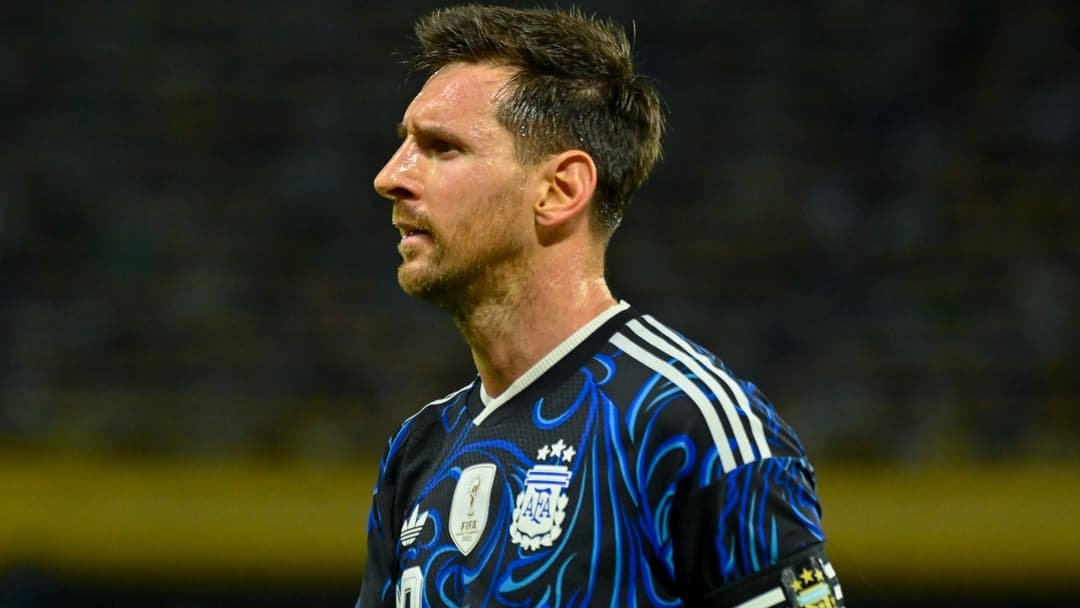
“Leo is doing well and has started training partially with the group. He's no longer working separately. He could get some minutes in these friendlies. He's much better, and that gives us peace of mind,” he revealed.
Peace of mind. For a coach, for a squad, and for a country that still measures its footballing pulse by Lionel Messi’s fitness.
Musso gets the nod in goal
There was at least one firm decision on the night: the starting goalkeeper. Scaloni confirmed that Juan Musso will start against Honduras, a nod to the hierarchy he’s building behind his outfield stars.
“Juan Musso will be in goal. Perhaps Gerónimo Rulli will play in the next match, and we'll see if we can give Santiago Beltrán some minutes as well,” he said.
It’s a reminder that even in a team dominated by its attacking names, the battle for places runs right through the spine. Musso gets the gloves now; others will have their chance soon. The auditions are still live.
Same hunger as Qatar, same demands
Asked to compare the mood to the build-up before Qatar, Scaloni didn’t reach for nostalgia. He went straight to the feeling.
“I don't remember exactly how we felt before Qatar, but I do remember being excited and eager to do our best. I don't think our mindset is much different now,” he said.
Excitement. Eagerness. Those words don’t sound like a squad easing into a title defence. They sound like a group that still feels it has something to prove.
Yet even with a strong core in place, Scaloni refused to pretend the final list is locked.
“I couldn't give you a number. We feel the players are doing well, but we know that if someone isn't fully available, they could be left out. We've been monitoring them, and when the decisive stage arrives, we'll make the decisions we need to make,” he explained.
Then came the cold edge that every international manager must carry.
“It would be very painful if someone has to be left out, but when the time comes, we'll have to decide.”
The message, the reply, and the reality
Scaloni even allowed himself a lighter moment when recalling a conversation with a player waiting for his fate.
“I sent him a message and he replied that he was going to wait for the squad list to see if he was called up,” Scaloni said with a laugh. “I told him, ‘You're called up!’ I was also hoping he'd announce he was going to play in the World Cup, but he said he'd wait for the list.”
The joke didn’t mask the underlying truth. Every player lives on the edge of that announcement. Some dreams will be made with a single line on a squad sheet; others will stop there.
“We've been in the position of being left out of a World Cup before, and we believe it's best for players to find out when the squad is announced. We're grateful to everyone who has been part of the process, but we think about the team. These are difficult decisions, but the team comes first.”
That last sentence is the Scaloni era in one phrase. Sentiment acknowledged, but never allowed to dictate.
Style fixed, details flexible
If there is one thing he refuses to touch, it’s the team’s identity. Scaloni was clear: Argentina know who they are with the ball, and that won’t change because of a venue, an opponent, or a friendly.
“Our team has a clear style of play, and we're not going to betray it. If we need to adjust certain things depending on the opponent, we will. But the idea is always to play together, connect passes, and control the game. If we need more directness or speed, we'll do that too. The goal is to give the team the tools to adapt to any situation.”
Control, then adapt. Not the other way around.
As Argentina step onto the pitch against Honduras, the scoreboard will matter far less than the answers Scaloni gets: How sharp is Messi? How ready are the fringe players? How close is this group to the ruthless, connected machine that conquered Qatar?
The friendlies will pass quickly. The decisions he’s about to make will define a World Cup.