.svg&w=384&q=75 "GoalGist logo")
Alisson Becker: Liverpool's Key to Success as Contract Situation Looms
For six years, Liverpool have slept soundly knowing the last thing between them and disaster was Alisson Becker.
Since arriving from Roma in 2018, the Brazilian has been more than a goalkeeper. He has been the stabilising force in a side that turned chaos into a collection of major trophies. The position that once undermined Liverpool’s ambitions became one of their greatest strengths.
Two Premier League titles, a Champions League, an FA Cup and a League Cup later, Alisson’s impact is etched into the modern history of the club. Across 333 appearances, he has been the calm in the storm, the man who turned one-on-ones into routine saves and panic into order.
Now comes the uncomfortable part.
Alisson is 33. His contract has just 12 months left. That clock is ticking loudly around Anfield, and the rest of Europe can hear it. Leading clubs in Italy are watching closely, sensing that Liverpool may soon have to make a decision they never wanted to confront: cash in now, or risk losing one of the club’s most important modern players for nothing.
Harder to replace than Salah?
When a team faces the prospect of losing both a legendary forward and a world-class goalkeeper in close succession, the natural instinct is to assume the goalscorer leaves the bigger hole. Mohamed Salah has 257 goals for Liverpool and a decade of defining moments behind him. His departure, when it comes, will reshape the attack and the aura of the team.
Yet Brad Friedel, a former Liverpool goalkeeper and long-time observer of the club, believes Alisson’s exit could cut even deeper for Arne Slot.
“From Arne Slot’s perspective, possibly,” Friedel told GOAL, in association with MrQ, when asked if Alisson going would hit harder than Salah. He pointed to a relationship between manager and forward that had begun to resemble “oil and water”. Tactically, stylistically, it was no longer a perfect fit.
Salah, Friedel stressed, has been “truly remarkable” and will be a “huge loss”. But replacing goals, as difficult as it is, often feels more achievable than replacing certainty in goal. Elite finishers emerge. Systems evolve. A goalkeeper like Alisson is a different problem entirely.
“Alisson would be one of the hardest goalkeepers to replace in global football if he were to go,” Friedel said. “I think it’d be very difficult for Liverpool to replace him.”
This is not just nostalgia talking. It is about profile, mentality, and consistency at the very highest level.
A standard few can reach
Friedel’s admiration for Alisson runs deep, both professionally and personally. He talked about a goalkeeper who has carried himself impeccably, who has never dragged the club into disrepute, who has owned the rare mistakes he has made.
“He is one of the best 1v1 goalkeepers that has ever played the game,” Friedel said. That is not a casual compliment. It is a recognition of how Alisson has repeatedly bailed Liverpool out when defensive lines have been breached and games have hung on a single moment.
Those keepers, Friedel argued, age differently. Even as they slow slightly or pick up injuries, their reading of the game and their presence mean they remain superior to almost everyone else.
“I think those types of goalkeepers, even as they decline in their age, even with maybe a couple of injuries, are still better than almost everyone in the world. I think that replacing him would be tough, really tough.”
This is the dilemma for Liverpool. Do you move on from that level of assurance a year early, or risk losing him a year too late?
Who could possibly follow?
If Liverpool are forced into that corner and the summer window brings an offer too strong to ignore, the next question is brutal in its simplicity: who on earth do you trust to follow Alisson?
Names will always surface. One of them is James Trafford, the 23-year-old England international currently stuck behind Gianluigi Donnarumma at Manchester City. On paper, he fits the profile of a long-term project. In reality, the job description at Anfield is unforgiving.
“Possibly,” Friedel said when Trafford was put to him as an option. Then came the reality check.
“You need someone with a skin of leather, you need someone who’s going to be able to play in all the big matches. You need someone who expects to win the Champions League, not just play in it. Expects to win the Champions League, win the Premier League, win the FA Cup, and win the League Cup.”
That word – expects – is the crux. A Liverpool goalkeeper cannot simply hope to compete. He has to live with the demand to win everything, every season, under the brightest lights and the harshest scrutiny.
“It’s a different type of mentality that you need when you’re a goalkeeper at these top clubs,” Friedel said. Trafford, he added, is “a really good goalkeeper” and one he likes a lot. But loading the responsibility of succeeding Alisson onto a 23-year-old would be a monumental ask.
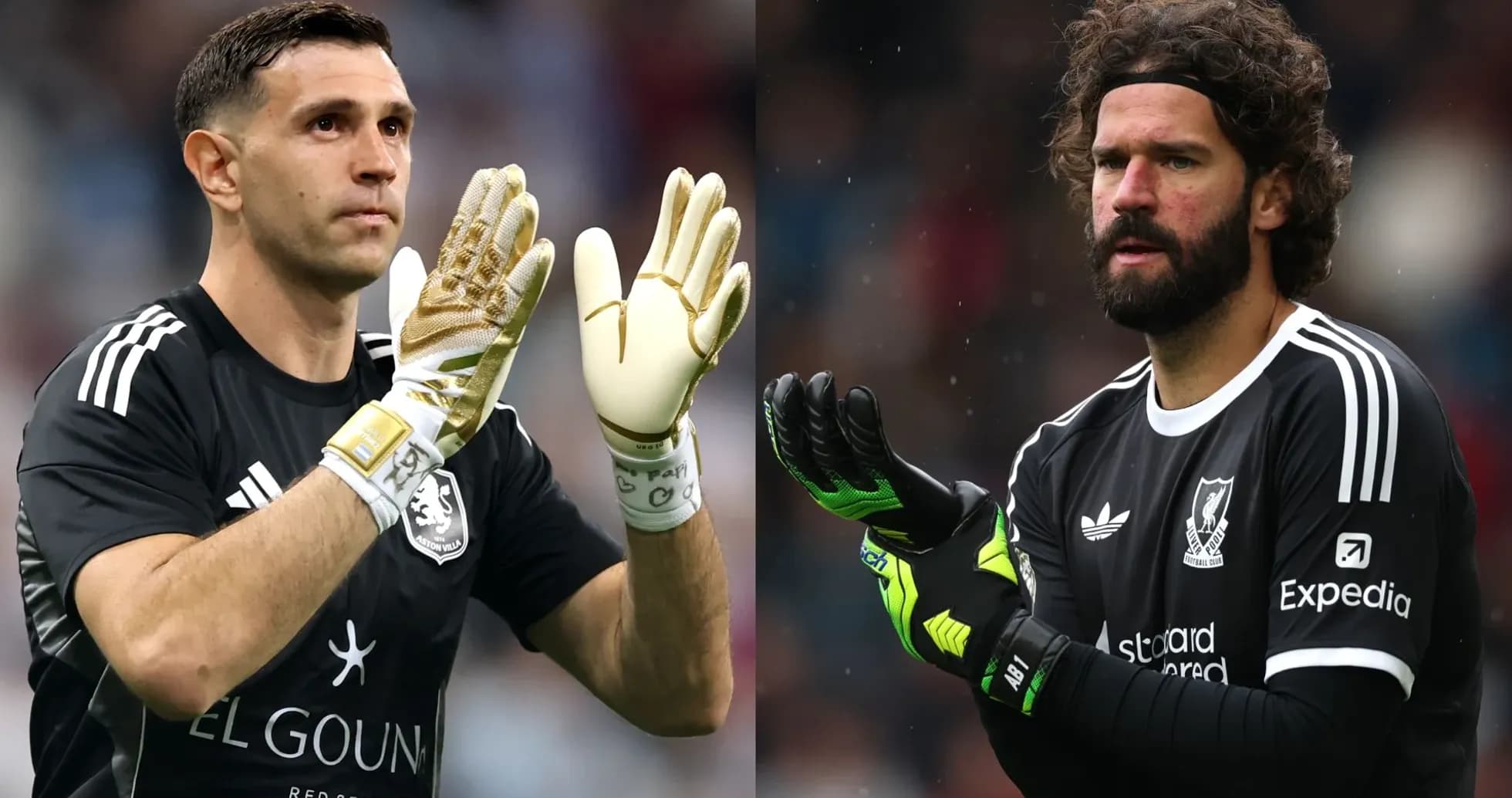
So Friedel floated another type of profile: “Maybe the likes of an Emi Martínez, someone like that, that can take all the games all the time, any criticism, any plaudits, and they know how to deal with it.”
Martínez, a World Cup winner and a dominant personality, fits that hardened, battle-tested mould. A keeper who does not just survive pressure, but seems to relish it. That is the kind of character Friedel believes Liverpool would need if they are to even attempt to bridge the gap Alisson would leave.
“There aren’t many out there that you can just pinpoint and say: ‘He’s our guy’,” he admitted. “That’s a hard decision.”
Hard, and unavoidable.
As the window nears and the contract ticks down, Liverpool must decide what they value most: one more year of near-absolute security with Alisson, or a painful, high-risk attempt to start the next era in goal on their own terms.