.svg&w=384&q=75 "GoalGist logo")
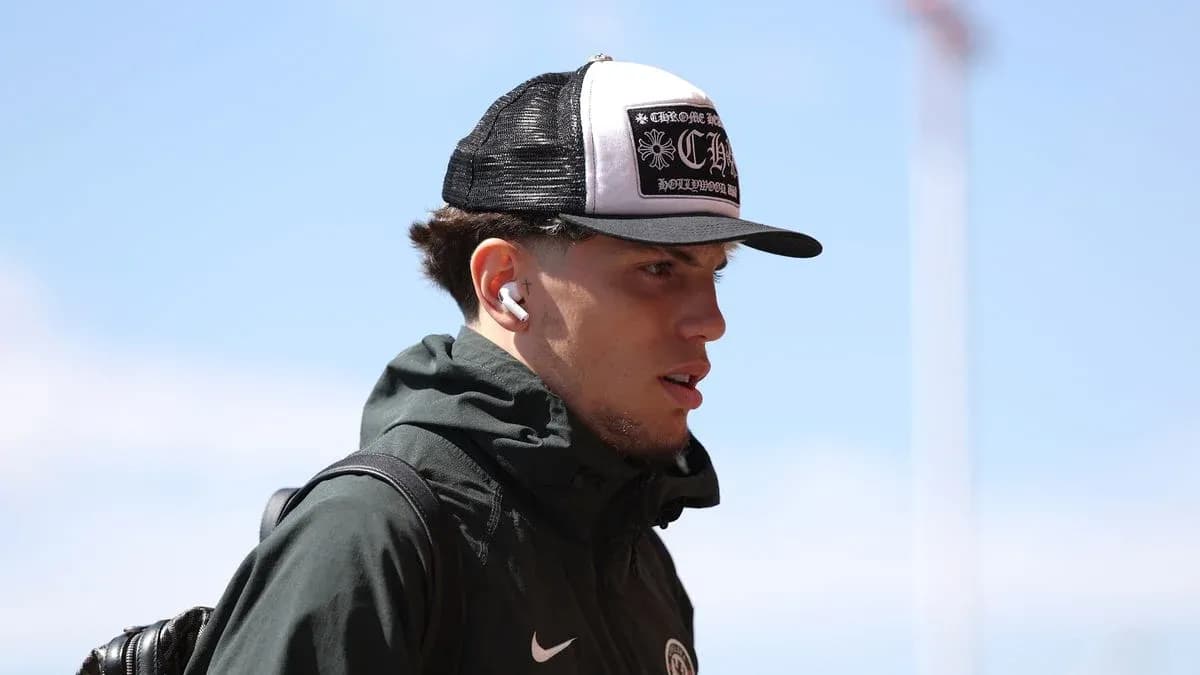
Alejandro Garnacho's World Cup Omission: A Painful Setback
Alejandro Garnacho’s World Cup dream has been ripped away before it even had the chance to build momentum.
Eighteen months after his last appearance for Argentina, the 21-year-old has been cut from the world champions’ preliminary squad, a brutal marker of how far his international stock has fallen since leaving Manchester United for Chelsea in a £40million deal last summer.
From rising hope to painful omission
Not long ago, Garnacho looked embedded in the Albiceleste’s future. He debuted in the summer of 2023, forced his way into regular squads and went to the following year’s Copa America, where Argentina lifted the trophy. He only played once at that tournament, but the message was clear: he was in the room, part of the project.
Three World Cup qualifying appearances followed, eight senior caps in total, and the sense that a long international career was beginning to take shape.
Then the calls stopped.
Garnacho has featured just twice for Argentina since that Copa America and now finds himself on the outside looking in as Lionel Scaloni trims his options for the defence of the world title. From the preliminary list, he is the most-capped forward to be discarded, a statistic that underlines how sharply his trajectory has stalled.
Franco Mastantuono, the Real Madrid talent who has collected all of his caps since Garnacho’s last call-up, also misses out. Claudio Echeverri, fresh from a season on loan at Girona from Manchester City and tipped for a senior breakthrough, will have to wait as well. Emiliano Buendia, Gianluca Prestianni, Mateo Pellegrino, Matias Soule, Santiago Castro and Tomas Aranda are the other forwards cut at this stage.
The message from Scaloni is ruthless: reputation and early hype do not guarantee a ticket.
Chelsea move, mixed return
Garnacho gambled on Chelsea to push his career forward. Manchester United cashed in for £40m, and the winger framed the move as a necessary jolt.
“Sometimes in life you have to change things to take a step forward or improve as a player,” he said in December. “I think it was the right moment and the right club, so it was an easy decision. I came here to play my football and show people the player I am. The most important thing is confidence.”
The numbers from his first season in London are respectable on the surface. Forty-three appearances across all competitions. Eight goals. Four assists. But the detail tells a more complicated story.
Only 22 of those outings came from the start. He spent long stretches as an impact option rather than a guaranteed starter, and his most productive moments arrived away from the Premier League spotlight. Four of his eight goals came in domestic cup ties, against Cardiff City, Port Vale and Wrexham – useful, but not the kind of stage that forces a national coach to reorganise his plans.
For a player trying to convince Argentina he belongs in a squad built around Lionel Messi, Lautaro Martinez and a cluster of proven winners, that lack of sustained top-level influence matters.
Argentina move on without him
While Garnacho watches from afar, familiar names and a new wave of talent will carry Argentina into another World Cup campaign.
Lisandro Martinez, his former Manchester United team-mate, is in. So are Premier League regulars Alexis Mac Allister, Cristian Romero, Emiliano Martinez and Enzo Fernandez, the spine of a side that knows how to navigate tournament pressure.
Up front, competition is unforgiving. Lionel Messi heads to his sixth World Cup, still the reference point for everything Argentina do in the final third. Lautaro Martinez remains the central striker at Inter and for his country. Palmeiras forward Jose Manuel Lopez joins the attacking mix, while Nicolas Paz, once of Real Madrid’s academy and now at Como, is another to benefit from Garnacho’s slide down the pecking order.
Half of the forwards who did make the cut spent last season at Atletico Madrid, the club where Garnacho once came through as a youth player before joining Manchester United. Giuliano Simeone, Nicolas Gonzalez, Julian Alvarez and Thiago Almada all travel, underlining how fierce and varied the competition for attacking roles has become.
Argentina are not short of options. That is Garnacho’s problem.
A crossroads at 21
This omission does not close the door on his international career, but it does change the conversation around him. Instead of being viewed as an inevitable long-term fixture for Argentina, he now has to fight his way back into relevance.
To do that, he needs more than flashes in cup competitions. He needs to become unavoidable at club level – a winger who starts every week, shapes big games and forces Chelsea’s managers to build around him rather than rotate him.
The talent is still there. The stage, for now, is not. While Messi marches towards another World Cup and Argentina refine a squad designed to win again, Garnacho faces a different kind of summer: one of reflection, recalibration and the uncomfortable question that now hangs over his move to Stamford Bridge.
Was this supposed step forward actually the pause button on his international rise – or the jolt that finally pushes him to prove Argentina wrong?