.svg&w=384&q=75 "GoalGist logo")
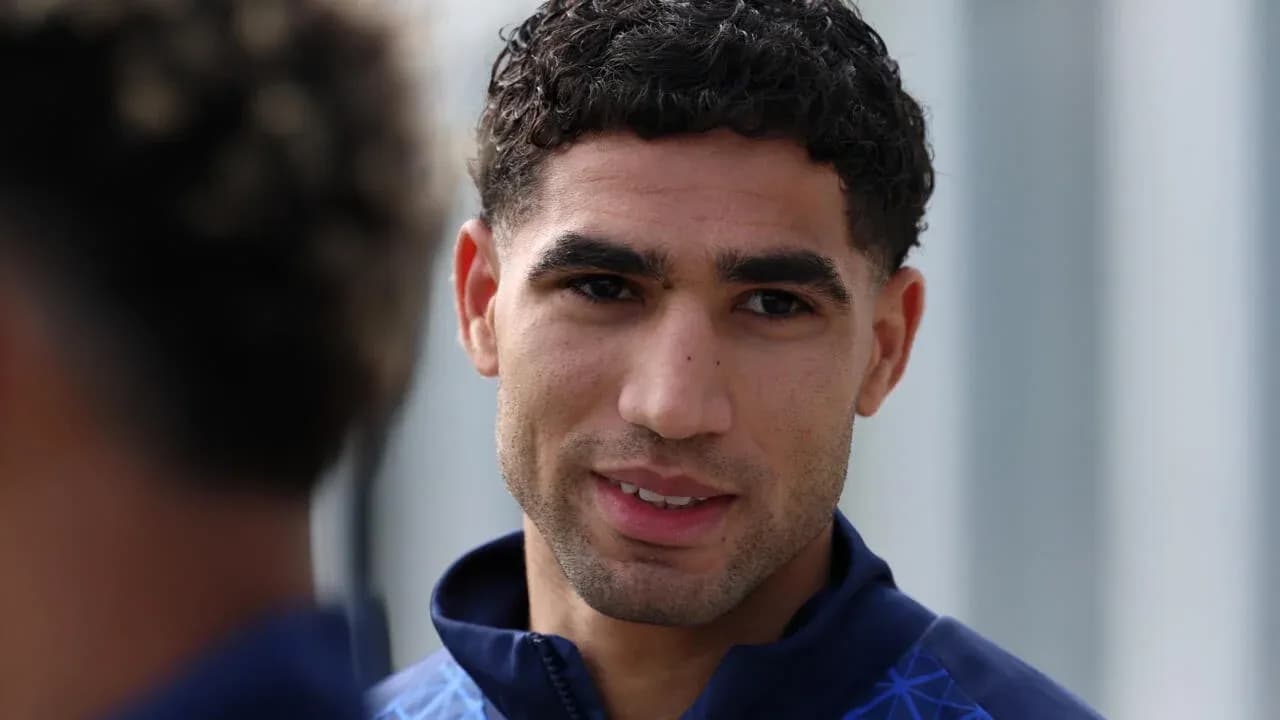
Achraf Hakimi's Court Battle Over Rape Charge
Achraf Hakimi faces a crucial day in court on Wednesday, as the Versailles appeals court, west of Paris, reviews whether the Paris Saint-Germain defender will stand trial on a rape charge.
The 27-year-old Morocco international has been formally charged over the alleged rape of a woman who was 24 at the time of her complaint in February 2023. If the appeals court rejects his bid to have the charge reduced to a lesser offence, Hakimi will face a full criminal trial on a date yet to be set.
The case has hovered over one of the most high-profile full-backs in world football for more than a year.
The allegation and the legal battle
According to police in Val-de-Marne, southeast of Paris, the woman told officers in February 2023 that Hakimi raped her after she went to his home. She said she had met the player in January 2023 via Instagram and later travelled to his residence in a taxi ordered by Hakimi.
Once there, she claims, the PSG defender kissed her, touched her without her consent and then raped her. She told investigators she managed to push him away and send a text message to a friend, who came to collect her.
Hakimi denies any wrongdoing.
He was placed under judicial supervision and formally charged, and in February this year the investigating judges decided the case should go to trial. That decision is now under the scrutiny of the Versailles appeals court, which will determine whether the charge stands as rape or is downgraded.
Contacted by AFP, Hakimi’s lawyer, Fanny Colin, declined to comment ahead of the hearing. During an earlier referral hearing, Colin argued that “the accusation rests solely on the word of a woman who obstructed all investigations, refused all medical examinations and DNA tests (and) refused to give the name of key witnesses”.
The plaintiff maintains her account of the night and her version of events remains at the centre of a case that has become as much a legal and personal crossroads as a sporting subplot.
A star under scrutiny
Hakimi’s status on the pitch makes the case all the more high-profile. A product of Real Madrid and a standout at Borussia Dortmund and Inter Milan before his move to PSG in 2021, he has built a reputation as one of the game’s most dynamic right-backs.
On the international stage, he played a pivotal role in Morocco’s historic run to the 2022 World Cup semi-finals, as the Atlas Lions became the first African and Arab nation to reach the last four of the tournament.
His football calendar underlines the scale of his profile. He is expected to be in the PSG side when the defending champions face Arsenal in the Champions League final on May 30 in Budapest. For Morocco, he is certain to be part of the squad that opens its World Cup campaign against Brazil on June 13 in New Jersey, in Group C alongside Scotland and Haiti.
The contrast is stark: a player preparing for the sport’s grandest stages while simultaneously navigating one of the most serious accusations any athlete can face.
What happens in Versailles will not decide his footballing fate. It will decide whether his next major date is not under the floodlights of Budapest or New Jersey, but under the unforgiving glare of a criminal court.

