.svg&w=384&q=75 "GoalGist logo")
West Ham Begins Championship Journey Amidst Boardroom Turmoil
Ten summers at the London Stadium. A decade since West Ham walked away from the Boleyn Ground and into a future that was supposed to be bolder, richer, grander. On Saturday, they begin life back in the Championship with a Carabao Cup first-round tie against Portsmouth that feels less like a curtain-raiser and more like a reckoning.
Relegation has stripped away the gloss. The club that lifted the Europa Conference League in May 2023 now faces a season of second-tier slog, their reduced circumstances laid bare by an early-round cup date with a League One side bringing 9,000 travelling fans. The Hammers are bookmakers’ favourites to bounce straight back, as they did under Sam Allardyce in 2011-12, but the mood around east London is anything but assured.
This was meant to be the reset summer. Instead, it has unravelled into something darker.
A club at war with itself
The turbulence has not come on the pitch but in the boardroom. Power, influence and ownership are being contested just as the club most needs clarity.
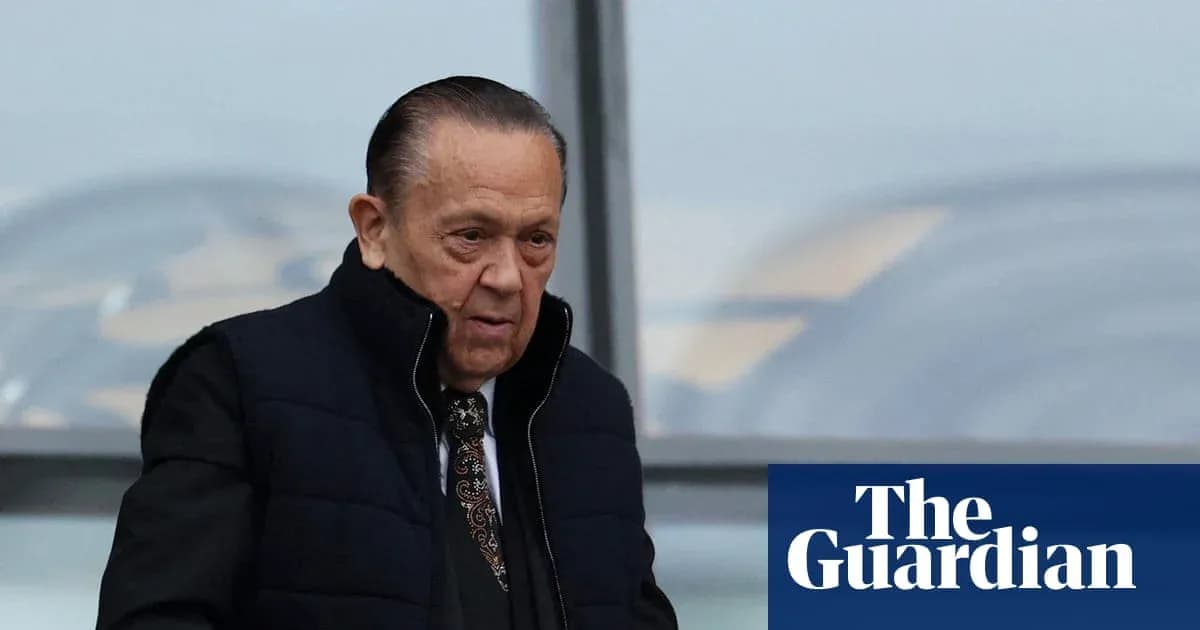
At the centre of it all stands David Sullivan, or at least the question of whether he will stand in his usual place on Saturday. The operators of the London Stadium have recommended that the former joint-chair, still a 38.8% shareholder, stay away because of the “potential for demonstrations and anti-social behaviour by some spectators”. A fans advisory board has warned that his presence would cause “offence and upset”.
Sullivan, it is expected, will turn up anyway.
He wants, so the suggestion goes, to experience this season as a supporter, to wait and watch before contemplating the sale of his stake. The timing, and the optics, are combustible. On 25 May, as relegation was confirmed despite a home win over Leeds, he had to leave early for his own safety. That was before the BBC Panorama documentary in early June accused him of sexually exploitative and predatory behaviour towards women over several decades. Sullivan denies the allegations, but stepped down from his role on the eve of the broadcast, saying he wanted to avoid disruption to the club while he dealt with the matter privately.
Even before that, he was a lightning rod. Supporters blamed him for a decline that has felt vertiginous since the high of Prague. The £100m fee banked for Declan Rice in the summer of 2023 dissolved into the ether, the recruitment scattergun and expensive. The glow of that European trophy dimmed quickly.
Jarrod Bowen, captain and hero of that night in Prague, has committed to stay and lead the fightback. His loyalty offers a thread of continuity in a club that feels as if it is being unstitched from the top down.
Old alliances broken, new players circling
For years, Sullivan effectively acted as West Ham’s director of football, to the irritation of more than one manager and executive. His closest ally in that approach, Karren Brady, walked away in April as the storm closed in, ending a working relationship stretching back to 1990. The old order has fractured, but no new regime has yet taken its place.
The supporters have spoken with their wallets as well as their voices. Around 50,000 season tickets have been sold, a remarkable show of commitment for a club that has just fallen out of the Premier League. Yet the loudest, most consistent demand remains simple: Sullivan must go.
His announcement that he was stepping back from his role had briefly lifted the mood, hinting at a fresh start. Instead, the ownership picture has only grown murkier.
Daniel Kretinsky, the Czech billionaire and Royal Mail owner who bought 27% of West Ham in 2021, had long been seen as the natural successor. Many expected him to move for control once Sullivan retreated. Instead, this week he trimmed his shareholding to just under 25%, transferring 2% to fellow Czech entrepreneur Jakub Havrlant. It looks like a technical manoeuvre with a clear purpose: avoid tripping the 50.1% threshold that would trigger a mandatory takeover offer if he also acquired the late David Gold’s 25% stake.
That Gold stake, now held by his daughter and co-chair Vanessa Gold, is the key to everything. Whoever secures it shapes the club’s future. As Kretinsky edged his pieces around the board, a familiar name stepped into the room.
Amanda Staveley, who helped broker the Saudi Arabian Public Investment Fund’s takeover of Newcastle and left St James’ Park in July 2024, has re-emerged with her eyes on West Ham. She had been linked with a move for Tottenham last September. Now, it is suggested she will lean on similar funding channels to assemble a bid in east London.
Among Newcastle fans, her departure was lamented; they credit her drive and contacts with accelerating their rise. Some West Ham supporters see in her a potential catalyst, someone who might jolt the club out of its drift. But Kretinsky’s first-refusal option on the Gold shares, and his recent share shuffle, means he remains in pole position to block or complicate any Staveley move.
Sullivan’s 38.8% remains the decisive bloc. He is no longer running the club day to day, yet still controls its destiny. Staveley’s next step is awaited with the kind of nervous fascination that only a club in flux can generate.
Squad surgery under financial strain
While the boardroom plays its own version of chess, Nuno Espírito Santo is left to prepare a Championship squad under tight constraints.
The first incoming of the summer was a free transfer: Joël Veltman, the experienced former Brighton and Ajax defender. A solid addition, but hardly the statement of a club trying to bully its way back to the top flight.
The real money has flowed in the other direction. Mateus Fernandes has gone to Tottenham, Crysencio Summerville to Al-Hilal, the pair fetching around £140m combined – roughly the value of a year’s Premier League TV revenue. For a relegated club, that income is oxygen. For fans, it is another reminder of what has been lost.
Freddie Potts, a youth product and symbol of the academy’s enduring promise, has been sold to Club Brugge for £10m, a deal that stung a portion of the fanbase. Needs must, runs the logic, if Nuno is to reshape a squad that must now handle Tuesday nights in Rotherham instead of Thursday nights in Rome.
There is interest in Troy Parrott, Ireland’s World Cup playoff hero now at AZ Alkmaar, as West Ham look to sharpen their attack. But attracting players of real pedigree to a Championship project is a different conversation to one backed by the lure of European football. The badge still carries weight; the division does not.
Nuno, who many expected to depart after relegation, has stayed put. His manner on the touchline – calm, controlled, almost detached – may prove vital. Panic is never far from the surface at West Ham. The vacuum left by Sullivan’s retreat, the lack of marquee arrivals, the sense of a club in limbo: all of it feeds anxiety.
The fixture list offers little comfort. By 1 September, West Ham will have faced Burnley, Charlton, Watford and Wolves in the league, a run that could either steady the ship or deepen the unease before the autumn has even arrived.
Behind the scenes, Karim Virani has returned as interim chief executive. A former club employee who left in 2020 and later worked at Rangers, he has been brought back to help stitch together something resembling unity. It is a delicate job at a club where almost every decision now carries political weight.
A home that never quite felt like home
While West Ham wrestle with their identity, their stadium has been busy being something else.
This summer, the London Stadium has echoed to Take That, roared to Metallica and watched Josh Kerr break the world mile record at a Diamond League meet in July. On Thursday, a bid went in to stage the 2029 World Athletics Championships there, a move that followed an impasse between the club and the venue’s owners.
Ten years on from leaving Upton Park, the ground still feels shared, borrowed, compromised. A home in name, not in soul. The terms Sullivan, Gold Sr and Brady agreed for the move continue to rankle with large sections of the fanbase, who see the running track and the bowl of seats as symbols of a deal that prized business over belonging.
On Saturday, that resentment will mix with something else: a raw, lingering anger towards the man who helped sign those papers and who, against the advice of the stadium’s operators and the pleas of supporters, is expected to walk back into the directors’ box.
West Ham begin their Championship journey with a cup tie that should be routine. It will be anything but. The football is only one part of the story now. The bigger question hangs over the stands and the boardroom.
Who, in the end, will really own this club’s future?

