.svg&w=384&q=75 "GoalGist logo")
Villarreal vs Sevilla: La Liga Clash with Champions League Implications
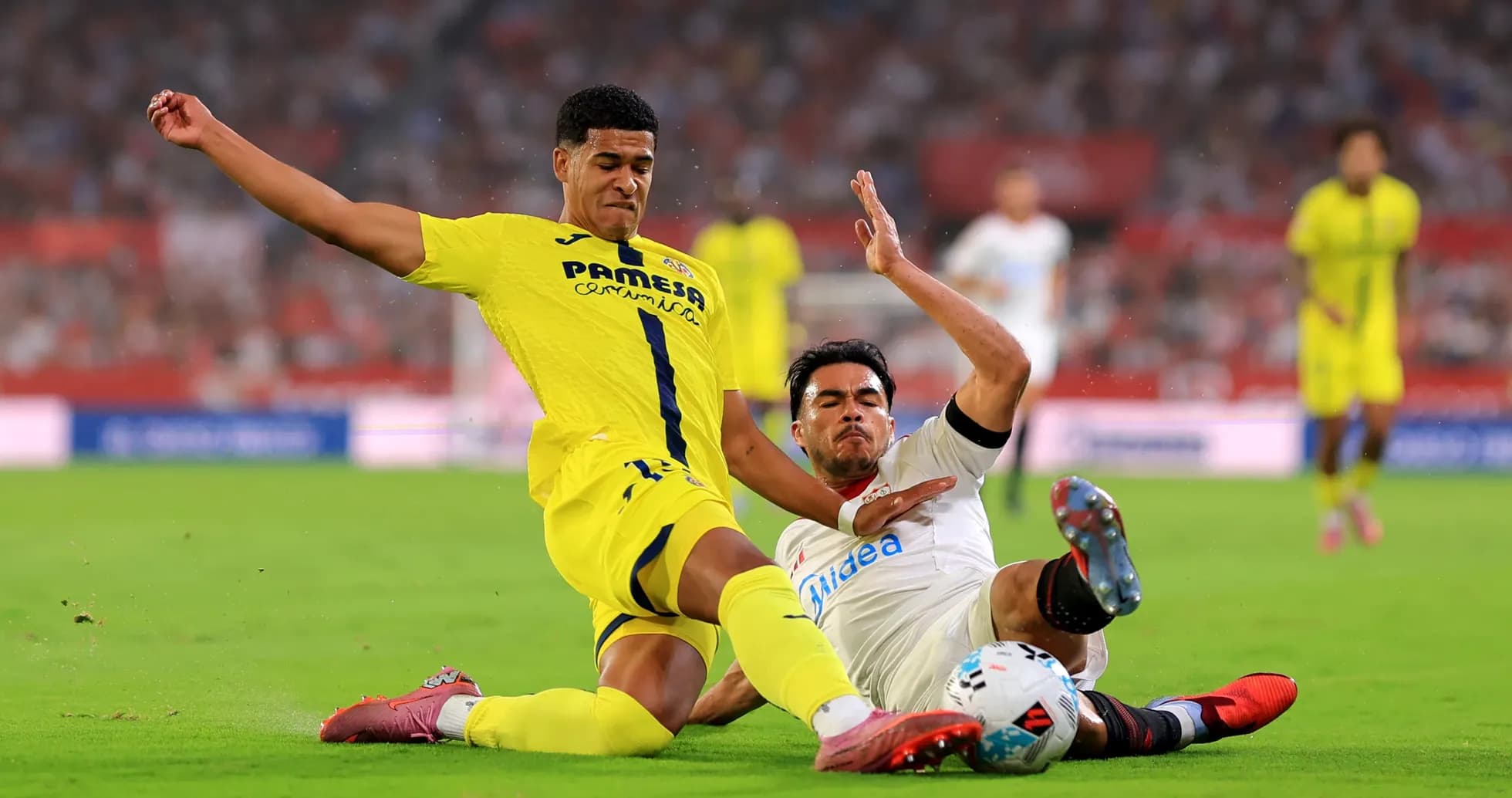
Estadio de la Ceramica stages a meeting of very different seasons on 13 May 2026, as third‑placed Villarreal host 13th‑placed Sevilla in La Liga’s Round 36. For the home side, it is about locking in a Champions League league‑phase place and perhaps pushing higher; for Sevilla, it is about closing out a turbulent campaign with a statement result away to one of Spain’s form teams.
Context and stakes
In the league, Villarreal sit 3rd on 69 points after 35 matches, with a goal difference of +25 (65 scored, 40 conceded). Their status line explicitly flags “Promotion - Champions League (League phase)”, underlining how much is at stake in the run‑in.
Sevilla arrive in 13th with 40 points from 35 games and a goal difference of -13 (43 scored, 56 conceded). They are clear of the relegation fight but far from the European picture, which makes this trip to Villarreal more about pride, momentum and individual futures than table position.
Villarreal’s recent league form reads DWWDW, a sequence that has kept them firmly in the top‑four race. Sevilla’s WWLLW is more erratic but at least shows an ability to respond after setbacks.
Villarreal: a home machine with clear attacking identity
Across all phases this season, Villarreal have built their campaign on a formidable home record. In the league they have 14 wins, 1 draw and just 2 defeats from 17 home matches, scoring 41 and conceding only 15. That averages 2.4 goals for and 0.9 against per home game – elite numbers for a side aiming for Champions League football.
Across all phases, their broader stats reinforce the picture:
- Fixtures: 34 played, 21 wins, 5 draws, 8 losses.
- Goals for: 64 total (41 home, 23 away), 1.9 per game overall.
- Goals against: 39 total (15 home, 24 away), 1.1 per game overall.
- Clean sheets: 8, with 5 at home.
- Failed to score: only 5 times all season, 2 of them at home.
Tactically, Villarreal are remarkably stable: they have lined up in a 4‑4‑2 in 33 matches and only once in a 4‑3‑3. That continuity underpins both their defensive structure and their attacking patterns. The 4‑4‑2 allows them to field two central forwards while using wide midfielders who can drift inside and link play.
The “biggest wins” data – 5-0 at home and 1-3 away – plus a maximum home “goals for” of 5 suggests they can run away with games when they score first. At the same time, their heaviest home defeat is only 0-2, indicating that they are rarely blown away in front of their own fans.
Discipline is a sub‑plot: Villarreal’s yellow cards skew late in games, with 25% of bookings between minutes 76‑90 and another 22.37% between 61‑75. That hints at a team that often defends leads aggressively in the final half hour.
From the spot, Villarreal have been flawless at team level this season, scoring all 5 penalties they have taken, with no misses recorded in the team penalty stats.
Sevilla: tactical flexibility, defensive frailty
Sevilla’s season has been defined by inconsistency and defensive vulnerability, especially away from home.
In the league:
- Overall: 11 wins, 7 draws, 17 losses from 35.
- Goals for: 43 (1.2 per game).
- Goals against: 56 (1.6 per game).
Their away record is particularly worrying: 4 wins, 3 draws and 10 defeats from 17 matches, with 19 scored and 32 conceded. That is 1.1 goals for and 1.9 against per away game, a sharp contrast to Villarreal’s home dominance.
Across all phases, the pattern is similar:
- Fixtures: 35 played, 11 wins, 7 draws, 17 losses.
- Clean sheets: 6 (3 at home, 3 away).
- Failed to score: 8 (4 home, 4 away).
Sevilla’s tactical profile is the opposite of Villarreal’s stability. They have used nine different formations:
- 4‑2‑3‑1 (11 times)
- 3‑4‑2‑1 (6)
- 5‑3‑2 (5)
- 4‑4‑2 (4)
- 3‑4‑3 (2)
- 5‑4‑1 (2)
- 3‑5‑2 (2)
- 4‑1‑4‑1 (1)
- 3‑4‑1‑2 (1)
This flexibility can be a strength, allowing them to tailor plans to opponents, but it also hints at a coach still searching for a settled structure. Away to a strong 4‑4‑2, they may lean towards a back five (5‑3‑2 or 5‑4‑1) to protect the central spaces and deal with Villarreal’s two strikers, or opt for 4‑2‑3‑1 to crowd midfield and press high.
Their “biggest loses” – 0-3 at home and 5-2 away – and a maximum “goals against” of 5 away underline how quickly things can unravel when the structure fails. Yellow and red card distributions show a tendency to pick up cards late, especially between 76‑90 and 91‑105, which could matter if they are chasing the game at Estadio de la Ceramica.
Like Villarreal, Sevilla have a 5‑from‑5 record from the penalty spot at team level this season.
Key players and attacking threats
Villarreal’s attacking edge is sharpened by the presence of two high‑impact contributors in La Liga 2025.
Georges Mikautadze has 11 league goals and 5 assists from 30 appearances (21 starts, 1958 minutes). He averages 50 shots with 28 on target, and his rating of 6.91 reflects consistent output. His duel numbers (197 total, 92 won) and dribbling (64 attempts, 31 successful) point to a forward who can both finish and carry the ball through pressure.
Alongside him, Alberto Moleiro offers a different profile from midfield: 10 goals and 4 assists in 34 appearances, with a slightly higher average rating (6.93). He has 38 shots (19 on target) and 35 key passes, plus 700 total passes at 78% accuracy. Moleiro’s 60 dribble attempts with 31 successes show how often he can break lines from deeper areas, making him a key figure between opposition midfield and defence.
Neither Mikautadze nor Moleiro has scored a penalty this season, but Moleiro has won one, underlining his threat when driving into the box.
Sevilla’s individual scoring data is not provided in this dataset, which makes it harder to single out specific threats, but their total of 43 league goals suggests they do have weapons, especially in transitional moments and set‑pieces. Their best away wins (up to 0-2) show they can produce clean, efficient performances when the game script suits them.
Team news and absences
Both sides have selection issues to manage.
For Villarreal:
- J. Foyth is ruled out with an Achilles tendon injury (“Missing Fixture”).
- A. Perez is listed as “Questionable” with an unspecified injury.
Foyth’s absence removes a versatile defensive option who can operate at right‑back or as a tucked‑in centre‑back in a back four, potentially impacting Villarreal’s ability to adjust in‑game against Sevilla’s changing shapes.
For Sevilla:
- Marcao is “Missing Fixture” with a wrist injury.
- M. Bueno and I. Romero are both “Questionable” with knee and unspecified injuries respectively.
Marcao’s absence weakens Sevilla’s central defensive pool, which is particularly significant given Villarreal’s dual‑striker system and strong home scoring record.
Head‑to‑head: Villarreal’s recent edge
The last five competitive La Liga meetings (no friendlies included) show a clear tilt towards Villarreal:
- 23 September 2025, Estadio Ramon Sanchez Pizjuan: Sevilla 1-2 Villarreal – Villarreal win.
- 25 May 2025, Estadio de la Ceramica: Villarreal 4-2 Sevilla – Villarreal win.
- 23 August 2024, Estadio Ramon Sanchez Pizjuan: Sevilla 1-2 Villarreal – Villarreal win.
- 11 May 2024, Estadio de la Ceramica: Villarreal 3-2 Sevilla – Villarreal win.
- 3 December 2023, Estadio Ramon Sanchez Pizjuan: Sevilla 1-1 Villarreal – draw.
Across these five, Villarreal have 4 wins, Sevilla have 0, and there has been 1 draw. The three matches at Estadio de la Ceramica in this sample all ended in home victories (4-2, 3-2, plus the broader pattern of home strength).
Tactical outlook
Villarreal’s likely 4‑4‑2 will aim to stretch Sevilla horizontally, with wide midfielders pulling Sevilla’s wing‑backs or full‑backs deep and creating pockets for Moleiro between the lines. Mikautadze’s movement across the front line, combined with a second striker, should test Sevilla’s central defence, especially without Marcao.
Sevilla’s main decision is structural. A back three/five (3‑4‑2‑1 or 5‑3‑2) could give them extra central protection and allow wing‑backs to engage Villarreal’s wide men higher up. However, their away defensive record suggests that even with numbers behind the ball, individual errors and spacing issues can be costly.
Given Villarreal’s late‑game booking profile and Sevilla’s own tendency to accumulate cards in the closing stages, game management in the final 30 minutes could be crucial, particularly if the match is tight and substitutions change the tempo.
The verdict
All available data points towards Villarreal as clear favourites. They are third in the league with a dominant home record (14 wins from 17), a strong goal difference and consistent attacking outputs from Mikautadze and Moleiro. Sevilla, by contrast, are mid‑table, concede heavily away from home and have not beaten Villarreal in their last five competitive meetings.
Sevilla’s tactical flexibility and recent WWLLW form mean they cannot be discounted, especially if they score first or exploit transitions. But Villarreal’s combination of structure, home strength and attacking quality, plus Sevilla’s defensive absences, makes a home win the most logical outcome.
Expect Villarreal to control territory and chances, with Sevilla relying on counter‑attacks and set‑pieces to stay in the contest. A high‑scoring game is plausible given both sides’ seasonal goal profiles, but the underlying numbers and recent head‑to‑head history tilt this fixture firmly towards Villarreal at Estadio de la Ceramica.