.svg&w=384&q=75 "GoalGist logo")
USWNT Faces Hostile Atmosphere in Brazil
The United States women’s national team are used to being the destination, not the visitors. Nations fly into Los Angeles, Austin, Cincinnati, and the USWNT set the terms: familiar pitches, friendly crowds, controlled chaos.
Not this time.
In June, with a year to go before a potential return for the 2027 Women’s World Cup, Emma Hayes has taken her team into the heart of South America, into Brazil, into noise and hostility and everything that comes with it. The first of two friendlies ended in defeat on Saturday, but the real story was the lesson.
Baptism in Brazil
From the opening whistle, the U.S. walked into a wall of sound. Whistles, jeers, roars – 90 minutes of it, with no pause button, no soft landing.
“It was an amazing atmosphere and it’s one that, as much as I can prepare my team for this, you don’t really know until you experience it,” Hayes said afterward. For many of her players, this was the first time they had felt a crowd lean over the game with that kind of intensity.
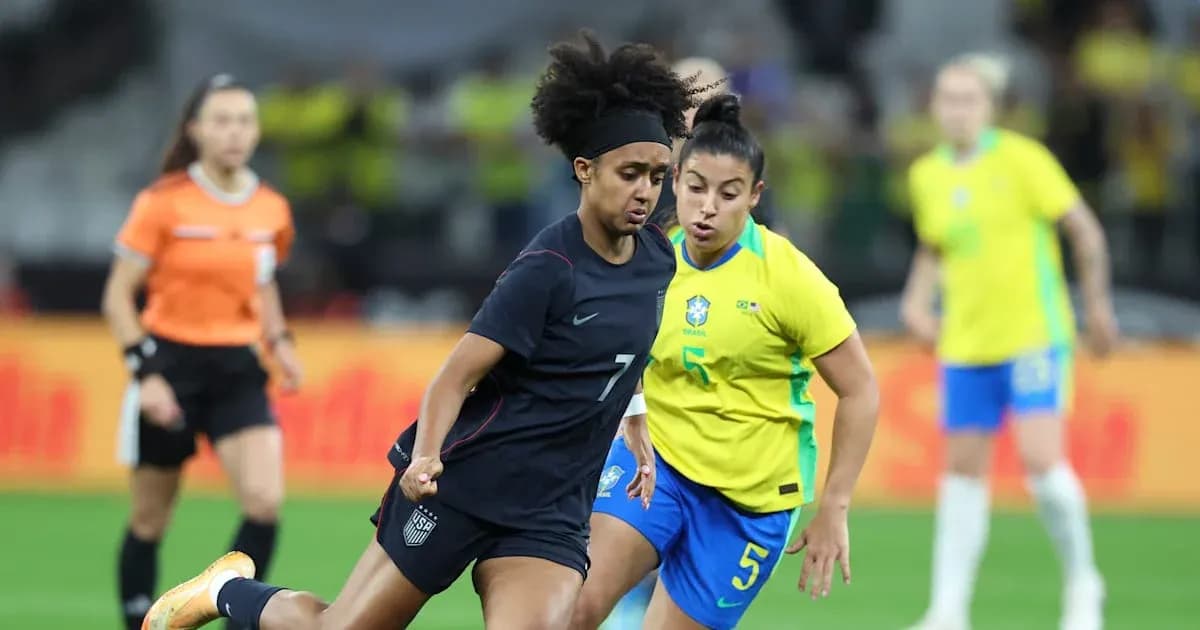
On the pitch, Brazil did what Brazil do at home: they embraced the chaos. Physical duels, scrappy second balls, quick transitions, that brand of “chaos ball” that drags opponents into a fight as much as a football match. The U.S., still in the early stages of a rebuild under Hayes, found themselves in a setting that felt a world away from a routine friendly on American soil.
Hayes wanted exactly that.
“I am so happy for the experience, because if we want things to be easy, we stay at home and play in LA or somewhere else,” she said. “We don’t want easy.”
With World Cup qualifiers looming in November and the very real possibility of returning to South America next year, this was not a sightseeing tour. It was a stress test.
Fast start, harsh response
On the scoreboard, the night teased promise, then punished naivety.
Sophia Wilson struck early, her first goal since returning to the national team, and for a brief spell the U.S. had the perfect away script: early punch, silence the crowd, settle into control. Instead, Brazil hit back with a quick-fire double, turning 0-1 into 2-1 inside the opening 15 minutes.
The momentum flipped. The stadium grew louder. The U.S. attack, after that, rarely carved out truly clear chances. Brazil defended with grit, closing gaps, contesting everything. Hayes’s side probed, but the final pass, the clean look at goal, rarely arrived.
There was no attempt afterward to blame the opponent or the officials. Inside the U.S. camp, the message was clear: the mirror matters more than the scoreboard in June.
Learning to live in the chaos
“It’s difficult when it’s a game like that, when you’re being thrown to the ground multiple times and calls aren’t going your way,” captain Lindsey Heaps admitted. “But it’s up to us – it’s that mental capacity to stay in a game like that.”
That word – capacity – is central to what Hayes is building. Not just technical quality, not just tactical structure, but the ability to stay present when the game turns wild.
“I’m really proud of our team because we stayed level-headed and we still created opportunities,” Heaps said. “But it’s about having that experience to get that goal back and walk away with a result from this kind of game.
“It’s hard but I think that emotional control has gotten so much better throughout this past year.”
Wilson echoed her captain. The forward’s goal was a personal milestone, but she framed it inside the bigger picture: how the team handled the second half, how they managed to keep their composure with the crowd pressing in on every touch.
“We needed to do a better job of controlling the game and keeping that lead, but it was a really good test for us, and we felt what it is like to play here in their home country,” she said. “I think we can take what we need to from this game and the nice part is we get to go again in a few days.”
That “again” is where the real value lies. This wasn’t a one-off shock to the system. It’s a two-game lab.
Fortaleza awaits
On Tuesday, the U.S. and Brazil meet for the 45th time, this time in Fortaleza. History leans heavily toward the Americans, but the present carries a sharper edge: the USWNT are trying to avoid a third straight defeat to Brazil.
The setting will change, the atmosphere will not. Another hostile crowd, another night of whistles and tackles and tests of temperament.
This is what Hayes signed up for when she took the job, and what she is now demanding of her players: to be comfortable being uncomfortable, to treat nights like this not as anomalies but as preparation.
They have felt the noise. They have felt the chaos. On Tuesday, in Fortaleza, we find out how quickly they can turn those lessons into a response.

