.svg&w=384&q=75 "GoalGist logo")
Trabzonspor vs Ferencvarosi TC: Tactical Analysis of the 0-1 Defeat
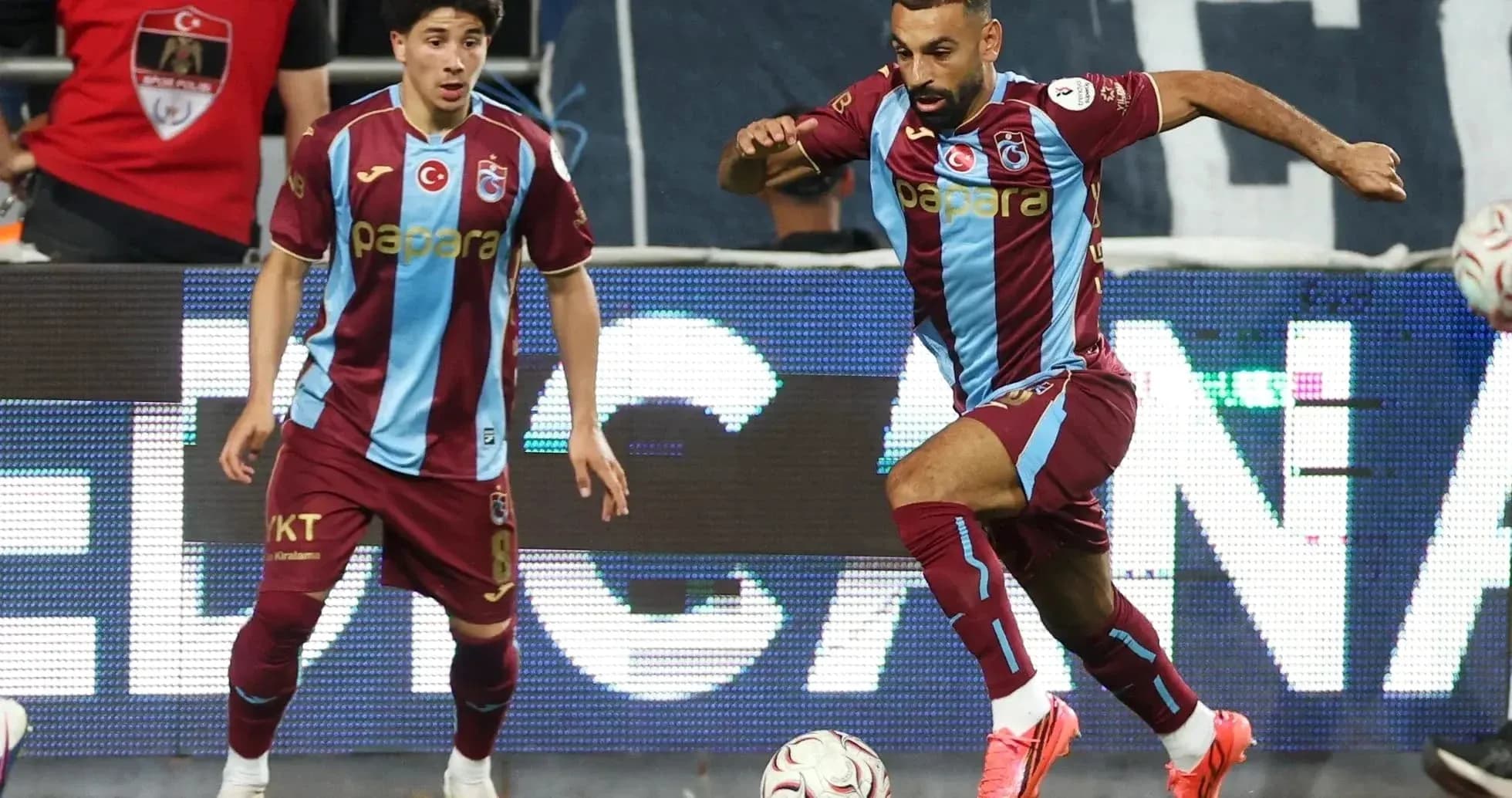
Trabzonspor’s 0-1 home defeat to Ferencvarosi TC at Papara Park was defined less by the scoreboard than by contrasting tactical identities. Fatih Tekke’s side imposed themselves territorially and with the ball, but Balazs Borbely’s visitors controlled the zones that mattered most. With 66% possession, Trabzonspor tried to dictate through a 4-2-3-1, yet Ferencvarosi TC’s compact 4-4-2, foul-heavy defensive approach, and ruthless use of transitions turned the match into the type of game the Hungarians wanted: fragmented, physical, and decided in both boxes.
The decisive moment came early and fit perfectly into Ferencvarosi TC’s plan. On 17 minutes, K. Zachariassen arrived from midfield to score a Normal Goal, assisted by O. Nagy. Structurally, it underlined Trabzonspor’s main problem: their double pivot of B. Bouchouari and M. Kabasakal could not simultaneously protect the back four and support the advanced line of M. Salah, U. Nayir, N. Saviolo, and P. Onuachu. With full-backs S. Lopes Cabral and W. Pina naturally aggressive in a home play-off tie, spaces opened between the lines and in the channels; Ferencvarosi TC repeatedly targeted these via direct balls and early passes into Dele and L. Joseph, using Zachariassen’s third-man runs as the real threat.
In possession, Trabzonspor’s structure was clear: a 2-4-3-1 in build-up, with centre-backs C. Nwaiwu and C. Ozkacar spreading to initiate play, full-backs high, and the pivots offering central outlets. The 66% ball possession reflects their territorial control, while 7 corner kicks and 3 offsides show a team trying to pin Ferencvarosi TC back and attack the last line with vertical runs, especially from Onuachu and Nayir. However, the shot profile exposes inefficiency: 3 shots on goal but 15 shots off goal and 6 blocked shots. Trabzonspor were able to reach shooting positions but not to create clean, high-quality chances; Ferencvarosi TC’s two banks of four defended their box in numbers, closing shooting lanes and forcing rushed or low-percentage attempts from distance or poor angles.
Second Half Substitutions
The second-half substitutions by Tekke were aimed at adding creativity and tempo between the lines. At 46', R. Malinovskyi (IN) came on for B. Bouchouari (OUT), and A. Simsir (IN) replaced U. Nayir (OUT), signalling a shift toward more aggressive, risk-taking possession. Malinovskyi’s profile as a long-range shooter and playmaker was designed to exploit Ferencvarosi TC’s deep block, while Simsir offered more mobility and link play around Onuachu. Later, at 64', E. Muci (IN) replaced N. Saviolo (OUT), another attempt to inject dribbling and vertical thrust into the half-spaces. At 83', M. Eskihellac (IN) came on for W. Pina (OUT), maintaining attacking width and crossing threat from full-back.
Despite these changes, the structural problem remained: Trabzonspor had volume without incision. The lack of recorded xG values in the data hides the precise shot quality, but the combination of 3 shots on goal and 15 off goal strongly suggests poor shot selection under pressure. Ferencvarosi TC’s 4 blocked shots confirm how often they got bodies in front of efforts around the box. The away side accepted long spells without the ball, trusting their compactness and willingness to foul to break rhythm.
Defensive Game Plan
Ferencvarosi TC’s defensive game plan is starkly visible in the numbers: 24 fouls to Trabzonspor’s 3, and 5 yellow cards, all to the visitors. Dele, K. Zachariassen, P. Rommens, A. Osvath, and G. Kanichowsky all went into the book, with reasons such as “Roughing”, “Holding”, and “Unsportsmanlike conduct” underlining a deliberately abrasive approach. Yet the tactical value was clear: every foul served to slow transitions, disrupt combinations, and prevent Trabzonspor from building momentum in dangerous central zones. The cost in cards was accepted as part of the game model.
Ferencvarosi TC’s Attack
In attack, Ferencvarosi TC were highly selective but efficient. With only 34% possession, they still produced 4 shots on goal and 3 shots off goal, a far more balanced distribution than Trabzonspor’s. Their 5 corner kicks show they were not purely reactive; when they advanced, they did so with purpose, often via the wide midfielders M. Corbu and C. O'Dowda and the full-backs stepping up in carefully chosen moments. The 4-4-2 shape allowed them to press situationally, especially when Trabzonspor tried to build short; Dele and L. Joseph could angle their pressure to force play wide, where traps and tactical fouls awaited.
Game management from Borbely was also precise. On 61', A. Nagy (IN) replaced Dele (OUT), and G. Kanichowsky (IN) came on for P. Rommens (OUT), refreshing the midfield legs to sustain the block and counter threat. At 78', A. Osvath (IN) for K. Zachariassen (OUT) and K. Lisztes (IN) for L. Joseph (OUT) signalled a tilt toward even more defensive solidity and ball retention in the closing phase. At 89', N. Zohore (IN) replaced Cadu (OUT), adding fresh defensive presence on the flank to help see out the result.
The late red card for C. Nwaiwu (“Roughing” at 90+6') encapsulated Trabzonspor’s growing frustration. Down to ten men and still chasing an equaliser, their defensive line became increasingly exposed to counters, and the centre-back’s dismissal removed any remaining platform for a structured final push.
Statistical Verdict
Statistically, the verdict is clear: Trabzonspor dominated the ball and territory but lost the tactical battle of control. Their 66% possession, 7 corners, and volume of attempts translated into only 3 shots on goal, reflecting an attack that was predictable and too easily funnelled into low-quality zones. Ferencvarosi TC, by contrast, turned 34% possession into 4 shots on goal and the only goal of the match, showing superior efficiency and clarity in their offensive patterns.
Discipline was a key axis of the contest. Ferencvarosi TC accumulated 5 yellow cards and 24 fouls, using controlled aggression as a tactical tool. Trabzonspor committed just 3 fouls but suffered a crucial red card, which hurt them far more than the visitors’ cautions. Without usable data on goalkeeper saves, passing volume, or xG, the clearest indicators are structural: Ferencvarosi TC’s compact 4-4-2, willingness to foul, and direct use of transitions were perfectly calibrated to a one-goal away win in a play-off context, while Trabzonspor’s possession-heavy 4-2-3-1 lacked the penetration and defensive balance required to turn dominance of the ball into dominance of the tie.