.svg&w=384&q=75 "GoalGist logo")
The Summer Game: Arsenal's Chase for Vinícius Júnior
Glenn Hoddle knew this feeling long before social media turned it into a daily referendum. Back in 2002, when Tottenham thought they were about to land Rivaldo, he stood in front of the microphones and tried to dress heartbreak as ambition. “We were so close … At the end of the day, really, they made him an offer he couldn’t refuse … It shows where we’re trying to aim for the club … There has been a lot of stuff written in the papers that you have to take on the chin I’m afraid – they should be talking about how well the England cricket team are playing at the moment.”
The punchline, then as now, was brutal. Rivaldo went elsewhere. Spurs filled the Brazilian‑shaped void with Robbie Keane, a fine player but not the fantasy. The echo in 2024 is hard to miss. Swap Tottenham for Arsenal, Rivaldo for Vinícius Júnior, and the script feels eerily familiar.
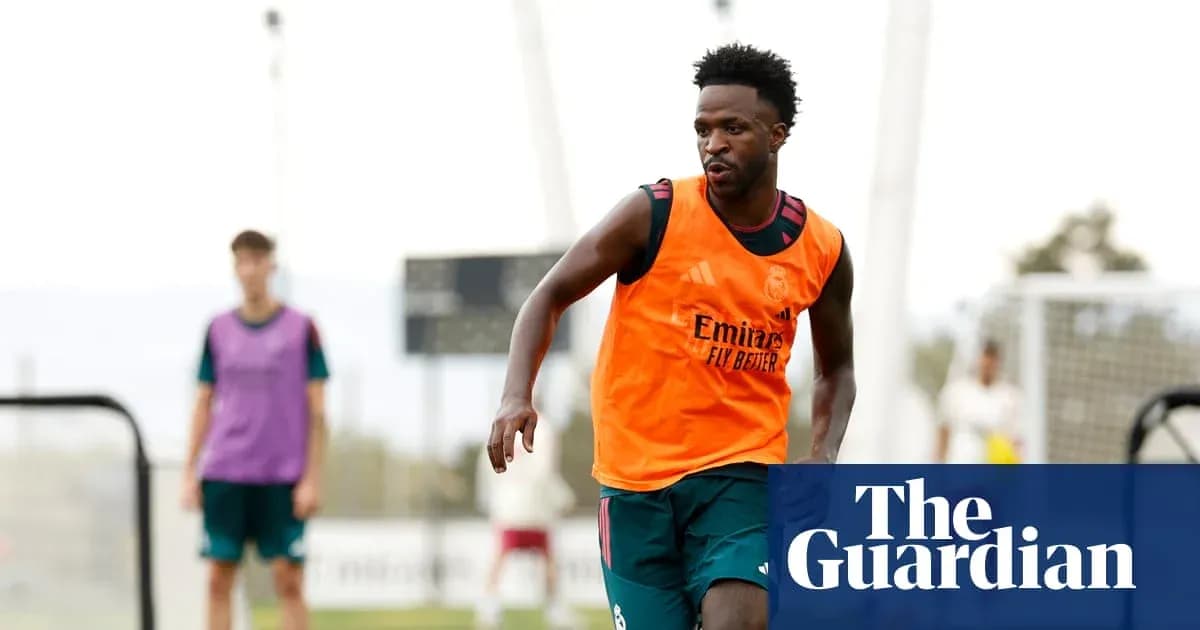
Real Madrid have pushed their chips in on Vinícius, tying down the Brazilian megastar on a huge new deal and slamming shut a door that Arsenal fans had convinced themselves was at least ajar. The Emirates daydream of Vinícius tearing up Our League, shredding full-backs and turning xG models into abstract art, evaporates with one signature in Madrid.
Arsenal’s fantasy, Madrid’s reality
The transfer window is football’s great shared hallucination. No competitive ball is rolling, so imagination takes over. In that make-believe world, there are no cold midweek trips, no hamstring strains on debut, no players who never quite settle. There are only perfect fits, instant heroes and a gazillion goals.
Vinícius became the latest projection screen. Arsenal supporters pictured him dovetailing with Bukayo Saka, dragging defences around, ripping up title races. Instead, Madrid paid up, locked him in and reshaped the rest of Europe’s plans in the process.
With Vinícius secured and Kylian Mbappé already on astronomical wages, there is suddenly “no room at the inn” at the Bernabéu for another galáctico in Rodri. The Spain captain, fresh from lifting the 2024 Ballon d’Or and still Manchester City’s metronome, had been loosely linked with Madrid. That now looks remote. The talk is that he wants Barcelona, a move that would strip City and Our League of its most complete midfielder and hand Xavi’s successors the kind of on‑field organiser they have craved.
One contract in Madrid, and the tectonic plates shift from Manchester to Catalonia.
Arsenal, meanwhile, turn their gaze elsewhere. The consolation prize? A different kind of Brazilian. Bruno Guimarães, the Newcastle United playmaker, is widely expected to land in north London. He is not Vinícius, not the same profile or position, but he does bring something Mikel Arteta craves: control, passing angles, a supply line to Gabriel Martinelli and the rest of that attacking carousel.
They wanted fireworks on the flank. They may end up with a conductor in midfield. Not the dream, but not nothing.
Liverpool’s summer anxiety
The flip side of fantasy is panic. Scroll through Liverpool’s corner of the internet and the tone is less “imagine if” and more “what on earth now?”. The complaint is simple and loud: Virgil van Dijk, now in his mid-30s, stands as the only senior centre-back of proven, elite quality at the club.
The angst has curdled into a kind of summer-long fury. Every rumour not followed through, every name linked and lost, becomes another piece of evidence in the case against the recruitment department. The hope is that Bradley Barcola might arrive and cool tempers, but that is not yet a done deal. Until ink hits paper, it’s just another mirage in the heat.
Yet this is the transfer window’s cruel logic. To have loved and lost – to chase, to fail, to watch a star choose somewhere else – feels, in some warped way, better than drifting through a summer with no movement at all.
Spurs, Romero and the dominoes
Tottenham know that feeling from the other side. Back when they missed out on Rivaldo, they pivoted quickly and brought home Keane, who at least gave them goals, energy and a face the fans could embrace. The lesson: if you can’t sign the fantasy, sign someone who will actually play and perform.
Now they may be the club loosening a piece on the board. Cristian Romero, their snarling World Cup‑winning centre-back, is in talks over a move to Atlético Madrid. Losing him would punch a hole straight through Ange Postecoglou’s defensive rebuild and rob Spurs of their most aggressive presence without the ball. Micky van de Ven is expected to be rewarded with a new deal, but that feels like reinforcement rather than replacement.
Romero’s possible departure, like Vinícius’s renewal, could trigger its own set of knock-on moves. One defender out of north London, another midfielder into it. The market never stands still; it just changes direction.
A restless game
Around all this, football’s backdrop stays as chaotic as ever.
In Norway, federation president Lise Klaveness has gone public with her frustration at Fifa, saying “the trust is now gone for us, there is no way back for Infantino” as a civil war inside the organisation deepens, with Mexico and Argentina throwing their weight behind the incumbent president. In Africa, a guaranteed $1bn deal over eight years has been abandoned by Caf after it chose to shift Afcon from a biennial to a four‑year cycle, a decision that rips up the financial planning for an entire confederation.
Closer to home, Leeds United have just made James Trafford the fourth‑most‑expensive goalkeeper of all time, paying around £40m to prise him from Manchester City. Trafford arrived with the swagger to match the fee. “I know my own abilities,” he said. “I go out and try as hard as I can and have as much fun as I can.” Leeds will hope the confidence translates into clean sheets rather than headlines.
Al-Ahli and England forward Ivan Toney faces a very different spotlight, charged with assault causing actual bodily harm after an incident at a London nightclub last December. He is due to appear at Westminster magistrates’ court on 24 September.
Down the pyramid, the margins are thinner and the stakes feel just as sharp. Bristol City are already out of the Coca-Cola Cup, beaten 1-0 at home by League Two Walsall. Manager Lee Grant clung to the positives, hailing “encouraging signs” and an “outstanding” collective effort, but the result still stings.
Scotland’s sharp comedown
North of the border, the mood has darkened in record time. The Scottish Premiership briefly felt like the centre of the footballing universe in late May, with Hearts’ rise and the noise around a title race that threatened to break old patterns. That glow has faded into something far more familiar: self‑loathing and back‑biting.
Hearts, stripped of manager Derek McInnes and talisman Lawrence Shankland in a brain drain to Rangers, have collapsed on the continental stage. A 6-0 hammering by Sturm Graz in Bigger Cup was followed by a 6-1 defeat to Benfica in their Bigger Vase first leg. Rangers have not fared much better: a 1-1 league draw at Dundee United and a 2-1 first-leg loss to Jagiellonia Bialystok in the same competition has McInnes already feeling the heat.
There is at least some resistance. Motherwell earned a 1-1 draw away at HJK Helsinki, while Hibernian saw off Shkendija of Macedonia in Tin Pot qualifiers. Small wins in a landscape that suddenly feels unforgiving again.
Power, past and what comes next
Amid the churn, there are quieter shifts in power. Mark van Bommel has stepped into one of the most scrutinised roles in European football, taking charge of Belgium’s so‑called Golden Generation™. He did not bother waiting for a call from the Netherlands. “Did I want to wait for the Dutch national team? No, not at all,” he said. “I didn’t even think about that. I am very happy to be here. It is different from coaching a club, but this challenge suits me well.”
History looms large elsewhere. Newcastle United are about to mark 100 years since their last league title, the 1926-27 triumph powered by Hughie Gallacher’s 36 goals. St James’ Park then was a very different place: no Shearer’s Bar, no corporate gloss, just terraces and a centre-forward you probably couldn’t have kept out of any pub in the city.
The modern game, with its billion‑dollar contracts, civil wars in boardrooms and transfer sagas that grip entire fanbases, can feel a world away from that sepia‑tinted era. Yet the emotions barely change. Hope, anger, longing, defiance. The captive void of noble rage that Hoddle tapped into in 2002 still holds supporters in its grip every summer.
Vinícius stays in Madrid. Rodri may walk towards Barcelona. Arsenal, Liverpool, Spurs and the rest scramble to adjust their plans. Somewhere in all this, one deal will unlock another, and another, until the window slams shut and the fantasy gives way to reality.
When the whistle blows on opening day, who will look back on this summer as a statement – and who will be left wondering what might have been?

