.svg&w=384&q=75 "GoalGist logo")
Spain’s World Champions Return to Barcelona: What’s Next?
Spain’s latest world title was barely sealed before the questions started landing in Barcelona. Not about Ferran Torres’ finish – that thunderous strike in the 106th minute against Argentina already belongs to the nation’s football folklore – but about what comes next for a club suddenly packed with freshly crowned champions.
A few weeks on from that taut, bruising World Cup final, the echoes of Spain’s 1-0 win are being heard loudest in Catalonia. Torres, the super-sub who decided the night, is one of at least eight Barcelona players now walking back into the dressing room with a gold medal in their luggage: Joan Garcia, Eric Garcia, Pau Cubarsi, Gavi, Pedri, Dani Olmo and Lamine Yamal all return with him.
For a young core, it is a staggering haul. World champions already. European champions before. A rare, almost complete sweep of international honours. The obvious fear hangs in the air: where do you go after you’ve climbed the highest mountain before your mid‑20s?
Hansi Flick is betting that you go again.
Flick leans into the gold rush
The former Bayern Munich coach has seen dressing rooms swollen with medals before. He helped build one. So the surge of confidence sweeping through his Barcelona squad doesn’t worry him; he welcomes it.
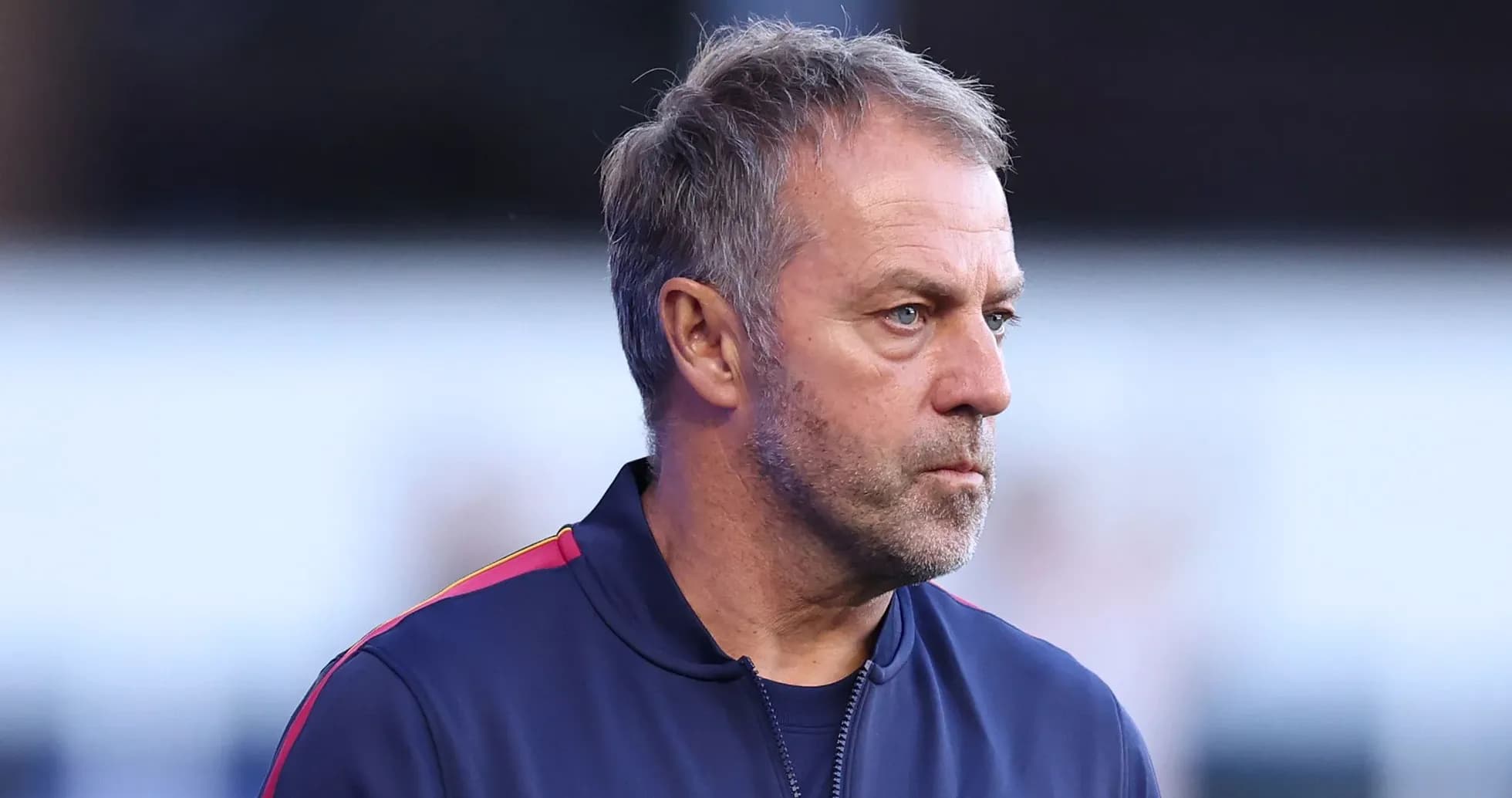
“Champions never stop. They know how to win titles and that is important. This title should give them more confidence. When you work hard and focus every day, it becomes something special. That's what we want to achieve this year,” he told the media at Saint George’s Park, sounding less like a man managing egos and more like one sharpening them.
The spotlight on Barça, already harsh under financial strain and institutional scrutiny, now burns even brighter. A club in transition suddenly houses the core of the best team on the planet. The margin for excuses shrinks.
A world-class squad with a glaring hole
For all the optimism, Flick did not bother to hide the most obvious flaw. Robert Lewandowski is gone. His contract has expired, his goals with it, and Barcelona have yet to find a true heir to the No. 9 role.
The recruitment so far has focused on the flanks, adding wide threats and creative sparks, but the space at the heart of the attack remains stubbornly empty. In a team that wants to dominate, that absence looms large.
“It depends on the team. We have to wait. I have complete confidence in Deco and we know we have to do something. It also depends on Ferran. We'll see what we do,” Flick said, folding the Torres question into the broader dilemma. Paris Saint‑Germain’s interest in the World Cup match-winner only complicates matters. Sell him and you lose a decisive forward in form; keep him and you still may not have the traditional penalty-box striker the system cries out for.
The pressure to solve that puzzle will not ease once the season starts. Every missed chance, every laboured draw, will point back to the same vacancy at centre-forward.
Setbacks before a ball is truly rolling
The build-up to the new campaign has already been jagged. A friendly against Preston North End, designed to sharpen legs and ideas, never happened. The English side simply did not have enough players available, leaving Barcelona with a hole in their pre-season schedule and one less chance to test Flick’s early plans.
Then came the blow in midfield. Frenkie de Jong’s injury removed one of the team’s most reliable metronomes, a player who knits together defence and attack with quiet authority. Many coaches in Flick’s position would be banging on the boardroom door for an immediate replacement.
He has chosen a different route.
Rather than chasing a quick fix, Flick is looking inward. The message is clear: the solution must come from within the squad, from players stepping up, from world champions carrying their new status into club colours. The returning stars will not be eased back into a comfort zone; they will be asked to stretch even further.
A delicate balance at a volatile club
Flick’s stance is bold. Confidence in his methods. Confidence in his players. Confidence, too, in Deco and the club’s ability to navigate a difficult market while boxed in by financial constraints.
But this is Barcelona. Expectation is not managed here; it is endured. A squad stacked with Spain’s heroes will be judged from the first whistle of the first competitive game. Every decision – how he rotates the champions, how he handles Torres amid transfer noise, how he lives without a classic No. 9 – will be measured against the standard of that night when Spain lifted the World Cup again.
“When you work hard and focus every day, it eventually becomes something special,” Flick said as he wrapped up his media duties.
He has the champions. He has the stage. What he does not have is time.