.svg&w=384&q=75 "GoalGist logo")
Senegal's World Cup 2026 Squad: A Blend of Experience and Youth
Senegal arrive at the 2026 World Cup with a reputation to defend and a point to prove. AFCON champions, miserly at the back, ruthless when it matters – but now staring at a group containing two of the hottest strikers on the planet. The margin for error just shrank.
A defence built on scars and silverware
The numbers from AFCON still stand out: just two goals conceded on the way to the title. That wasn’t luck. That was structure, discipline, and a back line that understood suffering.
At the heart of it all remains Kalidou Koulibaly. The captain is 34 now, the miles on the clock more visible with every sprint and recovery run. He missed the AFCON final through a mix of suspension and injury and saw red in the group stages against Benin. Those moments linger. They hint at a defender who still dominates but can no longer bully time.
Yet Koulibaly is still the reference point. Around him, a new generation is forming. Ligue 1 gives Senegal both depth and rhythm: Lyon’s Moussa Niakhate is expected to slot in alongside his captain, while Monaco’s Krepin Diatta offers thrust and tenacity from full-back. On the other side, El Hadji Malick Diouf of West Ham and Chelsea’s Mamadou Sarr bring Premier League intensity and a taste for one‑v‑one duels.
There is pressure from Spain too. Nobel Mendy of Rayo Vallecano has forced his way into the conversation, earning a first international call-up for the March friendlies against Peru and Gambia. He is not there to make up the numbers; he is there to unsettle the hierarchy.
Behind them all stands Edouard Mendy, unchallenged as No. 1. At 34, with two AFCON titles and a career built on big nights, he is the calm in the storm. Senegal will lean heavily on that composure when the World Cup spotlight burns brightest.
Midfield steel with a Premier League edge
If the defence brings structure, the midfield brings edge. Senegal’s engine room blends graft, experience and a touch of guile, much of it forged in the Premier League.
The return of Pape Matar Sarr and Habib Diarra from injury changes the picture entirely. Both missed the AFCON triumph, both are expected to be fully fit for the summer. Their comeback hands coach Aliou Cissé – or Thiaw in this context – the sort of options most national team bosses crave.
Idrissa Gueye remains the anchor. The Everton midfielder is still the metronome without the ball, snapping into tackles, screening the back four, and setting a ferocious standard out of possession. Alongside him, Villarreal’s Pape Gueye offers height, power and a reliable first pass, while Diarra brings legs and vertical running to break lines from deep.
Then there is Iliman Ndiaye. Listed here as an Everton player, he has taken to the Premier League with a swagger that has turned heads higher up the food chain. Performances full of close control, sharp turns and hard running have already sparked talk of a summer move to Manchester United. He presses, he dribbles, he finishes. A strong World Cup, and the suitors will not just be speculating.
La Liga provides further ballast in Pathe Ciss of Rayo Vallecano, a midfielder who understands tempo and tension, while Lamine Camara at Monaco adds youthful energy. Ismaila Sarr, now at Crystal Palace, stretches games from wide areas and gives this squad a direct outlet whenever the midfield needs relief.
This is not a midfield built for show. It is built to win duels, win territory, and give the forwards a platform.
Mane’s last dance – and a strike force with teeth
Up front, Senegal do not whisper. They roar.
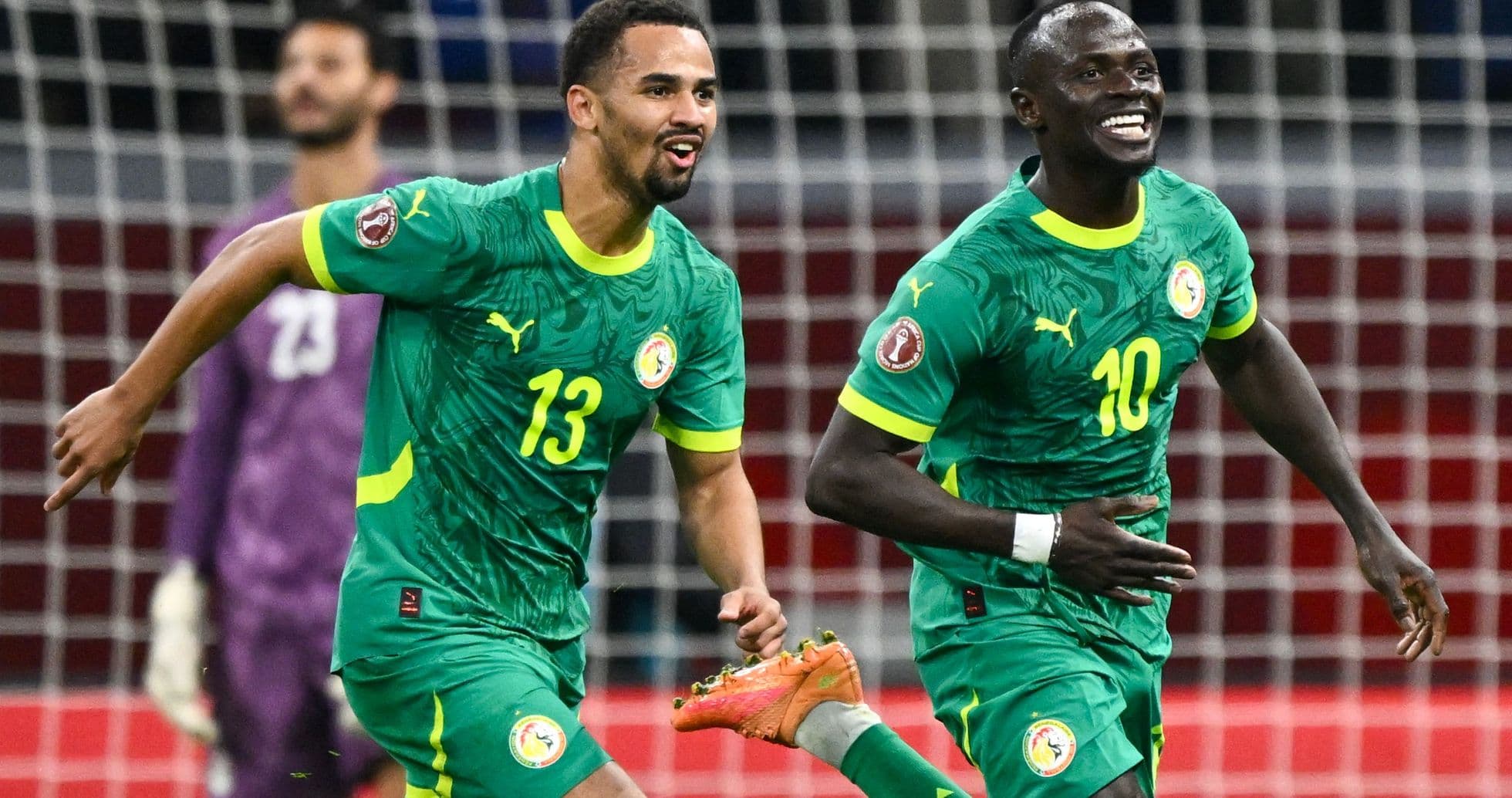
Sadio Mane, now at Al-Nassr, remains the undisputed star. Fifty-one international goals, a Premier League and a Champions League on his CV, and the decisive role in Senegal’s AFCON triumph. He has already confirmed this World Cup will be his final act on the international stage. That changes everything. Every run, every shot, every celebration carries a sense of farewell.
He will start on the left of the front three, cutting in, driving at defenders, dragging entire back lines out of shape. On the opposite side, Iliman Ndiaye is expected to push higher and wider, turning from midfield creator into right-sided menace in the 4‑3‑3.
Through the middle, Nicolas Jackson steps into the spotlight. On loan at Bayern Munich from Chelsea, he has spent much of his time in Germany watching Harry Kane and Luis Diaz lead the line. Now comes his chance to be the main man. Raw, quick, and dangerous when confident, Jackson arrives with something to prove and a global stage on which to prove it.
Behind that first-choice trio, the depth is striking. PSG youngster Ibrahim Mbaye offers pace and unpredictability off the bench. Cherif Ndiaye at Samsunspor, Boulaye Dia at Lazio and Habib Diallo at Metz all carry genuine penalty-box threat. Mamadou Diakhon of Club Brugge is the wildcard, fresh from his first call-up in March. And then there is Bamba Dieng.
The Lorient forward has forced his way back into the squad with a strong Ligue 1 campaign. His return was a surprise, but his profile – aggressive runs, sharp movement, a nose for scrappy goals – fits tournament football perfectly.
Senegal will not lack firepower. The question is how efficiently they can harness it.
How Senegal could line up
The shape looks familiar: a 4‑3‑3 built on a solid spine and explosive wide forwards.
Edouard Mendy in goal. A back four of Krepin Diatta, Kalidou Koulibaly, Moussa Niakhate and El Hadji Malick Diouf – experience in the middle, energy on the flanks.
In midfield, Habib Diarra’s running, Idrissa Gueye’s bite and Pape Gueye’s balance form a functional, hard-working trio designed to suffocate opponents and spring quick transitions.
Ahead of them, Iliman Ndiaye from the right, Nicolas Jackson through the centre, Sadio Mane from the left. One creator-finisher, one out-and-out No. 9, one legend chasing the perfect goodbye.
Predicted Senegal Starting XI for World Cup 2026 (4-3-3): Mendy; Diatta, Koulibaly, Niakhate, Diouf; Diarra, Idrissa Gueye, Pape Gueye; Ndiaye, Jackson, Mane.
The AFCON crown proved Senegal can conquer Africa. Now comes the bigger question: can this blend of hardened veterans and hungry climbers carry the Lions of Teranga to a new level on the world stage – before their greatest ever forward walks away?

