.svg&w=384&q=75 "GoalGist logo")
Ronaldinho Joins Ravenna: A Bold New Era
On a blistering afternoon in Ravenna, the heat shimmers off the cobblestones and tourists drift between Byzantine mosaics and Dante’s tomb. This is a city that normally whispers of empire and poetry, not stepovers and no-look passes. Yet in the historic centre, the conversation has shifted. People are looking for a different kind of icon.
Ronaldinho.
Not on a screen. Not in a legends game. As a registered player for Ravenna, a club that has spent most of its life far from the spotlight.
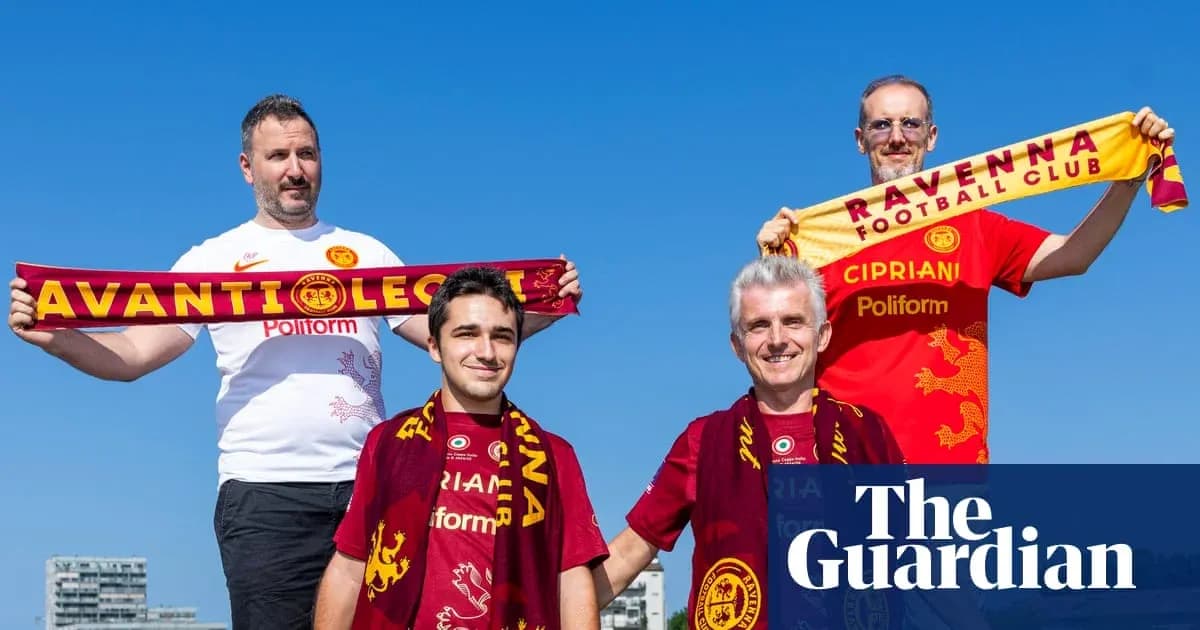
At a cafe, four Ravenna supporters thumb through La Gazzetta dello Sport’s pink pages and exchange glances. “We haven’t seen him yet,” one of them says, dry as the heat. They laugh, sceptical, convinced this is a commercial circus. But they keep reading. Because somewhere beneath the irony lies a stubborn, almost childlike hope: that the 2005 Ballon d’Or winner, the man who danced through the 2002 World Cup, might actually pull on their yellow and red shirt.
The idea sounds absurd. That’s precisely why it has gripped the city.
Cipriani’s audacious vision
At the centre of this whirlwind stands Ignazio Cipriani, heir to the Venetian hospitality empire behind Harry’s Bar and grandson of Raul Gardini, the industrialist and sailor who pushed Il Moro di Venezia to the 1992 America’s Cup final. A man used to big bets and bigger stages.
When he took over Ravenna in 2024, the club were in Serie D, the fourth tier, more accustomed to regional derbies than global headlines. Within a year, under his presidency, they had lifted the Serie D Cup and climbed into Serie C. Progress, yes. But for Cipriani, that was merely the opening chapter.
“Serie A is the goal I declared from day one because I intend to reach it,” he says. No half-measures, no soft landings. He talks about working with his back against the wall, about stripping away alibis. It is the language of someone who wants to force a club – and a city – to think bigger.
Then came the move that made the rest of Italy double-take.
Ronaldinho. Not as a ceremonial president, not as a roving ambassador, but as a player. At 46.
Cipriani traces the story back to Lorenzo Tonetti and Ariedo Braida, long-time AC Milan operators who once managed Ronaldinho’s Milan years. Through them, an introduction became a conversation, and a conversation turned into something more lasting. A friendship, Cipriani calls it, from which “many ideas for the club’s growth” emerged.
And from that, the line that has set social media alight: Ronaldinho will wear the Ravenna shirt. He will try, Cipriani smiles, to score the last goal of his career here.
A global icon in a provincial stadium
The impact was immediate and almost surreal. A dedicated website launched a special-edition shirt bearing the “R10” logo, Ronaldinho’s personal brand. It sold out within hours. Orders flew in from far beyond Emilia-Romagna. For a club that has lived in the shadows, this was a collision of worlds: high-end global branding landing in a modest, battered stadium that seats just over 6,000.
“If someone had told me three years ago that Ronaldinho was coming to Ravenna, I would have sent them straight to the psychiatric ward,” laughs Fabio, a lifelong fan. He remembers the night the story broke, headlines in multiple languages blaring the same improbable phrase: “Ronaldinho to Ravenna”. For him, it felt like a glitch in the football matrix.
Ravenna’s history hardly suggested such a twist. The club has known two bankruptcies, in 2001 and 2012, and spent decades bouncing around the lower tiers. Seven seasons in Serie B stand as the high-water mark. This is a volleyball town at heart, where football has usually meant tight budgets and modest ambitions.
Cipriani wants to rewrite that script. Ronaldinho, he insists, is not just a marketing pawn but “a unique icon” whose joyful style of play seduced an entire generation. Now he wants that same magnetism to pull a new wave of supporters towards Ravenna – locally and around the world.
The aim is not only to sell shirts. It is to build a bridge between eras, to attach a small club’s crest to a global football memory. To turn nostalgia into momentum.
Stadium dreams and city strategy
On the ground, the club is already stretching beyond its old limits. Work with the municipality is under way to renovate the Stadio Bruno Benelli, pushing capacity beyond 6,300 and dragging the venue closer to modern standards. Cipriani’s real dream, though, lies further ahead: a new multi-purpose arena, open all week, blending football with retail, concerts and a Hotel Cipriani that would tie Ravenna’s sporting project to its growing tourism ambitions.
For Mayor Alessandro Barattoni, the timing could hardly be better. Ravenna has been steadily rebranding itself, looking past its beaches and ports to a more international identity. A recent visit from the British royal family and the opening of the Lord Byron Museum hint at a city eager to reinsert itself into global cultural circuits.
Ronaldinho, Barattoni notes, adds a different kind of spotlight. When the news broke, his phone lit up with messages from old school friends. For teenagers, the Brazilian may be more of a YouTube legend than a weekly presence, but the fascination is still there. The mayor even jokes that, diary permitting, he would be happy to guide Ronaldinho personally through the city’s artistic treasures.
Yet Barattoni is careful to define the boundaries. The municipality is not in the business of stardust. Its shared ground with the club is clear: internationalisation. Ronaldinho has fronted global brands for years; now that aura could help Ravenna showcase its own projects to audiences who previously had no reason to locate the city on a map.
And the shift was under way even before the Brazilian’s name appeared on a contract. The stands are younger now, more vibrant, more engaged. A new community is forming around a club that once felt stuck in a loop of disappointment.
Between magic and mistrust
Not everyone is swept up in the romance. In the Curva Mero, the hardcore heart of the fanbase, the banners and drums share space with a lingering suspicion. Fabio admits there is “reluctance among some factions”. They have watched modern football drift away from them, prices creeping up, families priced out, loyalty repackaged as a revenue stream.
In that context, a superstar signing can feel less like a gift and more like a warning. Visibility is welcome; being turned into a backdrop for someone else’s brand is not.
Cipriani seems acutely aware of that tension. He talks not of inventing a new brand but of honouring an old identity. Ravenna, he says, already has a history; his job is to build on it, not erase it. Tradition, in his eyes, does not block ambition. It underpins it. “A club without its people is worth nothing,” he says, and in a city that has already watched its team die twice, those words carry weight.
In the stands, older supporters are starting to feel something they thought had gone. “I’m 50 years old and I’ve been coming to the stadium since my school days,” says Giovanni. “I’m rediscovering the enthusiasm of the past. If it takes an icon like Ronaldinho and a local entrepreneur to make us dream of Serie A, then so be it. The important thing is never to forget the people in the stands.”
That is the line Ravenna must walk now: chasing the dream without losing the soul.
The Ronaldinho Effect
The numbers are already shifting. Riding the wave of curiosity and excitement, Ravenna have launched their season-ticket campaign with a target of 2,800. Prices are up by an average of around 12%, varying by sector. The club is banking on the “Ronaldinho Effect” to fill the gaps and justify the rise.
On the pitch, work continues to assemble a squad capable of winning promotion from Serie C. The Brazilian’s presence, whenever and however it materialises, will not change the grind of a long league season, the reality of winter trips to small grounds and tight games decided by set pieces rather than backheels.
But for now, Ravenna is living in a different rhythm. Conversations in bars drift from mosaics to midfielders, from Dante to dribbling. The city has circled a date: 20 August, when Ronaldinho is expected to appear at a three-day summer festival in Marina di Ravenna, staged in unmistakable Cipriani style.
If he steps out in yellow and red, even for a few minutes, even just to wave, the cameras will be ready. So will the sceptics. So will the dreamers who never thought their club would share a sentence with Madonna, Ronaldo and a World Cup final show.
Somewhere between those extremes lies Ravenna’s new reality. A small club, a global icon, and a question that will define this bold experiment: is this a fleeting stunt, or the unlikely beginning of a road that really leads to Serie A – and beyond?

