.svg&w=384&q=75 "GoalGist logo")
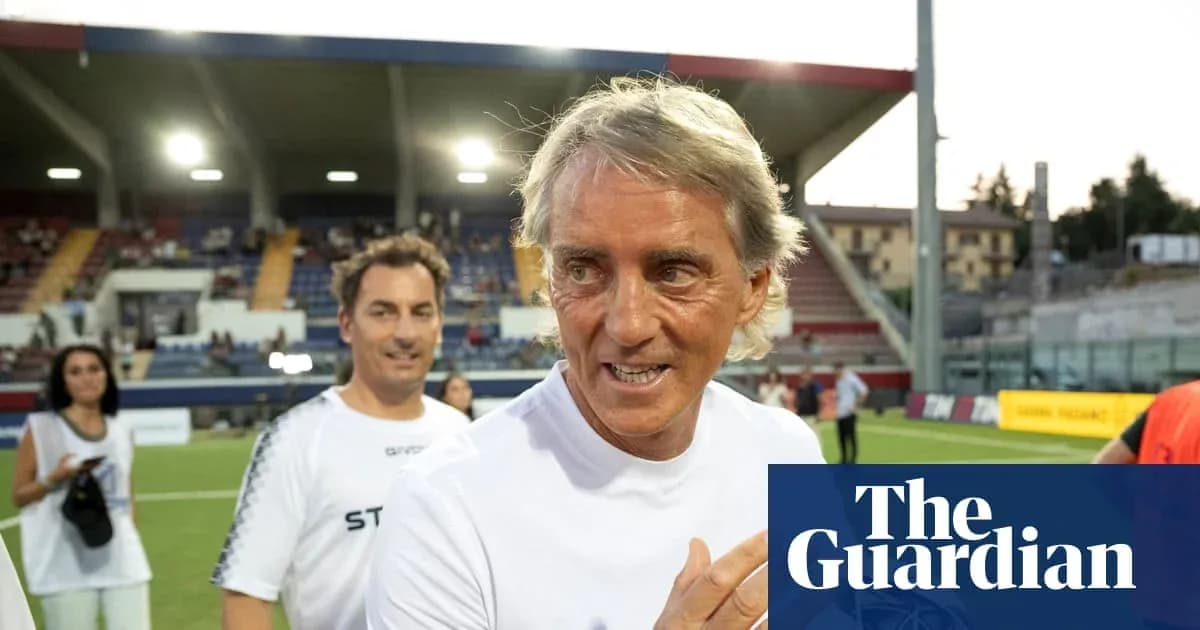
Roberto Mancini Returns as Italy Head Coach
Roberto Mancini is back in charge of Italy. Five years after walking away and three years after delivering the European Championship, the 59-year-old has agreed to a second spell as head coach of the Azzurri.
FIGC president Giovanni Malagò confirmed the move on Tuesday, drawing a line under weeks of uncertainty and political manoeuvring inside Italian football’s corridors of power.
“Mancini is the coach,” Malagò said. “I believed that the best person to become head coach was Roberto Mancini.”
A familiar face, a very different landscape.
From Wembley glory to a rescue mission
Mancini inherits a national team still nursing the scars of repeated failure on the biggest stage. He replaces Gennaro Gattuso, who left the post in April after Italy failed to qualify for a third World Cup in succession – an unthinkable run for a four-time world champion.
This is no fresh start for Mancini. It is a return to a job that defined both his reputation and his contradictions.
Between 2018 and 2023, he rebuilt a broken squad, restored belief, and led Italy to a remarkable Euro 2021 triumph, beating England on penalties at Wembley in a night that felt like a rebirth for the Azzurri. That shootout win, that trophy, looked like the launchpad for a new era.
Then came the crash.
Italy missed out on the 2022 World Cup and stumbled through the early stages of Euro 2024 qualifying. The momentum vanished, the doubts returned, and Mancini’s first reign ended with a sense of unfinished business.
Now he walks back into the same office, but with a narrower margin for error.
A coach with scars – and a CV
Mancini’s record with Italy remains substantial: 58 matches in his first spell, a European title, and a clear tactical identity that, at its best, blended Italian defensive nous with front-foot ambition.
His club résumé still carries weight in any boardroom. Inter, Fiorentina, Manchester City. In England, he spent three years at City and delivered the club’s first Premier League title in 2011-12, a season etched into modern Premier League history.
That pedigree matters. So does his familiarity with the Italian system, its players, and its political undercurrents. This is not a project that can wait years to mature. Italy need a coach who can walk in and start issuing instructions, not introductions.
Mancini, for all the baggage, offers exactly that.
Ranieri’s quiet authority
Alongside the headline return comes another significant appointment. Claudio Ranieri, one of the most respected figures in the game, will take over as technical director.
Ranieri’s title may sound subdued compared to Mancini’s, but his influence could be anything but. The role places him at the heart of long-term planning, talent pathways, and the broader sporting vision of the FIGC.
He brings with him decades of experience at the highest level, from Italy to England and beyond. His presence offers Mancini a sounding board and the federation a calm, credible figure in a period of upheaval.
Turmoil behind the scenes
The coaching reshuffle arrives against a backdrop of internal strife. Former FIGC technical director Paolo Maldini and his adviser Leonardo resigned on Monday, a dramatic exit triggered by the collapse of Andrea Pirlo’s proposed appointment as head coach.
Pirlo’s candidacy was blocked because of his ties to a Russian betting firm, a complication that turned a football decision into a political and ethical flashpoint. The fallout left a vacuum at the top of the technical structure and exposed the fault lines within the federation.
There was another twist to the saga. Pep Guardiola, the FIGC’s first choice for the job, turned down the role last month. Once that door closed, the search looped back to a familiar figure – one who knows exactly what it means to sit in the hottest seat in Italian football.
A second act under pressure
So Italy turn again to Mancini, the man who gave them Wembley and the man whose tenure also carried them into the wilderness of another missed World Cup.
This time, there will be less patience and more scrutiny. The task is blunt: restore Italy to the World Cup, stabilise Euro qualifying, and rebuild the aura of a team that once treated major tournaments as a natural habitat, not an aspiration.
Mancini has been here before. Ranieri has seen almost everything the sport can throw at a coach or a director. The FIGC has made its bet on experience, familiarity, and reputations forged over decades.
Now comes the only judgment that truly counts in Italian football: what happens when the whistle blows.