.svg&w=384&q=75 "GoalGist logo")
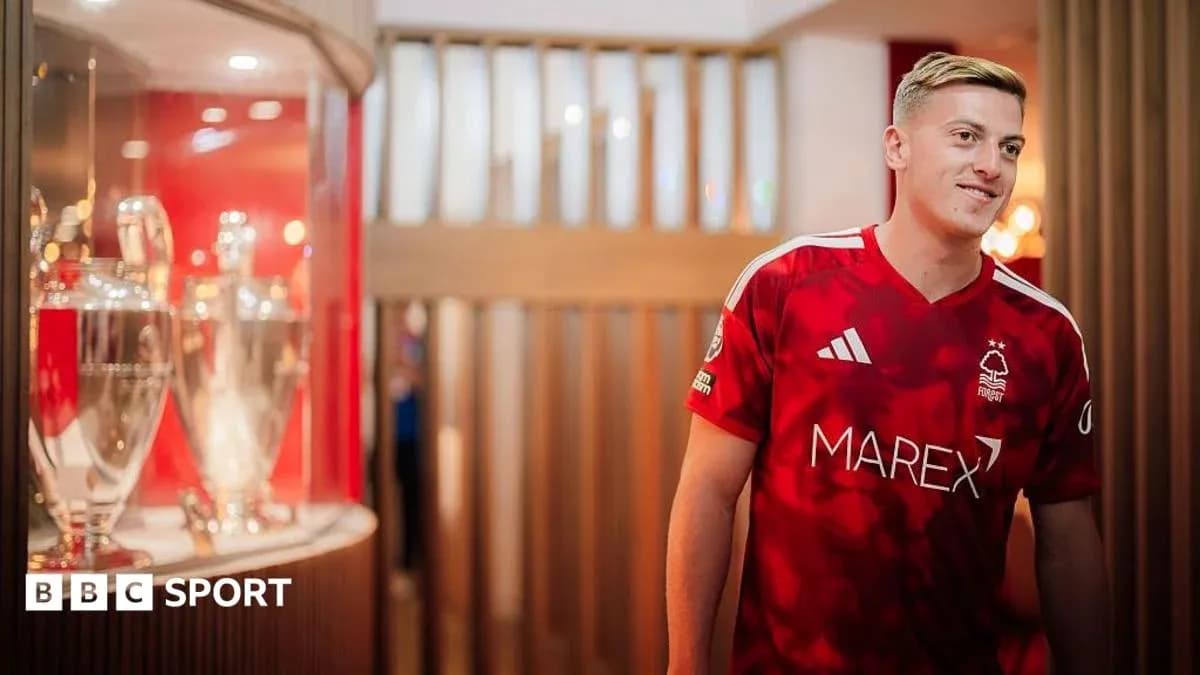
Nottingham Forest's Strategic Summer Signings
Nottingham Forest have gone against the grain this summer. No trolley dash, no last‑minute scramble to stockpile bodies. Just a clear idea: fewer signings, better signings.
Oliver Glasner has never hidden his preference. He wants a tight group he can drill, a squad where every player matters and no one disappears into the background. So this was never going to be a repeat of the chaotic windows that followed Forest’s return to the Premier League. This time, the club paid for quality.
Liam Delap’s £50m move is the headline. Not because he arrives with fanfare, but because of what he represents. Forest see him as the long‑term heir to Chris Wood, a centre-forward to lead the line for years rather than months. After his bruising spell at Chelsea, Delap needs rhythm, minutes and trust. At the City Ground, he should finally get all three.
Behind him, the spine has been hardened. The £34m deal for Ousmane Diomande is a statement that Forest intend to build from the back, not patch it up. Glasner wants the Ivorian to drop straight into a back three alongside Murillo and Nikola Milenkovic, a combination that, on paper, offers balance: aggression, composure, and aerial strength.
The defensive reshaping doesn’t stop there. Daniel Munoz has followed Glasner from Crystal Palace, a familiar lieutenant for a manager who values clarity and consistency in his wing-backs. His arrival cranks up the pressure on Ola Aina at right-back. Under Glasner, that role is pivotal; it’s not just about defending the flank, it’s about driving attacks and setting the tempo. Aina now has a direct challenger who already knows exactly what the head coach demands.
In midfield, Xaver Schlager is another trusted face. Glasner turned to a player he knows inside out from their days together at Wolfsburg. Schlager may not be the marquee name some expected after Elliot Anderson’s departure, but he brings something Glasner values even more: reliability, tactical discipline and an understanding of his system from day one.
The contrast with last season is stark. That Europa League run, thrilling as it was, took a heavy toll. By the time Forest faced Aston Villa in the semi-final second leg, the squad was stretched, bodies were missing, and they were punished. No European football this time changes the equation. Fewer games, fewer air miles, more time on the training pitch. For a coach like Glasner, that is gold.
What stands out most is the unfamiliar feeling of familiarity. After last summer’s 13 arrivals, Forest finally resemble a team evolving rather than constantly being rebuilt. The churn has slowed. The core is clearer. The dressing room, at last, has continuity.
Glasner has been blunt about his own role. He has warned supporters he is not a magician, that transformations do not happen overnight. That message suited last season, when he walked into a moving train and tried to keep it on the tracks.
Now the excuses are gone. Now he has his signings, his structure, his kind of squad.
Now he has the time to make Nottingham Forest look like his team.