.svg&w=384&q=75 "GoalGist logo")
Mikel Arteta Advocates for Expanded Matchday Squads
Mikel Arteta walked away from Cardiff with a statement win and a fresh argument for change.
Arsenal’s 3-0 dismantling of Manchester City in the Community Shield underlined their depth, but it also exposed a frustration their manager has been nursing for some time: he believes the Premier League is operating with outdated matchday squad rules.
Big win, big absences
On the pitch, Arsenal were ruthless. Off it, the team sheet told another story.
Several senior players didn’t even make the bench. William Saliba and Jurrien Timber were ruled out through injury, with Timber still travelling to Cardiff to be with the squad. Illan Meslier was also in the stadium but not named among the substitutes, a familiar fate for a third-choice goalkeeper in domestic competition.
That’s the key distinction. In UEFA competitions, clubs are allowed larger matchday squads, which means a third-choice keeper like Meslier can be included. Last season, Tommy Setford often travelled with Arsenal for domestic fixtures, took part in warm-ups, then disappeared from the official team sheet – only to be named in Champions League squads all the way through to the semi-final.
Against City, Arteta had to leave out far more than just a reserve goalkeeper. Gabriel Martinelli, Ethan Nwaneri, Gabriel Jesus, Fabio Vieira and Reiss Nelson were all omitted from the squad entirely. Under UEFA rules, with a 23-man squad instead of 20, at least two of those outfield players could have been involved.
For Arteta, that’s no longer acceptable in a calendar that feels permanently overloaded.
Arteta’s push for bigger squads
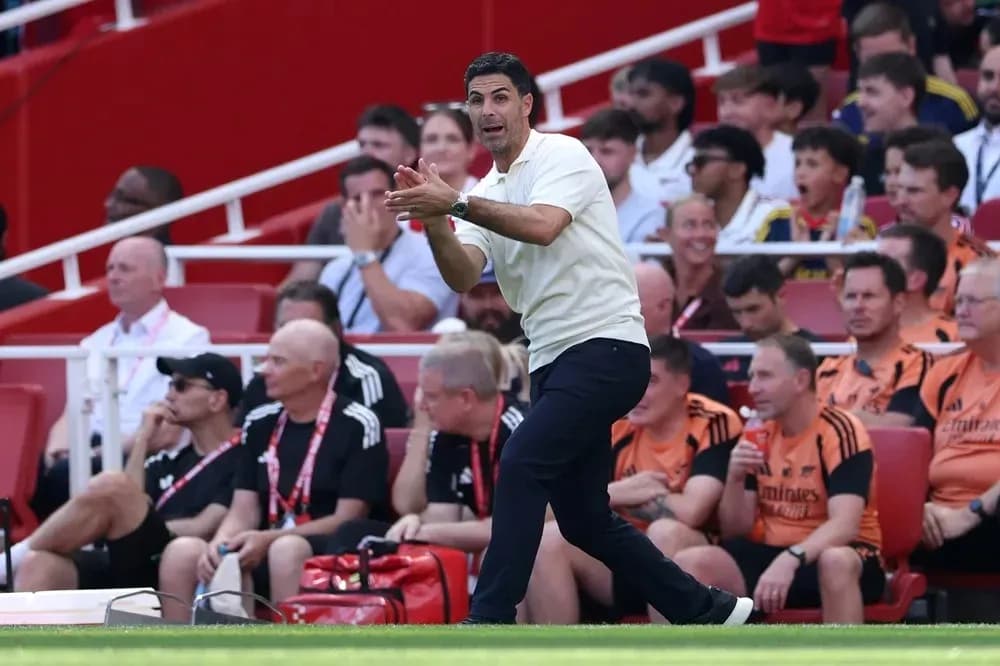
Speaking after the game, the Arsenal manager made it clear he has taken the issue beyond the press room.
"I've been trying to persuade the Premier League and the clubs to be able to extend the number of players that we can have, especially the outfield players in the squads, because we play more and more games and the load is unreal," Arteta said.
He didn’t dress it up. Leaving fit players out, he admitted, is the worst part of the job.
"It's just a shame (to leave players out), so it's the most difficult part of the job. It's just a fact that we can bring 18 outfield players and we believe that for today's game these were the options that we needed, especially with the physical condition of certain players."
In other words, Arsenal aren’t scratching around for numbers. They’re having to cut senior professionals from the matchday group in a season where rotation and workload management are non-negotiable.
The looming divide
Not everyone will welcome Arteta’s proposal.
Smaller clubs are likely to argue that expanding squads to 23 will tilt the balance even further towards the elite. More substitutes means more tactical weapons for managers with deeper, more expensive squads. Some clubs can’t even name 23 fully fit senior players, never mind high-level options in every position.
Yet the landscape of the league has shifted. Almost half of the Premier League now competes in Europe each season, living under UEFA’s broader squad framework midweek and the tighter domestic one at weekends. The pool of clubs who would never realistically fill a 23-man matchday squad is shrinking.
Arteta’s stance taps into a wider question: should the Premier League cling to a leaner, traditional model, or accept that the modern game – with its relentless schedule and swollen squads – demands a bigger bench?
For now, he has to leave players in the stands. If he gets his way, those same players could soon be back in the dugout, waiting to change games rather than watching them from afar.