.svg&w=384&q=75 "GoalGist logo")
Michael Carrick's Impact on Manchester United's Youth Academy
Michael Carrick will not kick a ball, bark an instruction or scribble a note on Thursday night. He will simply watch. For Manchester United’s youngsters, that is more than enough.
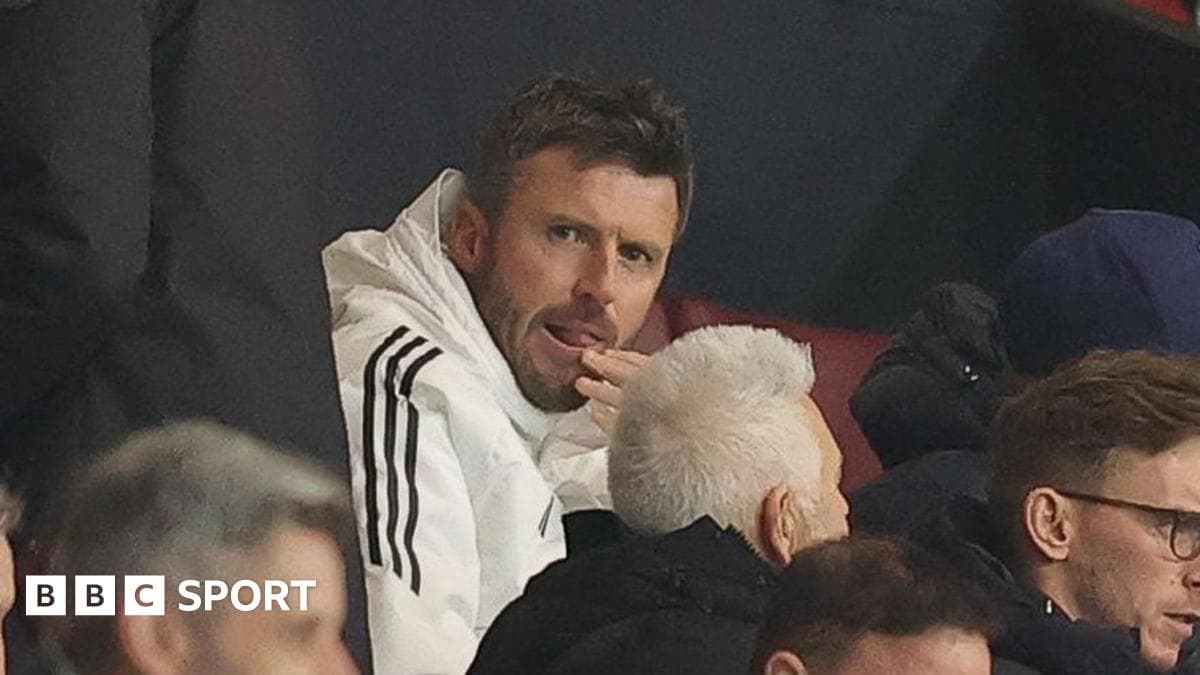
The first-team manager has been a regular at academy fixtures since replacing Ruben Amorim in January, slipping quietly into the stands at youth games across the club. To Darren Fletcher, now in charge of United’s Under-18s, that presence is not a token gesture. It is a statement.
Carrick will be there again at Joie Stadium when United face Manchester City in the FA Youth Cup final, with Fletcher aiming to close out his first season in the job by delivering a record 12th triumph in the competition. The venue, a 6,000-seat home for City’s academy sides, has already drawn disappointment from Carrick, who feels a showpiece of this size deserves a bigger stage.
But he is going anyway. He was there on 8 May too, at the same ground, when United’s Under-21s beat City in a Premier League 2 play-off semi-final. He will be back to see if the next wave can handle the fiercest of youth derbies.
His son Jacey is part of United’s academy, though not involved in this Youth Cup run. That family link only adds to the sense that the manager’s interest in the youth system is genuine, not ceremonial.
For Fletcher, who joined United as a 15-year-old and knows exactly what it feels like to chase a dream in this club’s colours, Carrick’s presence changes the air in the dressing room.
“All the players love it when the first-team manager is there,” he said. “It shows he cares and he's got eyes on it. It inspires them.
“It definitely shows them this is a club that thinks about young players and doesn't just speak about it. That's throughout the history of the club, but when you see it in action it brings it to life really. It's powerful and the parents like it.”
Fletcher’s own path back to the academy
Fletcher briefly stepped into the glare himself in January, taking charge of the senior side for two games on an interim basis in the immediate aftermath of Amorim’s dismissal. He could have stayed up there, joining Carrick’s staff and embedding himself in the first-team environment.
He turned it down.
Instead, he went back to the job he started the season with – leading the Under-18s – the first deliberate step on what he hopes will become a full managerial career. The decision speaks to where he feels the real work is right now.
Fletcher talks about enjoying the daily grind with teenagers desperate to impress, about watching them grow, about their willingness to absorb information. The old apprenticeship rituals – scrubbing boots in the dressing room corridors – have gone. But the standards remain.
Now the jobs are different. The purpose is not.
“It's not cleaning boots, it's things like bringing out the balls, or bringing the equipment back in,” Fletcher said. “Putting the meeting room chairs in the right place, filling up water bottles.
“They are all on a rota. Everyone brings something off the bus, even the coaches.
“It's not to punish them, it's to make sure everything is tidy. We bring the stuff out and we put it away, to show that we're all in it together.”
In a world where academy prospects can feel like mini-celebrities before they have kicked a senior ball, those small tasks matter. They underline that no one is above the group, that humility travels alongside talent.
A squad without passengers – and one standout name
Fletcher refuses to single out one player as a problem or a project.
“I don't have any players who've struggled this year,” he said, flipping the usual academy narrative on its head. To him, the group has moved together.
But some names inevitably attract more attention. One of them is JJ Gabriel.
The 15-year-old forward looked nailed on for the Golden Boot in the Under-18 Premier League until City’s Teddie Lamb exploded late in the season, rattling in 16 goals in his final 12 games to snatch the prize. Gabriel missed out on that individual honour, but his influence across the campaign was impossible to ignore.
He was named the league’s player of the season, a recognition of his overall performances rather than just his finishing. The London-born attacker is expected to feature in some capacity during United’s pre-season this summer, a significant nod towards the first-team environment at a remarkably young age.
“JJ's an amazing talent,” Fletcher said. “He is a fantastic kid. He brings an enthusiasm to the pitch every day to learn, to want to play, to be on the ball. He's desperate to do better, to improve and to learn. He takes constructive criticism well and I've got a great relationship with him.
“I do think we need to remember he is a kid and also he's been part of a really good team, and the players have helped him as well.
“But JJ has scored the goals and goals always get the limelight. He has a major future and is somebody I've enjoyed working with immensely.
“His next steps are something people above me will decide. We want him to go up there and thrive, so we need to get him in the position to do that.”
That is the balance United are trying to strike: accelerate the best without losing sight of the collective. Gabriel is a headline act, but Fletcher is determined that the story of this Under-18 side is not reduced to one precocious forward.
Youth Cup stage, club-wide spotlight
The FA Youth Cup has always carried a particular weight at Old Trafford. From the Busby Babes to the Class of ’92, this is the competition that has so often revealed who can handle the expectation that comes with the badge.
Now comes another test, against City, at a stadium both clubs know well but one Carrick feels is too small for the occasion. The limited capacity will not dull the significance.
The Under-18s will walk out knowing the manager will be in the stands, watching every touch, every decision, every reaction to pressure. Parents will glance up and see him too. So will coaches and staff who have spent months building this group.
For Fletcher, the night is about more than a trophy. It is about proving that United’s talk of youth is not nostalgia but a living, breathing policy, backed by the man who picks the senior team.
If his players can rise to that, a record 12th FA Youth Cup would feel less like a throwback and more like the start of something.