.svg&w=384&q=75 "GoalGist logo")
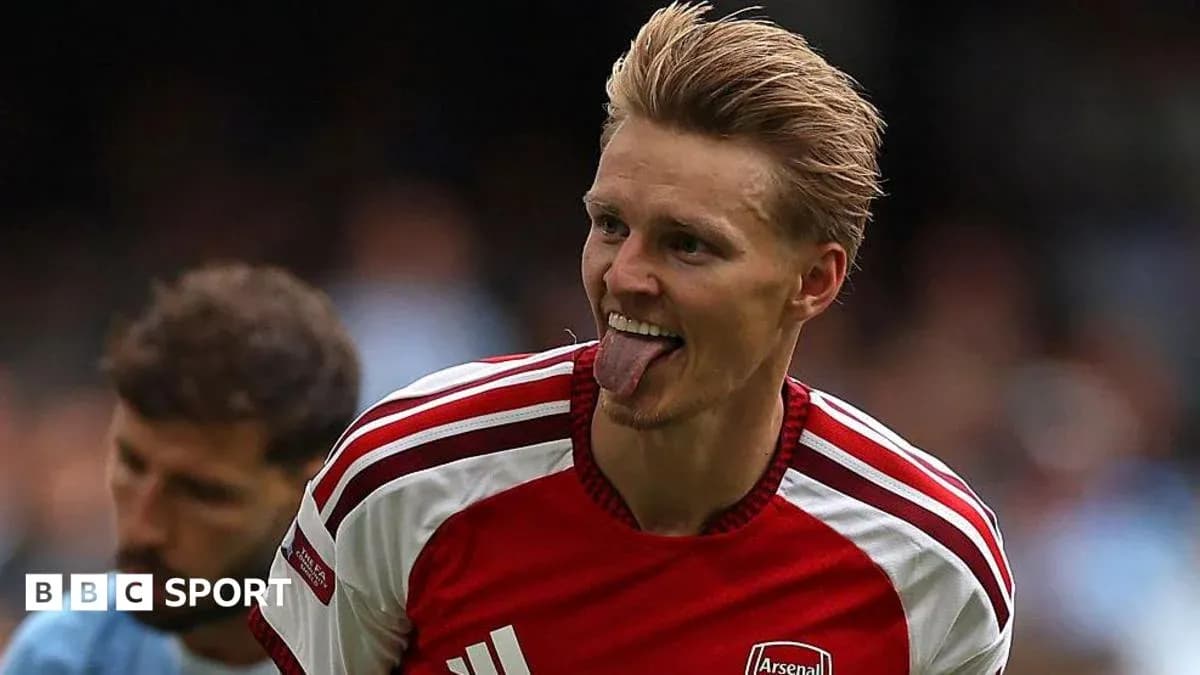
Martin Odegaard Shines in Community Shield Victory
Martin Odegaard did not just lift the Community Shield in Cardiff. He grabbed the game, Arsenal’s midfield narrative and, quite possibly, the coming season with both hands.
On a day when Manchester City were swept aside 3-0, the Norwegian playmaker looked like the sharp, inventive force Arsenal feared they had lost last year. He walked away with man-of-the-match honours and, more importantly, with the sense that his difficult 2025-26 campaign might be firmly behind him.
From frustration to control
Arsenal are champions of England again, but last season was bittersweet for their captain. Knee and shoulder problems stalled him. He started only 16 Premier League games, scored once and produced seven assists – his leanest return since making his move from Real Madrid permanent in 2021-22.
For a player who had become the on-field conductor of Mikel Arteta’s project, it was a jarring comedown. The team surged to a first league title in 22 years while their chief creator watched long stretches from the sidelines, unable to build rhythm or impose himself as he once did.
Those months clearly left a mark.
"Last year was really a big struggle with a lot of difficult moments. To miss so many games because of injury was really frustrating," Odegaard admitted after the game. "It is the worst thing for a footballer to not be able to be on the pitch and I had quite a lot of weird injuries, and bad luck."
He ended the campaign fit, helped secure the title, then carried that momentum into a standout World Cup with Norway, starting five of their six matches and laying on four assists. That summer platform matters. You can see it in his stride.
Cardiff statement
Against City, Odegaard played like a man intent on reclaiming his stage.
He was everywhere. Of all the Arsenal players on the pitch, he completed the most passes (55 out of 58), completed every dribble he attempted (3/3) and won possession more than anyone else in red and white (nine times). Those are not just neat numbers; they tell the story of a captain dictating tempo and setting the tone without the ball as well as with it.
The moment that will be replayed, though, came with Arsenal already in control. Bursting into the box, Odegaard shaped to shoot, then let the ball run. Gianluigi Donnarumma dived at a ghost. The dummy left the City goalkeeper on the turf as Odegaard calmly finished off a flowing move with Arsenal’s third.
It was a goal that mixed composure, imagination and a touch of cruelty. The kind of moment that says: I’m back.
"Sometimes you are just in the flow. You need to find that on the pitch," he said. "All of us were flowing pretty good out there. I will just try to keep that up and keep going."
A midfield built to dominate
Arteta has not stood still since lifting the Premier League trophy. He has doubled down on midfield, spending £75m to bring in Bruno Guimaraes and adding yet more quality to an already crowded department.
Mikel Merino, one of those jostling for minutes, has gone as far as to call Arsenal’s midfield options "probably the best in football". When you list them, it is hard to argue.
- Odegaard.
- Guimaraes, who impressed in his 45 minutes in Cardiff.
- Myles Lewis-Skelly.
- Martin Zubimendi.
- Declan Rice.
- Eberechi Eze.
- Merino.
It reads like a manager’s dream and a player’s challenge.
Maybe that is exactly what Odegaard needed. His quality has never been seriously questioned, but last season’s inconsistency and his long absences opened up debates, especially from former players, about whether he should wear the armband. Those voices will have been quieter on Sunday.
Odegaard and Guimaraes looked like they had been sharing a pitch for years, not just starting together for the first time. The Brazilian’s intensity and range dovetailed with the captain’s guile, hinting at a partnership that could torment opponents all season.
Captain with a point to prove
Arteta has always viewed Odegaard as central to his rebuild, a leader in style and mentality. The manager knows how disruptive last year’s setbacks were.
"Well, he missed five or six months for different things and it was extremely difficult for him to get any momentum," Arteta said. "So I'm sure this year if we can maintain him fit, available with the players around him, we're going to see a very different Martin.
"And I sense from the first day that he joined [pre-season training] that he has something else on the belly that he wants to prove and show, because the team needs it as well."
Odegaard’s own words match that reading.
"It was good for me to end the season with a title, here, and then a good World Cup. Then I had my break and I feel good, ready to go again," he said. "What I have just worked on is to use that as motivation for this year and to come back stronger. And to use all of those experiences in a positive way."
The injuries, the doubts, the questions about his captaincy – all of it is fuel now.
A “new signing” hiding in plain sight?
When Arteta first reshaped Arsenal, Odegaard was at the heart of it, stitching together moves, pressing high, dragging the club into a new era. On this evidence, that version of him is re-emerging, only with a harder edge forged by a year of frustration.
With a stacked midfield behind and around him, and with his body finally cooperating, the prospect is clear. Arsenal may have spent big on Bruno Guimaraes, but the player who could transform their season might be the one who has been there all along.
If Martin Odegaard stays fit and keeps hitting this level, he will not just feel like a new signing for Mikel Arteta.
He will feel like the missing piece returning to a champion side that suddenly looks even more dangerous.