.svg&w=384&q=75 "GoalGist logo")
Manchester United's Left-Back Dilemma: A Season of Risks
As the clock ticked past 23:00 BST on 1 September and the transfer window slammed shut, one question hung in the air for Manchester United fans: what about a left-back?
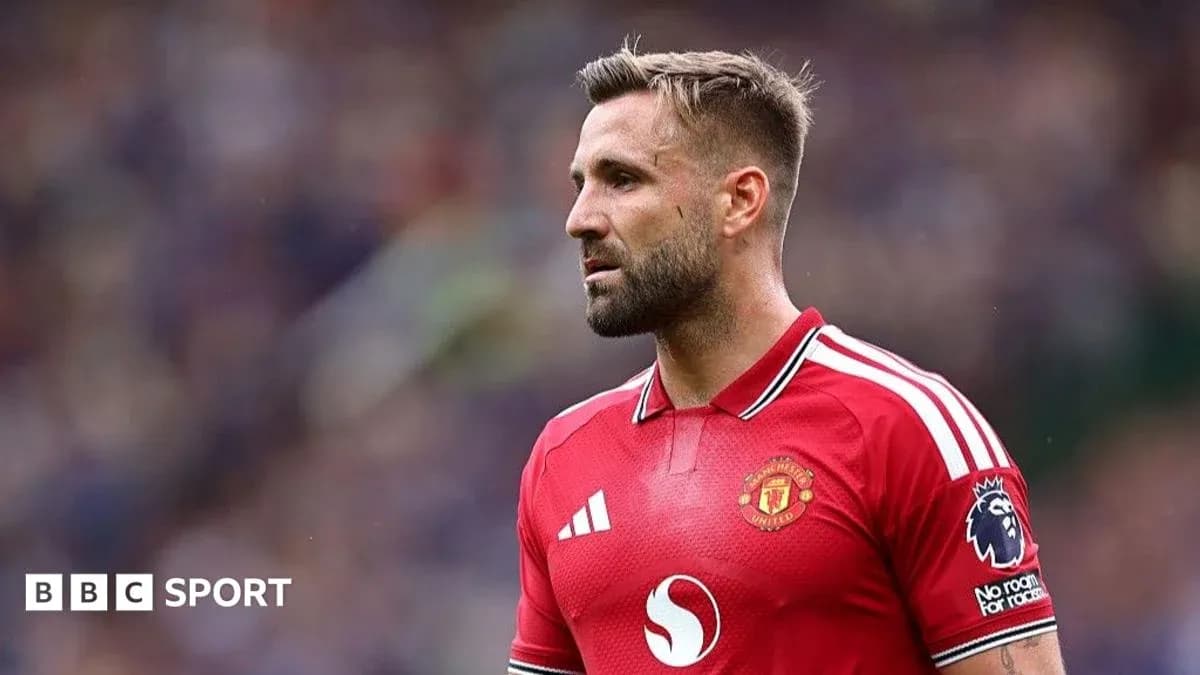
All summer, as soon as the 2025-26 season ended and the debate over Michael Carrick’s squad began, the gap on that flank felt obvious. Luke Shaw stood alone as the only senior, natural left-back. He had just delivered a remarkable campaign, starting all 38 Premier League games despite a history of injuries that once made such durability seem impossible.
No-one inside or outside the club expected that to be the plan again.
Tyrell Malacia’s departure at the end of June, when his contract expired, only sharpened the concern. Shaw is 31 now. United are staring at a season that could easily run beyond 60 matches if they go deep in multiple competitions. A reinforcement at left-back looked less like a luxury and more like common sense.
Names came and went. Newcastle’s Lewis Hall. Barcelona’s Alejandro Balde. Racing Santander’s Jorge Salinas. The shortlist was clear, the need even clearer. In the end, United’s late push focused on one bold idea: Rayan Ait-Nouri crossing Manchester on loan from City.
City refused. Talks never got close without an obligation to buy being written in for a later date. United walked away, determined not to be bounced into a deal that didn’t suit their long-term plan, and chose to wait for what they still regard as first-choice targets.
The window closed. The gamble began.
Hall, Baleba and a budget with limits
Inside Old Trafford, there is no secret about how highly they rate Lewis Hall. If a deal with Newcastle had been remotely realistic, United would have pushed it through.
It wasn’t. Newcastle, already stripped of key players by Premier League rivals this summer, made it clear that prising away their highly regarded 22-year-old would require a huge fee. United’s budget was not built for that kind of late-window escalation.
Faced with that reality, the club doubled down on what they had already marked as the priority zone: midfield. The result was a £70m commitment to bring Carlos Baleba in from Brighton, a move they viewed as essential to reshaping the spine of Carrick’s team.
Hall, they decided, can wait. Next summer is the target.
The same hard line shaped their stance on other left-back options. United would have taken Balde on loan; Barcelona only wanted a sale. Salinas had an accessible release clause, but Atletico Madrid always looked the likeliest destination. By the time United circled back to Argentina defender Nicolas Tagliafico, they missed out again – and, in truth, had already started to look elsewhere.
That “elsewhere” turned out to be a late move around Ait-Nouri, triggered by an agent’s approach that had initially been parked. United’s decision to revisit it was a tacit admission: they are not entirely convinced by the path they’ve chosen.
Shaw, Mazraoui… and the kids
The plan now is brutally simple. Shaw remains first-choice. Behind him, Carrick will lean on Noussair Mazraoui as cover, a role the Moroccan knows from international duty, with Diogo Dalot capable of flipping flanks if required and Harry Amass hovering on the fringes.
Amass is the intriguing subplot. A natural left-back from United’s academy, he impressed during a loan spell at Sheffield Wednesday last season before injury struck soon after he joined Norwich in the winter window. This summer, at 19, he shadowed Shaw in pre-season and caught plenty of eyes with his composure and positioning.
Yet United were, until very recently, open to letting him go.
The pattern goes back two years. In the summer of 2024, Erik ten Hag left Amass out of the Community Shield squad, even though the teenager had held his own against Mo Salah in a pre-season game in the United States just a week earlier. Ten Hag’s view was blunt: physically, Amass wasn’t yet at the level required.
Two years on, logic says he should be bigger, stronger, more ready. Interest has certainly not been in short supply. Multiple clubs have tracked him, and his omission from United’s Premier League 2 game against Leicester on Monday, right before deadline day, only fuelled the belief he was heading out on loan.
He didn’t. No move, no loan, no clear public explanation. Amass stays, but his precise role in the senior set-up remains hazy.
Yoro’s emergence and a defensive reshuffle
The willingness to treat Mazraoui as a genuine left-back option has been shaped by another development: Leny Yoro’s performances on the opposite side.
Signed from Lille in 2024 for £52m as a central defender, Yoro spent this pre-season largely operating at right-back. Against Ipswich on Sunday, Carrick again used him there, bringing Yoro on for Dalot while Mazraoui replaced Shaw on the left.
Yoro is only 20. He is still learning the nuances of the role. But he is quick, strong, comfortable on the ball – the raw materials of a modern full-back. United supporters do not have to look far for a template. Josko Gvardiol arrived at Manchester City as a centre-back and has grown into a highly effective full-back in a title-winning system.
United believe Yoro can follow a similar path. That belief underpins the entire defensive reshuffle.
A risk United are willing to own
Strip it back and the strategy is stark. United have chosen to trust internal solutions and positional flexibility rather than dive into the market for another Alex Telles, Matteo Darmian or Sergio Reguilon – short-term fixes who never truly matched the club’s standards.
They spent the summer holding firm on fees, refusing to go beyond what they felt any target was worth. That stance has cost them a new left-back for now. It has also protected them from another expensive mistake.
On paper, the logic is sound. The numbers add up. The pathway for Hall or another elite option next summer remains open. The squad is spared another stop-gap signing.
But football doesn’t live on paper.
This decision will be judged not on balance sheets or long-term plans, but on what happens when Shaw inevitably needs a rest in February, or when injuries bite in the middle of a congested run. It will be measured in how Mazraoui copes on his weaker side, how quickly Yoro adapts, whether Amass is trusted when the stakes are high.
United have made their calculated gamble. The season will decide whether it was shrewd restraint – or a corner cut too far.