.svg&w=384&q=75 "GoalGist logo")
Luka Modric: Defying Age in Football
Luka Modric looked finished with international football that night in Leipzig. Not because his legs had gone, but because football can be brutally indifferent to romance.
He had dragged Croatia to the brink of the Euro 2024 last 16, scoring from the rebound after his own saved penalty against Italy in what was effectively a knockout tie at the Red Bull Arena. At 38, in the 55th minute, he was still the man for the moment, still the one with the nerve to step up.
Then came the 98th minute. Mattia Zaccagni curled in a stunning winner, Italy went through, Croatia went home, and Modric walked into the post-match ceremony with the Player of the Match trophy under his arm and a hollow stare in his eyes. The award felt like a consolation prize at a funeral.
This was not how an international career like his was supposed to end. Everyone in the room knew it.
In the press conference, Italian journalist Francesco Repice put into words what millions were thinking. He thanked Modric for “everything you have shown, not just tonight but in your career” and begged him to “never retire.” It was raw, emotional, and entirely sincere.
Modric’s answer was honest. He admitted he wanted to play forever, but accepted there would come a day when he would have to stop. He would carry on, he said, but he didn’t know for how long.
That was then. Remarkably, he still doesn’t know.
Because just as remarkably, at 40, he is still operating at a level most midfielders in their prime never reach.
When Modric left Real Madrid last summer after 13 seasons and a mountain of trophies, his move to AC Milan was framed as a sentimental homecoming of sorts. This was the club he had adored as a boy, largely because of Zvonimir Boban. It would have been easy to assume nostalgia was driving the transfer.
Modric dismissed that idea. He was not coming to San Siro for a farewell tour. He believed he could help revive Milan. He was right.
His arrival dominated the headlines in Italy. Debate followed quickly. How much could a 38-year-old – soon to be 40 – really give? Did Milan even need him after signing Samuele Ricci, a 24-year-old Italy international expected to anchor their midfield for years?
The answer came on the pitch. Ricci, far from sulking, became one of Modric’s biggest admirers. He watched the veteran take his place in the starting XI week after week and could only shrug and smile.
“He’s the strongest player I’ve ever played with,” Ricci said, stunned by Modric’s intensity and humility. Training with him felt like a masterclass.
The Italian press reacted the same way. “If he really is 40,” wrote journalist Alberto Polverosi, “let’s clone him!” It sounded like a joke. It wasn’t far from the truth.
Modric’s performances seemed to mock the basic rules of physiology. He didn’t just keep up; he dictated games, set the tempo, closed spaces, demanded the ball when it burned. Milan legend Kaka, who knew him well from Real Madrid, offered the simplest explanation: Modric was a “force of nature.”
Kaka talked about the mentality. How easy it is to lose the edge when you have won everything. Modric, he said, is “crazy” in the best sense: still desperate to pass on his knowledge, still the one calling team-mates, still first into the fight. Energy. Personality. Leadership. Technique. The full package, just with a few more lines on his face.
His influence stretched beyond matchdays. Training sessions sharpened under his gaze. Standards rose. Young players listened. Serie A, Kaka argued, benefited from having Modric in it. Italian football as a whole felt his presence.
Milan coach Massimiliano Allegri fell for him completely. The relationship became so close that talk emerged of Modric becoming Allegri’s assistant when he finally decided to stop playing. The idea didn’t sound far-fetched. He was already a coach on the pitch.
There was a cost. Milan leaned on him too heavily.
When Modric fractured his cheekbone in a 0-0 draw with Juventus on April 26, the effect was immediate and brutal. He couldn’t start any of Milan’s final four league games. Without their compass, they lost three of them. A team that had been cruising in third place slid to fifth, tumbling out of the Champions League spots.
One injury, one player. The collapse underlined just how central he had become.
Allegri paid the price with his job. Missing out on the top four proved fatal, and Milan sacked him. Modric’s own future in red and black now hangs in the air. He has spoken warmly about the club and the city, but nothing is guaranteed.
Back in Madrid, doors are already half-open. Real would like him back at the Bernabeu in some capacity if he decides this summer is the moment to finally stop. Player, mentor, ambassador, coach – the title can wait. The bond is permanent.
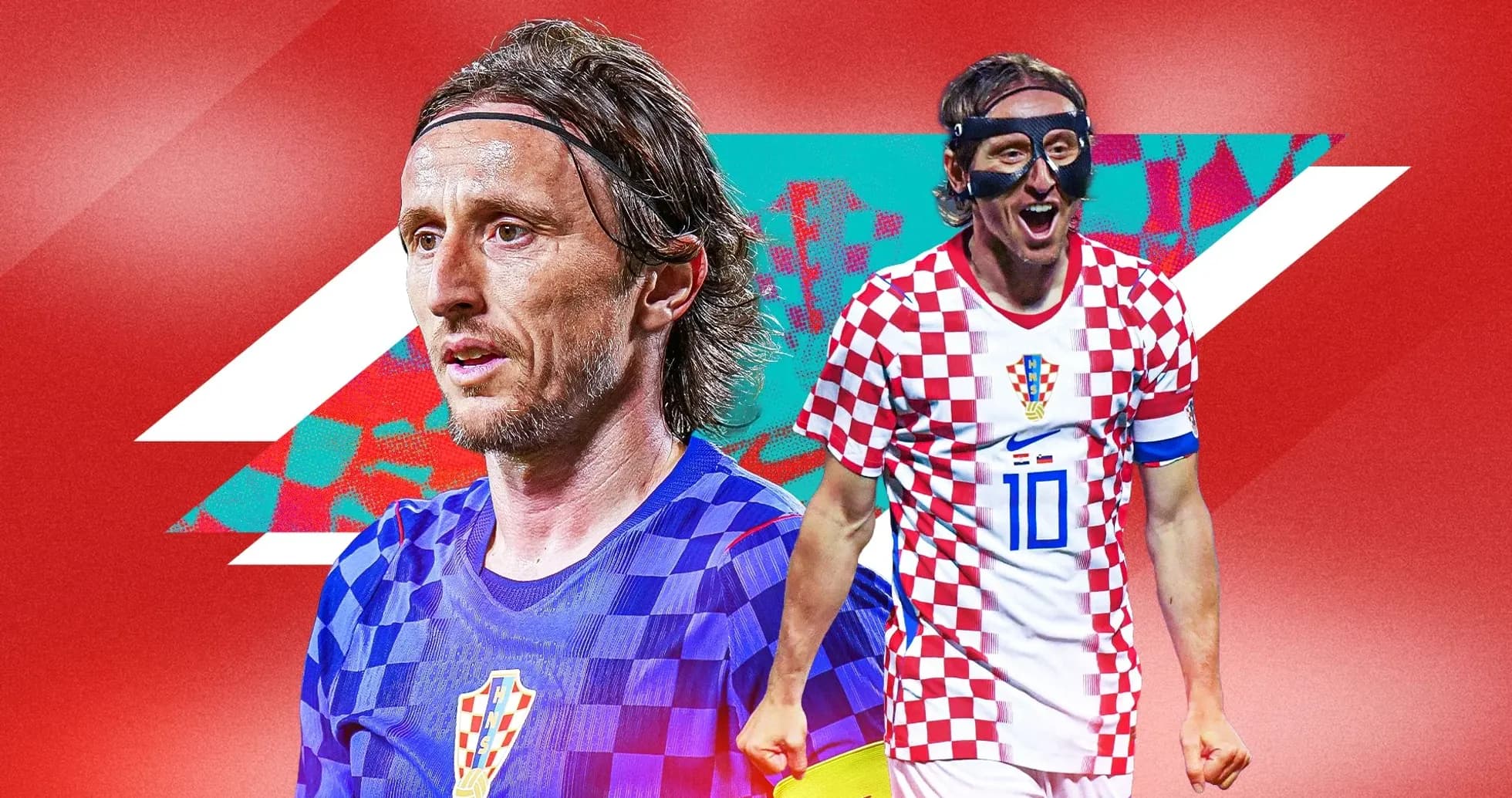
For now, he is saying little. He keeps his cards close, as always. What seems almost certain is that this World Cup will be his last major tournament with Croatia. It will not be comfortable. He will play with a protective mask, guarding that fractured cheekbone in what could be punishing conditions.
The image is striking: Luka Modric, 40 years old, masked, still orchestrating, still refusing to bow to time or expectation.
He has built an entire career on defiance. Too small, too slight, too old – he has heard it all. “I never really cared what anyone else said,” he reminded people recently. “It only further motivated me.”
So who dares write him off now?
Not England, that’s certain. The English media know this story too well. They have seen Modric pick their team apart before, watched him control the rhythm, watched him walk off with the game in his pocket and a knowing look on his face.
Masked or not, 40 or not, they will treat him with the respect he has earned: as a man who has never accepted the script he was given.