.svg&w=384&q=75 "GoalGist logo")
Liverpool's Strategic Move for Ronald Araujo: A Gamble with Potential
Liverpool have found their defender. Not the one they spent the summer building around, but the one the market suddenly dropped in their lap.
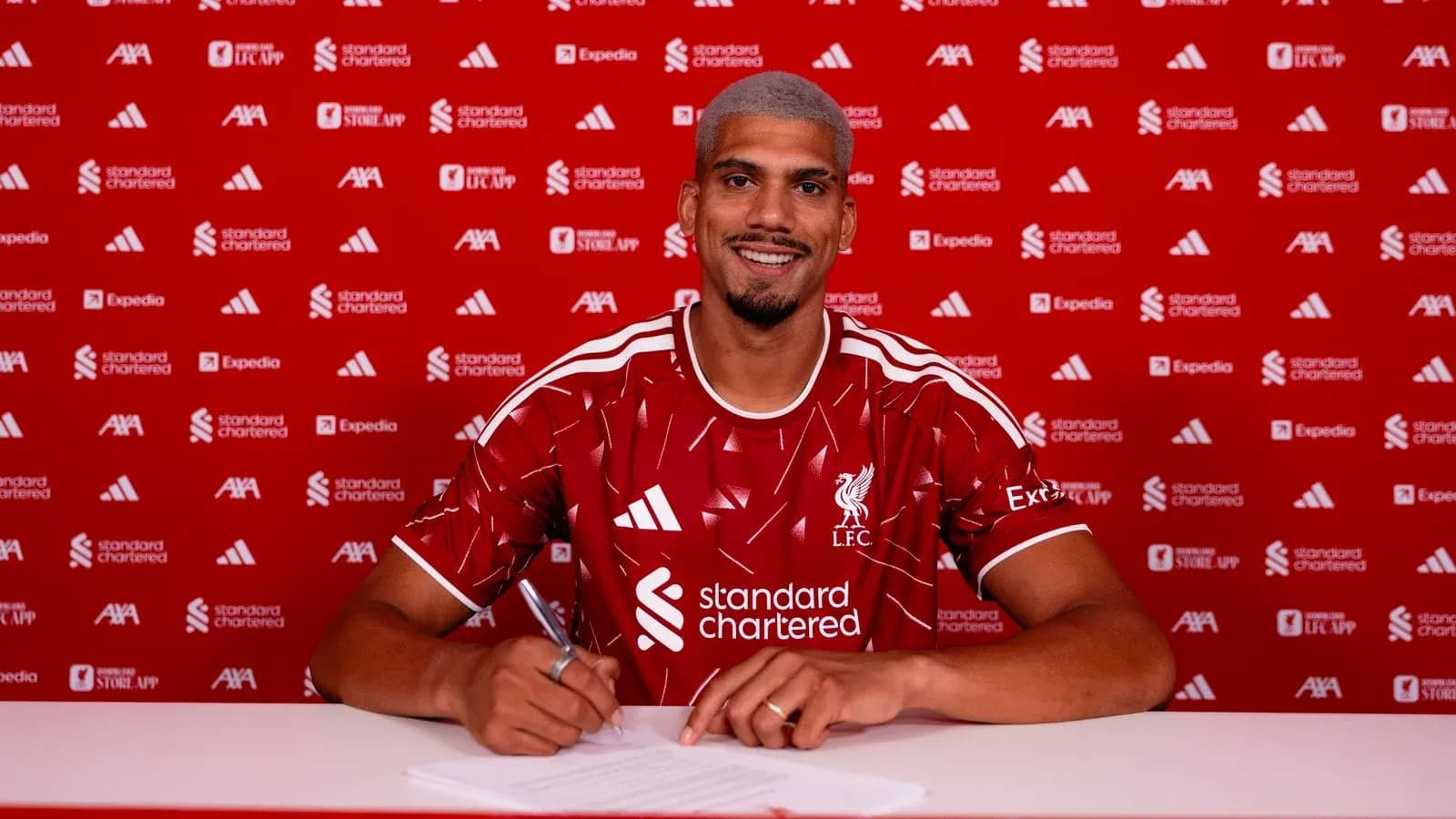
Ronald Araujo has arrived from Barcelona on an initial season-long loan, a 27-year-old international centre-back stepping into a back line held together by Virgil van Dijk and crossed fingers. There is no loan fee. Liverpool will simply take on his full salary, with an option to buy for around £47.14m (€55m) next summer.
For a club that had not set out to sign a defender, it is a sharp pivot. And a calculated roll of the dice.
A captain in Spain, a reset on Merseyside
Araujo will wear the No 33 shirt and is expected to train with his new team-mates this week. He arrives as a player with serious pedigree: more than 200 games for Barcelona, experience at the top end of LaLiga, and a reputation, at his best, as one of Europe’s most aggressive, front-foot defenders. He can play at centre-back or right-back, a versatility Liverpool badly need.
This is also a player looking to restart his career.
Last season he started only 11 LaLiga matches, his campaign punctured by an extended break from football in November 2025 as he stepped away to recover from depression. He later spoke openly about that struggle. Barcelona still trusted him enough to name him among the club captains after Marc-Andre ter Stegen’s departure in January, and he wore the armband as they celebrated the league title in May. Yet he finished the season with just 24 appearances.
Hansi Flick’s arrival has only underlined the reset. The new Barcelona head coach has made it clear Araujo does not fit how he wants to play. A new contract signed last year, one that reportedly put the defender among the club’s highest earners, now sits awkwardly on their wage bill.
So the door opened. Liverpool walked through it.
Liverpool’s defensive crisis – and the Jacquet question
This was not the plan. Liverpool’s recruitment focus had been on a wide forward. At the back, they believed they had already invested heavily enough.
Jeremy Jacquet, signed from Rennes for £60m with the clear idea he would partner Van Dijk long term, was supposed to be the major defensive addition. But the 21-year-old has not yet featured in pre-season. He missed the second half of last season following shoulder surgery, has made fewer than 100 senior appearances, and Liverpool are treading carefully with his return.
Then the injuries started stacking up.
Joe Gomez picked up a muscle problem in the opening pre-season game and will miss the Premier League opener against Newcastle. Teenage centre-back Giovanni Leoni is still working back from an ACL injury. Jacquet is not ready. Suddenly, Van Dijk stood as the only fully-fit senior centre-back available to new head coach Andoni Iraola.
For a coach who has already admitted he is short of options at the back, the situation was drifting towards the unacceptable. The pressure finally told in the market.
Araujo’s availability on loan, without a fee, changed the picture. It gave Liverpool a way to plug the immediate gap without abandoning their longer-term commitment to Jacquet.
Risk, reward and a £47m question
There is risk here, and Liverpool know it. Araujo’s recent years have been shaped by injury interruptions and his mental health break. Liverpool already have defenders whose careers have been disrupted by fitness issues; they are not adding a flawless physical profile.
But the potential reward is obvious.
At his peak, Araujo was valued at close to double the option-to-buy figure now attached to him. If he rediscovers that level in the Premier League – a league that should suit his aggression, pace and ability to defend big spaces – £47m becomes a bargain rather than a punt.
From Liverpool’s perspective, the structure is ideal. Short-term cover now. A full season to judge his form, durability and fit under Iraola. Then a choice: walk away, or lock in a defender who, at 27, would still have his best years ahead.
For Barcelona, it cleans the books and the dressing room. A high earner not central to Flick’s plans moves off the wage bill. They gain flexibility to recruit a defender more in tune with the new coach’s ideas. If Araujo thrives in England, they either bank a solid fee from Liverpool or see his market value rise.
Everyone gets what they need. For now.
Araujo’s leap – and Liverpool’s need
Araujo has already made one big leap in his career. He left Uruguay in 2018, joined Barcelona, and within a year made his debut. He grew into a mainstay, a defender trusted in Clásicos, a leader in a dressing room packed with stars. He also missed the World Cup through injury, another reminder of a career that has rarely run in a straight line.
This move feels similar: another leap, another test.
He has taken a pay cut to make it happen, a detail that will not go unnoticed in a Liverpool dressing room that values commitment as much as talent. He called Liverpool “a massive club with lots of history” and described the move as “ideal” and “necessary” at this stage of his career. The language is that of a player who knows he needs a jolt, not a comfort zone.
For Iraola, he brings something else: experience. In a back line that could soon feature a 21-year-old in Jacquet and a recovering teenager in Leoni, Araujo offers hardened minutes at the highest level. More than 200 games for Barcelona is not a footnote; it is a foundation.
The question now is whether his body and his form can match his résumé.
A new spine, or a stopgap?
If this works, Liverpool’s future defence almost picks itself. Van Dijk remains the standard-bearer in the short term. Behind him, Jacquet and Araujo could form the core of the next era, with Leoni and others pushing through.
If it doesn’t, Liverpool will have spent a season paying a big wage to a player who never fully convinces, and will return to the market next summer with the same questions hanging over their back line.
That is the calculation. That is the gamble.
For now, though, Liverpool have done what top clubs must do: react quickly when the market drops a player of Araujo’s calibre into view. They have covered a glaring weakness, given themselves an option with serious upside, and handed a once-elite defender the platform to prove he still belongs at that level.
The next move is Araujo’s – and the Premier League will show whether this is the start of his revival, or just a pause before Barcelona turn the page for good.