.svg&w=384&q=75 "GoalGist logo")
Lionel Messi's Impact at 39: World Cup Moments
Lionel Messi still bends World Cups to his will. Even at 39.
In a tournament scattered across the United States and soaked in noise, colour and contradiction, the story kept circling back to him – to that left foot, that brain, that unshakable sense of occasion.
Moments that stopped the tournament
The goal that broke Cape Verde’s resistance summed up why Argentina still orbit around him. A difficult pass, fizzing at an awkward height. Messi cushioned it on the run with the sort of touch most players dream about, then, with barely a yard to operate in, whipped his second touch into the top corner. It was a finish of utter calm in a game that had lost all sense of it.
And yet, that same night in Miami, the stadium truly shook for someone else.
Sidny Cabral, 103 minutes on the clock, Cape Verde staring at elimination. From just inside the area, tight angle, nothing on. He bent a right-footed shot that screamed past Emiliano Martinez and into the top corner. No dip, no doubt, no chance for the goalkeeper. For a few seconds, the smallest nation ever to reach the knockouts had Argentina – and the world – gasping.
Cabral’s strike became one of those World Cup goals that lives in slow motion. Journalists in the press box rose as one. Commentators lost their scripts. The ball kissed the net and Cape Verde’s bench emptied. Argentina would still edge it 3-2, but Cabral’s equaliser will sit in highlight reels for decades.
The tournament kept producing those freeze-frame moments.
Kerim Alajbegovic’s solo effort for Bosnia-Herzegovina against Qatar belonged to another era – a weaving run, defenders turned inside out, then a rising right-foot shot lasered into the roof of the net. Erling Haaland’s winner for Norway against Brazil in the last 16 looked, at first glance, like a casual swing of the boot. It wasn’t. The strike was perfectly judged, punched with astonishing power, the kind of finish that underlines why defenders fear him from 30 yards in.
Julian Alvarez picked his moment in a suffocating quarter-final between Argentina and Switzerland. Extra time, legs heavy, space at a premium. One touch to set, one swerving right-foot drive from distance, and the ball tore into the top corner. Game broken. Tie decided.
Antonio Nusa, for Norway against Ivory Coast, offered the opposite: delicacy. A little shimmy in the box, a defender sent the wrong way, then a precise, curling finish into the far top corner. No fuss, just perfection.
Goalkeepers refusing to blink
For every wonder goal, there was a goalkeeper refusing to be the victim.
Johny Placide’s double save for Haiti against Morocco had old-school, acrobatic heroism written all over it – first with his legs, then a sharp, one-handed stop low to his left before anyone could process the rebound.
In the furnace of the Azteca, Jordan Pickford produced one of the defining performances of England’s World Cup. Against Mexico, his early dive low to his left to claw away Raul Jimenez’s header set the tone for a night when everything that could be saved, was.
Orjan Nyland’s best stop in Norway’s win over Brazil did not even come from a Brazilian. Kristoffer Ajer, stretching to clear, diverted the ball towards his own net. Nyland scrambled backwards, twisted in mid-air and somehow turned it on to the post. It was part reflex, part anticipation, and entirely outrageous.
Aymen Dahmen’s reactions for Tunisia against Japan defied logic. Takehiro Tomiyasu’s close-range effort looked in all the way, the ball almost behind him, yet Dahmen still clawed it away on the line. Patrick Beach did something similar for Australia, flinging himself to his right to fingertip Abdulkerim Bardakci’s rising 30-yard drive on to the post.
Alireza Beiranvand’s moment came for Iran against Belgium. He could not reach Kevin de Bruyne’s initial effort, was still recovering his ground, then somehow sprang again to block a follow-up from inside the six-yard box. It was the kind of save that keeps a team – and a tournament – alive.
And then there was Vozinha.
Cape Verde’s 40-year-old goalkeeper arrived in the United States with around 50,000 Instagram followers and left with more than 29 million. That surge did not come from clever marketing. It came from seven sensational saves in a 0–0 draw with Spain in their first-ever World Cup match, then eight more as he dragged his team to the brink of eliminating Argentina. Shot after shot, one-on-one after one-on-one, he refused to fold. A cult hero, created in real time.
The kings of the ball
Fifa’s Golden Ball went to Spain’s captain Rodri, the metronome and shield at the heart of a side that conceded only one goal all tournament. He played the role he knows so well from Manchester City – irreplaceable, unruffled, always in the right place.
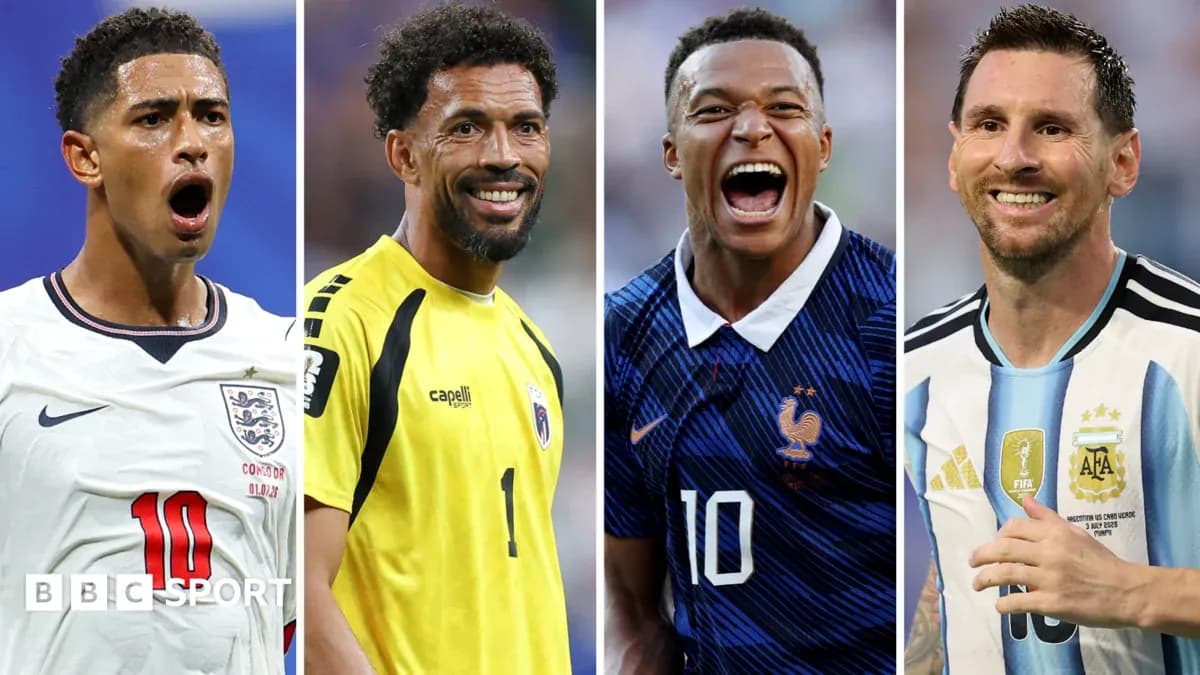
Messi took the Silver Ball, Kylian Mbappe the Bronze, but the debate around the player of the tournament never really stopped.
For some, it was Jude Bellingham, the Real Madrid midfielder who dragged England through tight games by sheer force of personality, then found yet another gear in the knockout rounds. For others, it was Rodri’s quiet dominance, or Michael Olise’s creativity for France, his seven assists and that scissor-kick against Sweden that crashed off the post and had the entire press box on its feet.
Many simply went back to Messi. Eight goals, four assists, eight games. England managed to smother him for 45 minutes in the semi-final, then he slipped the handcuffs and supplied two decisive assists. At 39, he did not just influence matches; he decided them.
Mbappe, relaxed and razor-sharp from his first news conference, stitched together a tournament of big goals, leadership and a level of off-the-ball work rarely seen from him before. Bellingham, Olise, Rodri – all had compelling claims. Yet the image that lingers is Messi, still pulling strings in sky blue and white, still rewriting the rules on longevity.
A new generation steps into the light
Behind the established giants, a new wave announced itself.
Pau Cubarsi, 19 and unflappable, played every minute of Spain’s campaign and walked away with Fifa’s Young Player award. His semi-final display against France felt like a statement: this is Spain’s next great central defender, and Barcelona’s future is already here.
Elsewhere, Morocco’s Ayyoub Bouaddi turned the New York New Jersey Stadium into his personal stage against Brazil. His movement, drifting into pockets, reading the game two passes ahead, drew comparisons with Patrick Vieira and Luka Modric.
Erling Haaland, already a superstar, somehow still counted as a breakout figure in the United States, where his goals and presence transformed him into a household name overnight. Switzerland’s Johan Manzambi, 20 years old and playing with a grin, left with three goals in four games and a £50m move to Aston Villa on the way.
Mexico handed the keys of their midfield to 17-year-old Gilberto Mora. He responded with a poise and vision that made seasoned observers talk about him as a future star. The USA’s Alex Freeman impressed so much at full-back that Mauricio Pochettino publicly suggested he could become one of the best in the world in his position.
The World Cup always promises a glimpse of tomorrow. This one delivered in bulk.
Stadiums, cities and a soundtrack of noise
Some nights, the football had to fight for attention with the atmosphere.
Mexico v England at the Azteca became one of those occasions people will talk about for years. The singing of the Mexican national anthem, a roar that felt physical, an “assault on the senses” in the best possible way. When an MC in a Mexico City restaurant asked where visiting diners were from and heard “England”, the whole place burst into applause. That was the mood of a country that lived every second of its World Cup.
In Philadelphia, Paraguay fans spilled out of the stadium in tears and disbelief after their side stunned Germany in one of the most dramatic penalty shootouts anyone could remember. A father and son, wrapped in flags, called it the best day of their lives. Those are the moments that explain why this tournament still matters so much.
Colombia supporters turned Arrowhead Stadium in Kansas City into a rolling party when they faced Ghana. Curacao’s tiny fanbase – from a nation of just 150,000 – somehow made enough noise in Philadelphia to sound like an entire continent.
Brazil’s travelling army did what Brazil always do: they took over cities. For 48 hours in Philadelphia, it felt like Rio or Sao Paulo had relocated.
Norway’s fans added a different kind of theatre. Their Viking row celebration, red shirts sitting in lines and “rowing” in unison, swept across stadiums. After games, players joined in, turning the ritual into a shared performance between pitch and stands. During the quarter-final against England in Miami, Norwegian fans taunted their opponents with “You’re going home” as they led 1-0. Moments later, Jude Bellingham equalised. Football has a cruel sense of timing.
And then there was the MetLife Stadium in New Jersey, host of the final but not the hearts of many travelling supporters. Huge, expensive, hard to reach, it felt more like a giant bowl in the middle of nowhere than a cathedral of the game. In a country full of purpose-built sports complexes, plenty thought it the wrong choice.
Guts, failures and what might have been
Not every heavyweight justified the billing.
Brazil, under Carlo Ancelotti, trudged through the tournament. Slow, uninspired, stripped of the flair that has defined their footballing identity, they were exposed and then deservedly dumped out by Norway in the last 16. It was a campaign that left more questions than answers.
France, with their star-studded frontline, delivered a strangely flat semi-final against Spain and paid the price. Portugal, carrying Cristiano Ronaldo and pre-tournament expectations, slipped out 1–0 to Spain in the last 16. Ronaldo scored three in five, but Portugal never hit the level many anticipated.
Senegal’s exit stung in a different way. Blessed with arguably the most talented squad in their history, they led Belgium 2-0 in the last 32 and still found a way to fall apart. Tactical errors and poor game management turned a golden opportunity into a painful lesson.
The USA rode a wave of early optimism at home, only for controversy around Folarin Balogun and a limp defeat by Belgium in the last 16 to puncture the mood. Scotland’s failure to reach the third-place qualification spots hurt, the delayed confirmation stretching out the agony.
And yet, the expanded format also gave the stage to stories that might never have existed.
Cape Verde, debutants and the smallest nation to reach the knockouts, went toe-to-toe with Argentina. They were not just plucky; they were brave, organised, and at times brilliant. Their run, and their refusal to bow, embodied exactly what many hoped the new World Cup structure would deliver.
The supporters who owned the stage
Ask those who criss-crossed the United States covering this tournament and they will talk as much about fans as about tactics.
Mexico’s support, both at home and in cities like Los Angeles, felt relentless. Green shirts everywhere, fireworks after wins, a constant soundtrack. For some, the Mexicans were the heartbeat of this World Cup, especially inside the Azteca, where the noise almost became a physical presence.
Norway’s Viking row turned into a viral phenomenon. Argentina’s travelling support, 60,000 strong in places like Miami and Kansas City, sang from first whistle to last and created the kind of wild, rolling atmosphere that opponents could feel in their bones.
Brazil’s fans, Colombia’s parties, Curacao’s improbable noise, the kindness of Mexico’s supporters applauding visiting English journalists in a restaurant – all of it stitched together into a tapestry that made this sprawling World Cup feel, at times, like a single shared carnival.
On roads and in car parks across six cities, fans stopped reporters for selfies, handed out beers and sausages from the back of pick-up trucks, and asked the same question over and over: “Is it coming home?”
And at the centre, still, Lionel Messi
Amid the chaos, the travel, the late nights and the penalty shootouts, one constant remained: Lionel Messi shaping games, shaping narratives, shaping legacies.
This was not a gentle farewell tour. It was a 39-year-old refusing to accept the limits of time, leading Argentina back to the brink, dictating semi-finals, deciding knockout ties, collecting the Silver Ball while many insisted he was still the best of the lot.
He did it with goals. He did it with passes. He did it with the quiet authority that has turned him from prodigy to patriarch.
The World Cup in the United States belonged to many – to Rodri’s control, to Cubarsi’s emergence, to Cabral’s thunderbolt, to Vozinha’s miracles, to the fans who turned cities into cauldrons.
But as the dust settles and attention drifts towards the next cycle, one question lingers above all the others: how many more times can Lionel Messi bend a World Cup to his will?