.svg&w=384&q=75 "GoalGist logo")
Lionel Messi Reflects on World Cup Heartbreak After 2026 Final
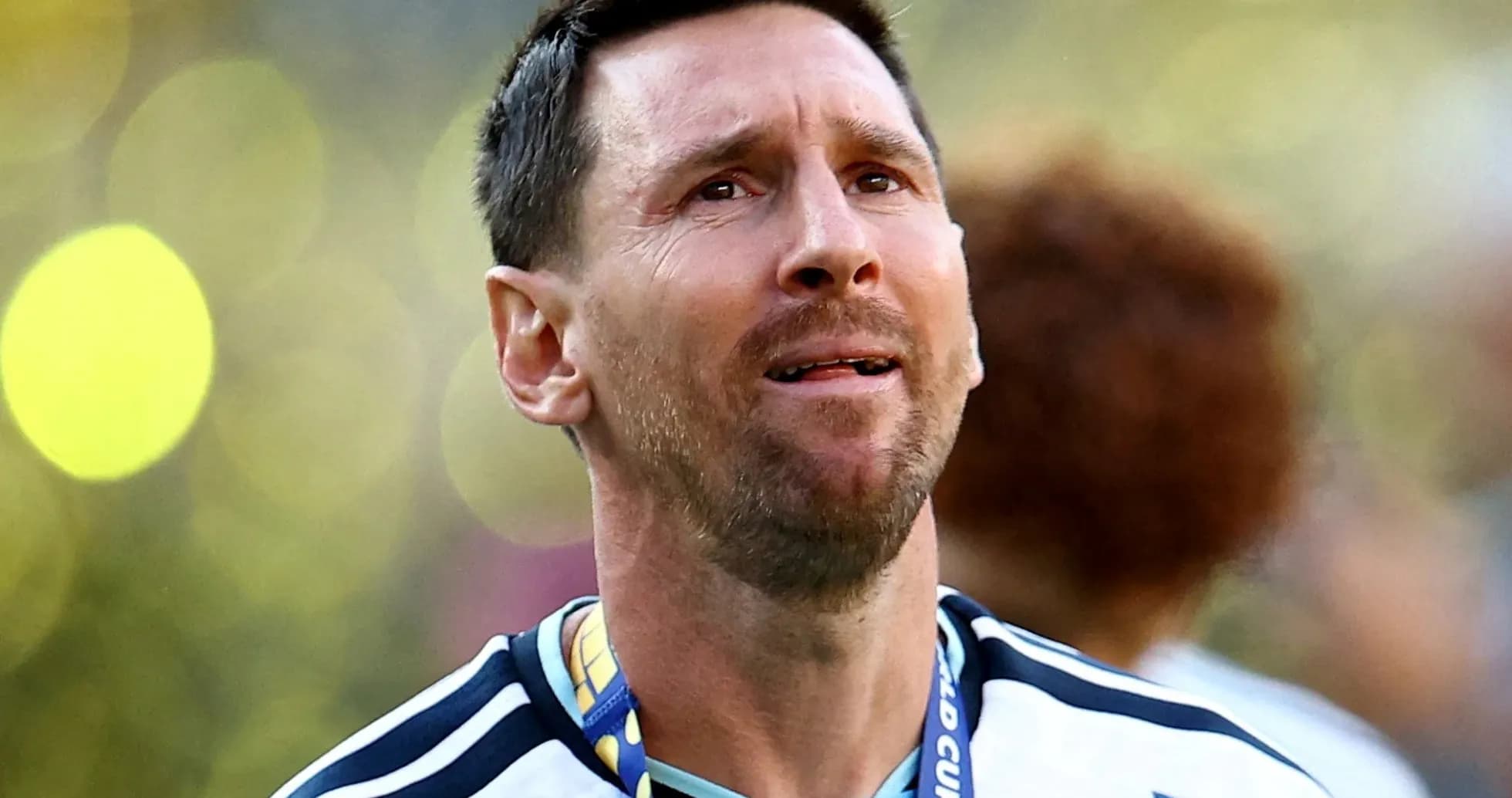
Lionel Messi stood alone on the MetLife Stadium turf, silver medal around his neck, eyes wet and fixed on nothing in particular. The rest of Spain’s celebration swirled around him in East Rutherford on Sunday night. For the first time, it felt like the World Cup might finally be slipping out of his reach for good.
Argentina’s 1-0 defeat to Spain in the 2026 final did more than cost them a second straight title. It left their captain wrestling with the brutal edge of sport: the knowledge that even legends run out of tournaments.
Messi didn’t confirm anything. He didn’t announce a farewell or close the book on his World Cup career. Instead, a day later, he reached for perspective.
“The pain is immense, and this wound will take time to heal,” he wrote on Instagram on Monday, posting a photo of himself with that unwanted silver medal. “But I also hold onto all the good things… The matches we turned around by giving it our all – moments that will remain in our memories forever – and the support of an entire country which, combined with this group’s hard work and effort, brought us back among the world’s elite once again.”
The words carried the weight of a man who has seen both ends of this tournament. From the despair of 2014 to the ecstasy of 2022, and now to the hollow quiet of a final lost without registering a single shot on goal.
From Qatar’s summit to New Jersey’s heartbreak
Four years ago in Qatar, Messi completed the circle. Argentina’s wild 3-3 draw with France, sealed on penalties, delivered the one trophy that had always loomed over his career. It was the crowning piece, the night he finally joined – or for many, surpassed – the pantheon he’d been measured against since he was a teenager.
That triumph was supposed to buy him peace. Instead, it set the bar.
In North America in 2026, Argentina arrived as champions and played like it. They were sharp, hardened, and ruthless when it mattered. They dragged themselves past England in the semifinal, another comeback etched into a catalogue of resilience that has defined this generation.
Then came Spain.
On Sunday, the European champions squeezed the life out of Argentina’s attack. The Spanish back line and midfield strangled supply, shut down passing lanes, and turned Messi’s influence into a flicker rather than a blaze. Ninety minutes, no shots on target. A final that turned into a tactical straitjacket.
For Messi, who turned 39 during the tournament, it was a harsh reminder that even the greatest can be smothered by a well-drilled opponent and the march of time.
“It is hard to fully appreciate our achievement right now, but this group reached two consecutive World Cup finals,” he wrote. In the middle of the pain, he refused to ignore the scale of what Argentina had done.
A career of records, and one more chase
Even in defeat, he kept rewriting history.
Early in the tournament, Messi passed Miroslav Klose’s long-standing mark of 16 World Cup goals. He pushed the record out to 21 by the time Argentina walked off in New Jersey, another line in a record book already crowded with his name.
Then Kylian Mbappé arrived in the frame again.
The French forward, who had chased him so ferociously in the 2022 final, hunted him down across this World Cup as well. Mbappé finished on 22 World Cup goals, one more than Messi, and took the all-time scoring record for himself. He also snatched the Golden Boot, his 10 goals edging Messi’s eight.
Twice now, their careers have intersected on the biggest stage. In Qatar, Messi held the trophy but watched Mbappé claim a hat-trick. In North America, the roles reversed: no title, no Golden Boot, and another reminder that the next generation is no longer waiting. It is here.
The clock, and the country
The question hangs in the air: is this it?
Messi will be 43 when the 2030 World Cup kicks off in Spain, Portugal and Morocco. He didn’t address the future directly, didn’t tip his hand. His message was about the present – the hurt, the pride, the journey.
“Thank you from the bottom of my heart for every greeting and message,” he wrote. “Once again, we managed to unite as a country and stand together, sharing the immense pride of being Argentine. I also want to congratulate Spain on winning the championship.”
Even at his lowest, he made space for gratitude and respect. That has become part of his late-career identity with the national team: less the tortured genius, more the calm leader who understands what this shirt means beyond trophies.
This Argentina side has lived two very different finals in four years. One a chaotic masterpiece that ended in immortality, the other a suffocating defeat that will sting for a long time. Both, though, have reinforced one truth: they are back among the game’s heavyweights and expect to stay there.
Rest, recovery, and whatever comes next
The fallout from this World Cup won’t be confined to the international stage.
According to ESPN, Messi and Rodrigo De Paul will sit out Inter Miami’s next two regular-season matches and skip the MLS All-Star Game as they rest and recover from the tournament. For club and country, the mileage is catching up. Bodies need a pause, even when minds are already searching for the next challenge.
For now, there are no farewell tours, no official goodbyes, no speeches from balconies. Just a 39-year-old standing in the middle of a stadium in New Jersey, medal around his neck, knowing he has given everything and still come up one goal short.
If this was Lionel Messi’s last World Cup match, it ended not with a coronation, but with a question: how do you walk away when you still look like you can carry a nation?

