.svg&w=384&q=75 "GoalGist logo")
Kevin Keegan: The Link Between Liverpool and Hamburg
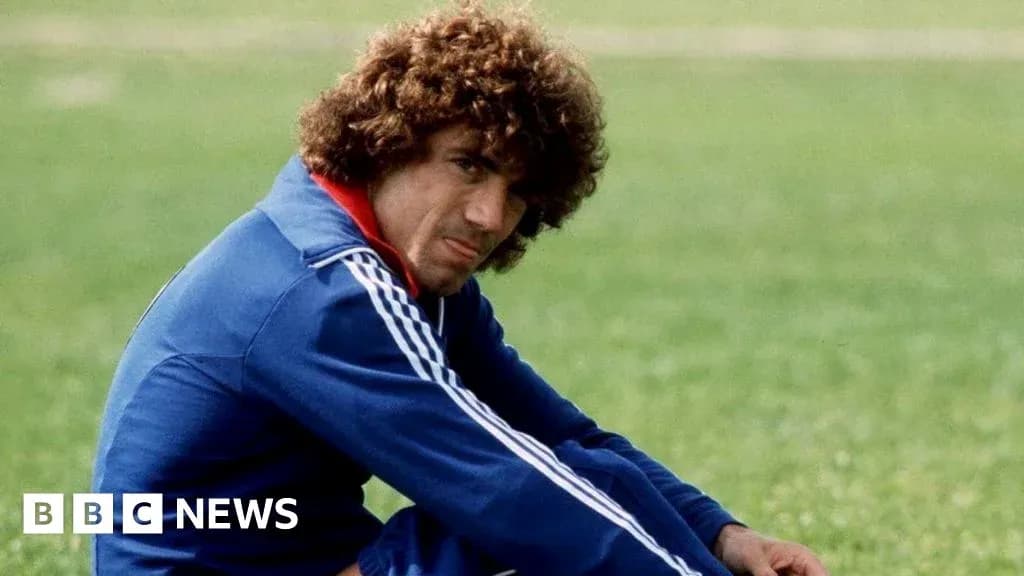
Kevin Keegan’s death this week, at 75, has drawn tributes from every corner of the game. In Liverpool and Hamburg, it has struck something deeper. This is not just mourning for a great player. It is the loss of a man who stitched two football cities together and never let the thread snap.
Liverpool City Region Mayor Steve Rotheram put that bond into words in a letter to Hamburg’s mayor, Dr Peter Tschentscher. It was meant to be a note of thanks before a shared celebration. It became an epitaph.
Keegan, twice a Ballon d'Or winner and one of the most decorated English footballers of all time, was due to travel with Rotheram to Hamburg’s famous Harbour festival, the Hafengeburtstag. Cancer stopped him. The diagnosis meant the former England striker could not make what would have been a poignant return to the city where he reinvented himself and, in many ways, Europeanised the English star.
Rotheram’s letter, seen by the Local Democracy Reporting Service, does not read like a politician’s tidy tribute. It sounds more like a fan talking about one of their own.
“For one half of our football-mad city, Kevin was a footballing hero,” he wrote. “For the other, a well-respected irritant on derby day.”
That line captures Keegan’s Liverpool life. An icon in red. A menace in blue. But always respected. He was the beating heart of Bill Shankly’s and Bob Paisley’s emerging European force, lifting seven major honours with Liverpool FC, including the club’s first European Cup in 1977. Fittingly, that final in Rome was his last appearance for the club. He walked off the pitch a European champion, then walked towards a new challenge in Germany.
“When Kevin left our shores for Germany in 1977, he did more than make a then-record transfer between two football clubs,” Rotheram wrote. “He built a bridge between two great cities.”
That bridge was not just about goals and trophies. Keegan arrived at Hamburg SV as a superstar and left as a cult figure. He won the Ballon d'Or twice, in 1978 and 1979, with HSV, and his relentless energy, his refusal to shrink from the fight, turned him into a symbol of the club’s ambition. In Rotheram’s words, his success “belonged equally to Liverpool and Hamburg”, where he was both “admired and loved”.
To the mayor, Keegan represented something bigger than medals. “To me,” he wrote, “he embodied better than anyone else that famous maxim: football is the people’s game.”
The relationship he forged between the two ports has outlived his playing days. Rotheram praised Keegan’s efforts to keep Liverpool and Hamburg close, a connection now strong enough to warrant its own exhibition, celebrating the shared football story and the man at the centre of it.
Earlier this year, at the Liverpool City Region pavilion, Keegan could not attend in person. He still found a way to speak. “As you may remember, Kevin wrote some words for me to convey to the large audience… back in May,” Rotheram reminded his Hamburg counterpart. The mayor joked about his “pidgin German and broad Scouse accent”, but the message landed. The crowd warmed to it. Keegan, absent physically, was still in the room.
He had planned to be back in Hamburg for the Hafengeburtstag, to stand again on the banks of the Elbe. The cancer diagnosis changed everything. “He was devastated not to be attending,” Rotheram wrote, “but he did provide me with a personal note that I felt honoured to read out on the Liverpool stage on the banks of the Elbe.”
That note has now become part of his legacy. Rotheram shared Keegan’s message in his letter to Dr Tschentscher. “In Kevin’s words, once again: Forgive my Plattdeutsch, but I love Hamburg.”
It is a simple line. It says enough. Keegan, the kid from Doncaster who conquered Anfield, then charmed Hamburg, never forgot either place. He carried both cities with him.
Rotheram closed with a message that could have been sung from the Kop or from the Nordtribüne. “On behalf of the people of Liverpool, we send our deepest condolences to Kevin’s friends, the HSV family and the people of Hamburg. Thank you for loving him as we did. You’ll Never Walk Alone.”
In the end, that is where Kevin Keegan stands in football history: not just as a great player, not just as a serial winner, but as a living bridge between two proud football cities who now grieve the same man and share the same song.