.svg&w=384&q=75 "GoalGist logo")
Julian Nagelsmann Faces Challenge After Lenny Karl's Injury
Julian Nagelsmann’s World Cup plans have been jolted by the kind of news every national coach dreads: a teenage prodigy, pencilled in as a wildcard for the tournament, is out before a ball is kicked.
The Germany boss did not hide the emotional impact of losing Lenny Karl, whose rapid rise had injected freshness and excitement into the squad.
“I feel incredibly sorry for Lenny,” Nagelsmann said, laying bare the mood in camp. “It’s a huge shock for him and all of us that he’s missing the World Cup. It’s only a small consolation that he’s young and has many tournaments ahead of him. We would have loved to have him on the team.”
A plan carefully built over months suddenly has a hole in it. Not just tactically, but emotionally. Karl had become a symbol of the new wave, the Bayern prospect whose fearlessness and flair hinted at something different for Germany on the biggest stage.
The player himself gave the clearest picture of the blow. On Instagram, Karl wrote that he “did absolutely everything” to be fit for the World Cup, only to see injury strike at the worst possible moment. The message read like a raw outpouring rather than a polished statement: he spoke of pain “beyond words,” pledged to come back stronger, and promised to support his teammates “every single minute” from afar. For a teenager, this was the harshest lesson in elite football’s timing and cruelty.
Nagelsmann, though, cannot dwell. The tournament clock is ticking, and the gap in his squad demands a response.
Ouedraogo Steps In
Into that space steps Assan Ouedraogo. Not as a like-for-like replacement in terms of narrative, but as a serious footballer in his own right.
“With Assan Ouedraogo, we’re now getting a player who, like Lenny, had a fantastic start with us,” Nagelsmann said. “He’s also highly talented and we expect him to play with courage and freedom.”
Those last two words matter. Courage. Freedom. They tell you exactly what the coach wants from his young midfielders at this World Cup: no shrinking, no deference, no hiding behind senior names.
Ouedraogo arrives off the back of a strong domestic season with Leipzig, where he produced four goals and three assists in 19 Bundesliga appearances. Those numbers are not youth-team padding; they come from real minutes in a high-intensity league, in a side that demands vertical, aggressive football.
He has already marked his brief time with the senior national team in similar fashion, scoring on his only international appearance so far. Now he must compress what is usually a months-long integration into a handful of training sessions before competitive football starts.
There is no gentle ramp-up. No soft landing.
A Race Against Time Before Group E
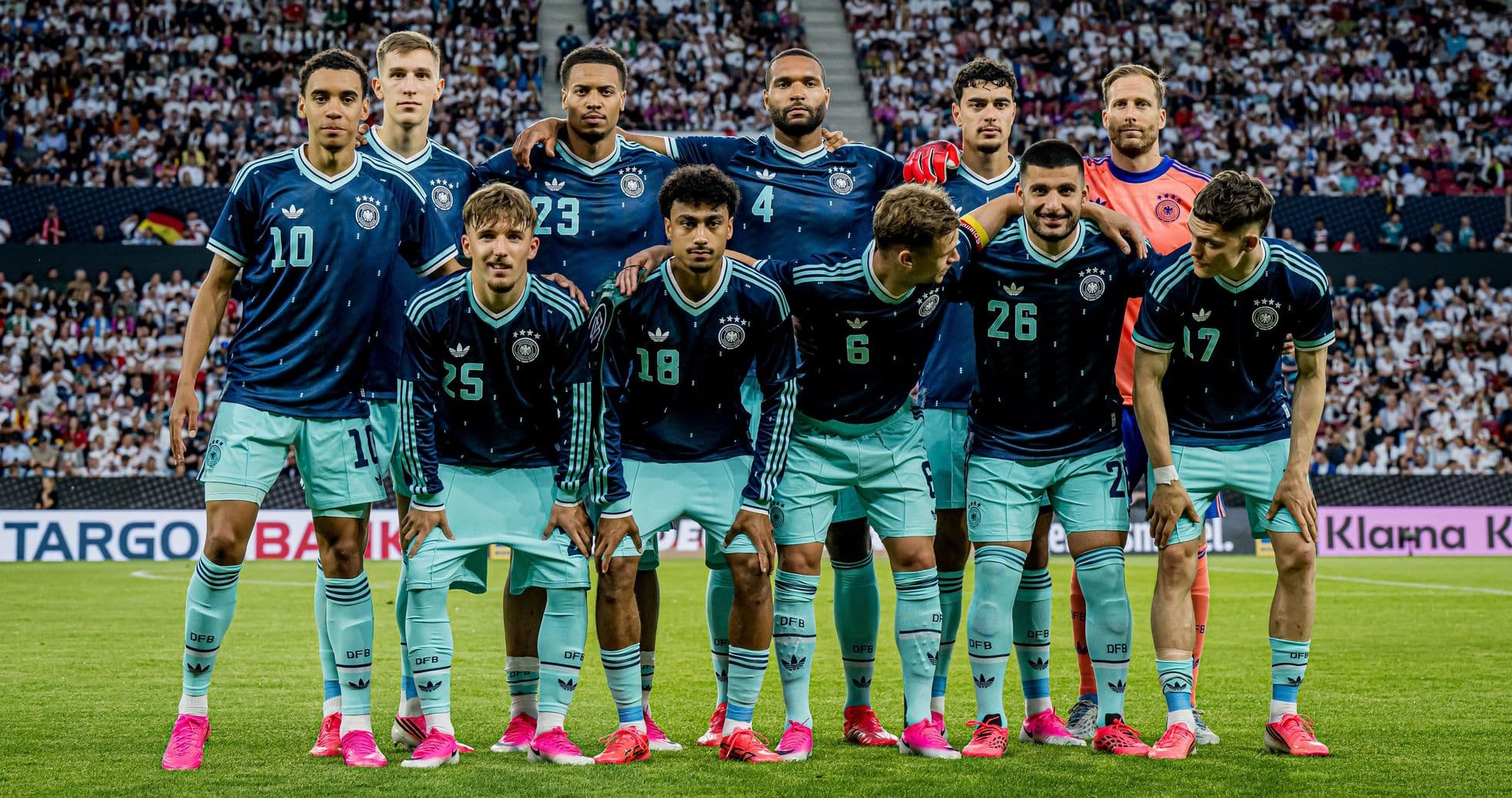
Germany have one final rehearsal: a warm-up match against the US. For Nagelsmann, that fixture now doubles as a live audition for Ouedraogo and a stress test for a midfield that has just lost one of its brightest young options.
Then comes the real thing.
The Group E campaign opens against Curacao on June 14, a game that will set the tone for a section that also includes Ivory Coast and Ecuador. It is a group with contrasting styles and physical profiles, the kind of mix where midfield balance and bravery on the ball will decide more than any pre-tournament ranking.
Karl will watch it all from home, his World Cup dream delayed, not destroyed. Ouedraogo will live it from inside the storm, asked to turn promise into presence on the global stage.
For Nagelsmann, the question is blunt: can a reshaped, youthful core absorb this setback and still carry Germany deep into the tournament, or will this early blow linger longer than anyone inside the camp dares to admit?