.svg&w=384&q=75 "GoalGist logo")
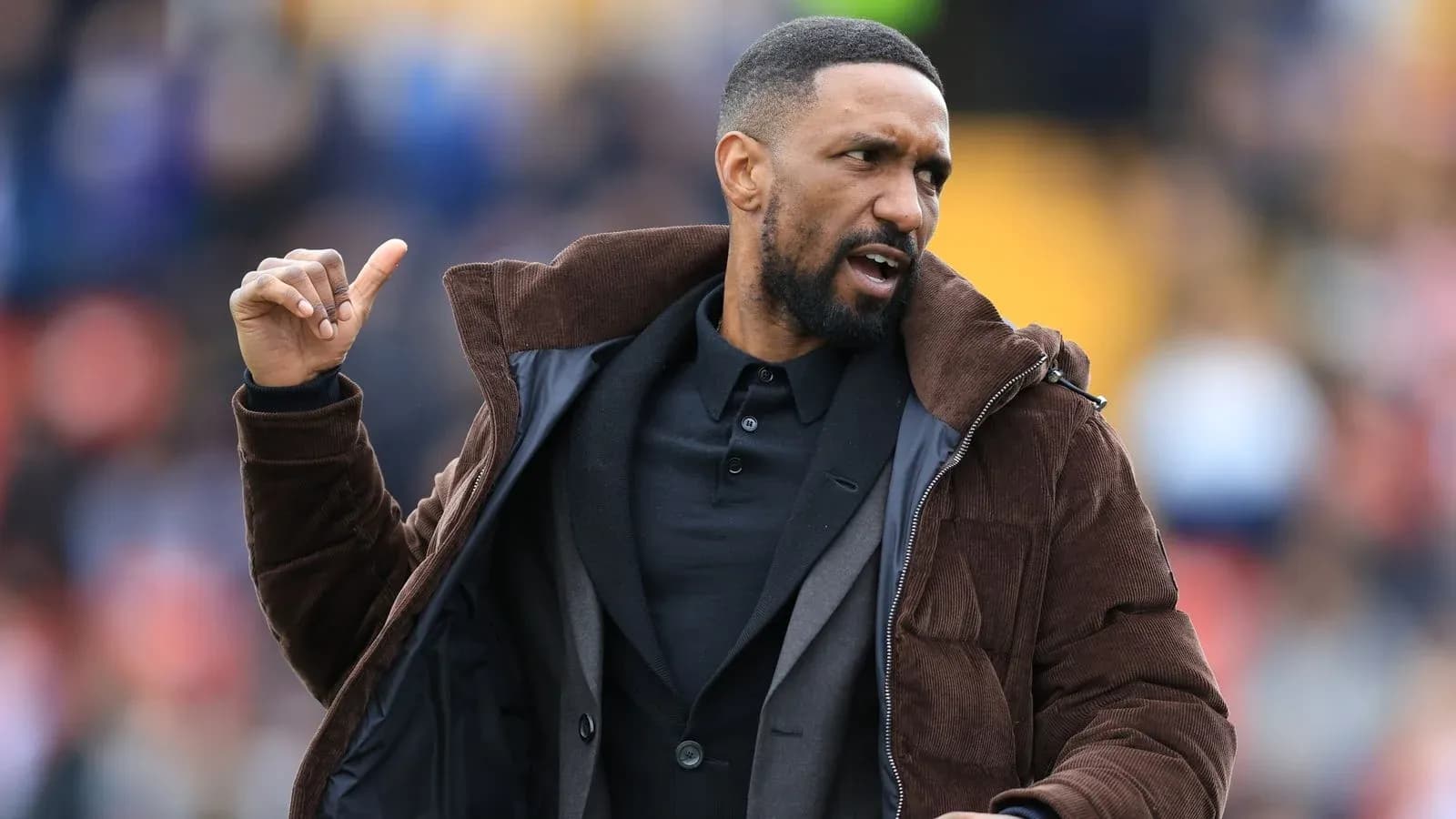
Jermain Defoe's Management Debut Ends in Controversy
Jermain Defoe’s first step into management has ended in a bitter public split, with Woking’s director of football Jody Brown accusing the former England striker of failing to attend a key meeting and a training session before his abrupt exit.
Defoe’s contract at the National League club was mutually terminated on Thursday, just four months after his appointment in March. His record: six games, two wins, one defeat. A small sample, but enough to give the sense of a project in its infancy rather than crisis.
Yet the manner of the separation has ignited something far more combustible than a routine early-season parting.
Brown hits back
On Saturday morning, Brown issued a strikingly forthright statement that cut directly against Defoe’s account of events.
Defoe, speaking via Instagram, had said “circumstances have ultimately made it impossible for me to continue” and described his spell at Woking as “an eye-opening managerial experience.” He spoke of pride, of a “fantastic” group of players, of a journey ending too soon.
Brown painted a very different picture.
“The recommendation to appoint Jermain as manager was mine, and I take full responsibility for it,” he said, stressing that recruitment, staffing decisions and football matters had been “heavily influenced” by the 43-year-old. The club, Brown insisted, had been “fully committed” to backing their rookie manager.
Then came the sting.
“As we have seen many times before, success as a player does not always translate into management and leadership,” Brown said, adding that there had been “growing concerns” across the club during pre-season.
Those concerns, he explained, were not vague grumblings. They were specific enough that Brown requested a brief written report from Defoe and assistant Paul Bracewell, outlining squad depth, recruitment targets and any operational issues that might be holding the team back. The aim, he said, was to “provide the support required and accelerate preparations for the season.”
The report never arrived.
The no-show
Pressure built. Feedback from players, staff and other departments continued to reach Brown. To confront it, the club scheduled a meeting involving the directors, Defoe, Bracewell and the head of operations to review preparations for the campaign.
According to Brown, neither Defoe nor his assistant turned up. They did not attend training that day either.
“Throughout his tenure, Jermain had never communicated any serious concerns directly to me, so I am not going to speculate on his reasons,” Brown said.
Then, in a pointed analogy, he widened the lens to the everyday reality of a football club.
“Every football club faces challenges,” he said. “Players want more game time, improved contracts or transfers. The media team might want better equipment, the medical department more interns, the strength and conditioning staff larger gym space, and the car park attendants may want more coffee. But people do not just fail to turn up.”
It was as close to an accusation of unprofessionalism as a club executive is likely to make in public about a departing manager. Sky Sports News has contacted Defoe for comment.
Defoe’s version
Defoe, for his part, had already chosen his words carefully when announcing his departure.
“Following recent discussions, I can confirm that I have mutually agreed to leave my position as manager of Woking FC,” he wrote. “Unfortunately, circumstances have ultimately made it impossible for me to continue in the position.”
He stressed his pride in the work done and his belief that “we were building something special,” reserving particular praise for the players and thanking Todd Johnson for the opportunity to manage the club.
“I’m really disappointed the journey has ended so soon,” he added, “but I leave with great pride in what Paul Bracewell, Karl Halabi and I were building at the club.”
That “eye-opening” experience, he said, would make him “stronger for the next challenge” in his career.
The contrast between the two narratives is stark: Defoe hinting at obstructive “circumstances” without elaboration; Brown highlighting missed reports, missed meetings and a manager who, in his view, never voiced major concerns directly.
From EFL dreams to a fractured exit
The split is all the more jarring because of how Defoe’s reign began. Cameras followed his opening steps into management, with Sky Sports present for his first two games: a six-goal thriller against Eastleigh and a goalless draw with Braintree Town.
After that 0-0, Defoe was bullish. He spoke openly about doing “something special” at Woking and even entertained the idea of pushing for promotion to the EFL.
“People talk about it being impossible. That means nothing,” he said. “I truly believe that we can do something special. When you become a manager and a coach, you want that sort of challenge. You want to get up in the morning and have a goal to strive to.”
Those ambitions now lie in pieces, at least in Surrey. A project that was supposed to showcase a Premier League great’s transition into the dugout has instead become a case study in how quickly managerial dreams can unravel.
Woking must now salvage a season shaped, in part, around Defoe’s influence on recruitment and staffing. Defoe must decide where this bruising first taste of management sends him next.
For a man who made a career out of timing his runs to perfection, his next move off the pitch will say a great deal about how far he really wants to go in this side of the game.

