.svg&w=384&q=75 "GoalGist logo")
Iran's Path to World Cup 2026: Beiranvand's Role, Taremi's Impact, and Azmoun's Absence
The faces are familiar. The stakes will be bigger. As Iran edge toward World Cup 2026 in the USA, Mexico and Canada, the spine of Team Melli is already taking shape – and it is built around a veteran goalkeeper, a prolific No. 9 and a conspicuous void where Sardar Azmoun used to stand.
Beiranvand, From Pavement to World Stage
Alireza Beiranvand is 33 now, but there is no sign of Iran moving on from their most compelling goalkeeping story. More than 80 caps, two World Cups, and one unforgettable moment: that penalty save from Cristiano Ronaldo in 2018, the first spot-kick Portugal had ever failed to convert at a World Cup.
His journey remains the emotional heartbeat of this team. The boy who ran away from his nomad family at 12, slept on the streets of Tehran, worked whatever jobs he could find just to stay close to football, now stands as the overwhelming favourite to be Iran’s No. 1 again in 2026.
Behind him, the hierarchy is clear. Hossein Hosseini of Sepahan is the main challenger, an assured and experienced deputy who may have to accept another tournament as back-up. Payam Niazmand at Persepolis and the younger Mohammad Khalifeh of Aluminium Arak FC round out the goalkeeping pool, both hoping to claim the third ticket to North America.
Beiranvand’s story is already written in bold ink. The others are still trying to squeeze their names onto the page.
Midfield Brains and Young Legs
If Beiranvand brings the backstory, the midfield brings the balance.
Saman Ghoddos remains a central figure. Comfortable between the lines, clever in tight spaces, he is expected to shoulder a major creative burden at the World Cup. Alongside him, Saeid Ezatolahi provides the structure. The Shabab Al Ahli man missed the March friendlies with a foot injury, but the expectation is that he will be ready for the summer – a vital piece in front of the back four.
Omid Noorafkan of Sepahan and Mohammad Ghorbani of Al Wahda offer experience and versatility in the middle of the park. They are not the headline acts, but they are the types of players managers lean on in tournament football: disciplined, reliable, tactically mature.
Then there is the new energy. Amir Razzaghinia, the Esteghlal youngster, is one of the most intriguing names in the squad picture. Dynamic, hungry, and still unproven at this level, he could be the surprise that jolts Iran’s midfield into something fresher if Amir Ghalenoei trusts him on the biggest stage.
Taremi, Still the Reference Point
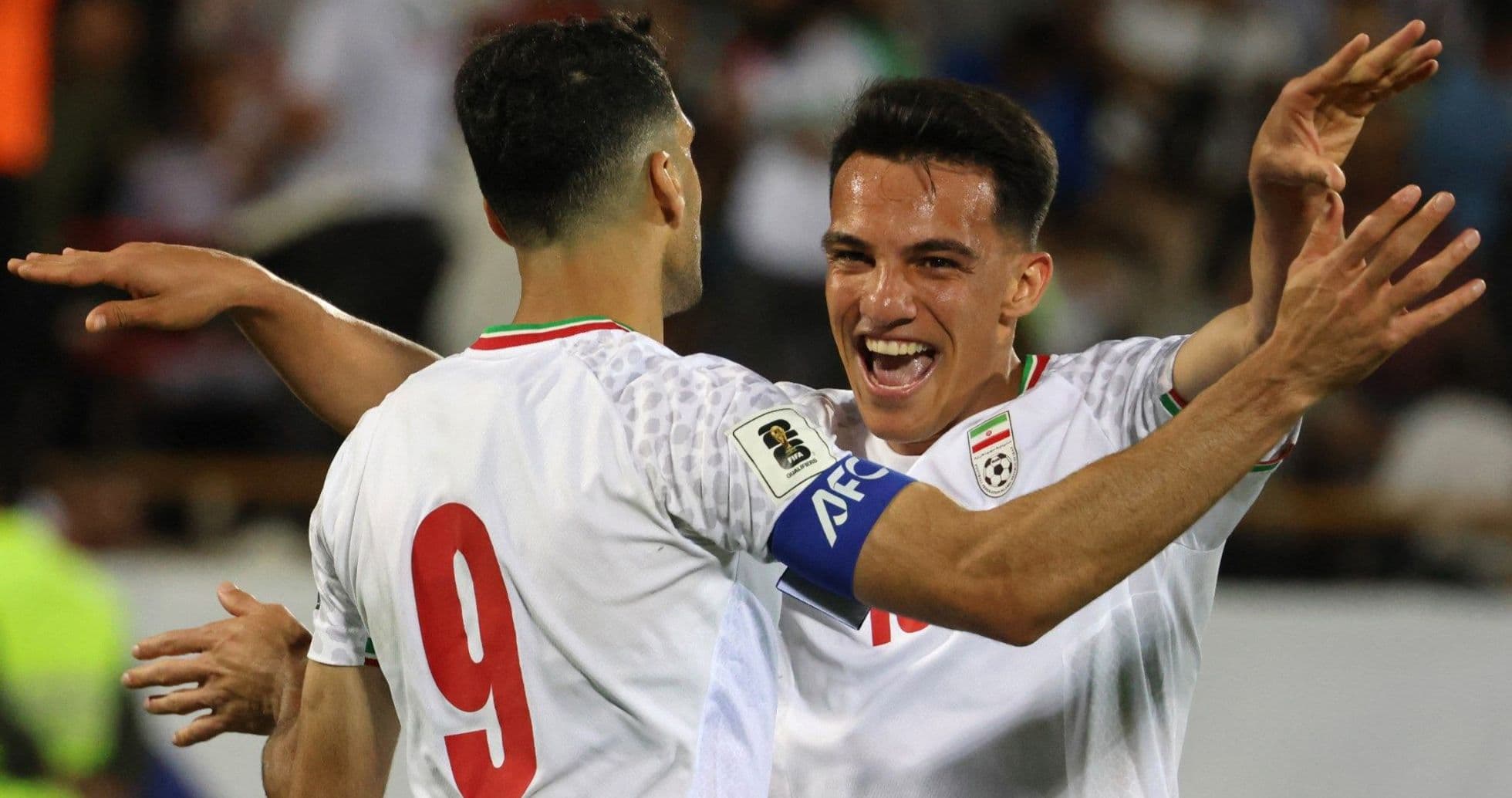
Up front, nothing has changed. Everything still runs through Mehdi Taremi.
The Olympiacos striker is heading toward his third World Cup, carrying more than 100 caps and over 50 international goals. He knows how to score on this stage – his brace against England in the 6-2 defeat at Qatar 2022 was a reminder that even when Iran struggle, Taremi remains a constant threat.
He will arrive in North America off the back of another prolific season in Greece, still leading the line, still the man expected to turn half-chances into lifelines. For all the tactical talk and squad debates, Iran’s attacking identity is simple: get Taremi in the box, and trust his instincts.
Around him, the supporting cast is deep.
Alireza Jahanbakhsh, now at FCV Dender EH after spells with Brighton and in the Eredivisie, offers width and experience on the flank. Mehdi Ghayedi, currently with Al-Nasr, is another near-certainty for the squad, a lively, inventive forward who can unsettle defences with his movement and close control.
The pool is broad: Ehsan Mahroughi (Foolad), Ali Alipour and Hossein Abarghouei (both Persepolis), Shahriyar Moghanlou (Kalba), Mohammad Mohebi (Rostov), Amirhossein Mahmoudi (Persepolis), Ali Gholizadeh (Ekstraklasa), Mehdi Torabi (Tractor), Amirhossein Hosseinzadeh (Tractor) and others all jostle for minutes and roles.
Yet one absence dominates every conversation.
The Azmoun Void
On pure numbers, Sardar Azmoun is irreplaceable. Ninety-one internationals. Fifty-seven goals. A strike rate that places him among the elite in international football.
But Iran are preparing for a World Cup without him.
Azmoun was left out of March’s friendlies amid reports alleging a perceived act of disloyalty to the government. The situation has pushed him to the fringes at precisely the moment Ghalenoei is trying to lock in his core for 2026. If he does not return, Iran lose more than just a goalscorer; they lose the perfect foil for Taremi, the one forward who has consistently shared the burden rather than just supported it.
The door, for now, has opened to another profile. Dennis Eckert, the Standard Liege forward with Iranian ancestry, has been called up in Azmoun’s place for those March games. It is a chance – maybe the chance – for Eckert to convince Ghalenoei that he belongs in the World Cup squad, either as a partner to Taremi in certain games or as the first man off the bench when Iran need a different look in attack.
The Shape of Team Melli
Tactically, the picture is becoming clearer.
Ghalenoei is expected to lean on a traditional back four. On the right, Salheh Hardani brings energy and aggression; on the left, Milad Mohammadi offers balance and experience. In the middle, Shojae Khalilzadeh and Hossein Kanaanizadegan look the likeliest central pairing, a combination of aerial strength, combativeness and tournament know-how.
In front of them, Ezatolahi and Ghoddos form a two-man midfield base – one to shield and recycle, the other to connect and create. Ahead of that double pivot, the attacking three behind Taremi could feature Jahanbakhsh on one flank, Ghayedi on the other and Mohammad Mohebi operating in the central attacking role.
On paper, it is a 4-2-3-1. In reality, it is a system built to funnel the ball into dangerous areas for Taremi while keeping the defensive structure intact.
Predicted Iran Starting XI for World Cup 2026 (4-2-3-1): Beiranvand; Hardani, Khalilzadeh, Kanaanizadegan, Mohammadi; Ezatolahi, Ghoddos; Jahanbakhsh, Ghayedi, Mohebi; Taremi.
A Familiar Core, A Different Story?
Iran will arrive at World Cup 2026 with a veteran goalkeeper who once slept on the streets, a centre-forward who keeps rewriting the record books, and a midfield blend of battle-hardened regulars and ambitious newcomers.
What they may not have is Sardar Azmoun.
That single missing piece could define the ceiling of this team. Will Taremi’s goals and Beiranvand’s presence be enough to drag Iran into a new chapter on the world stage, or will the absence of their other great finisher haunt them when the margins tighten and the knockout rounds beckon?