.svg&w=384&q=75 "GoalGist logo")
Heimir Hallgrimsson's Post-Match Reflections After Ireland's Draw with Canada
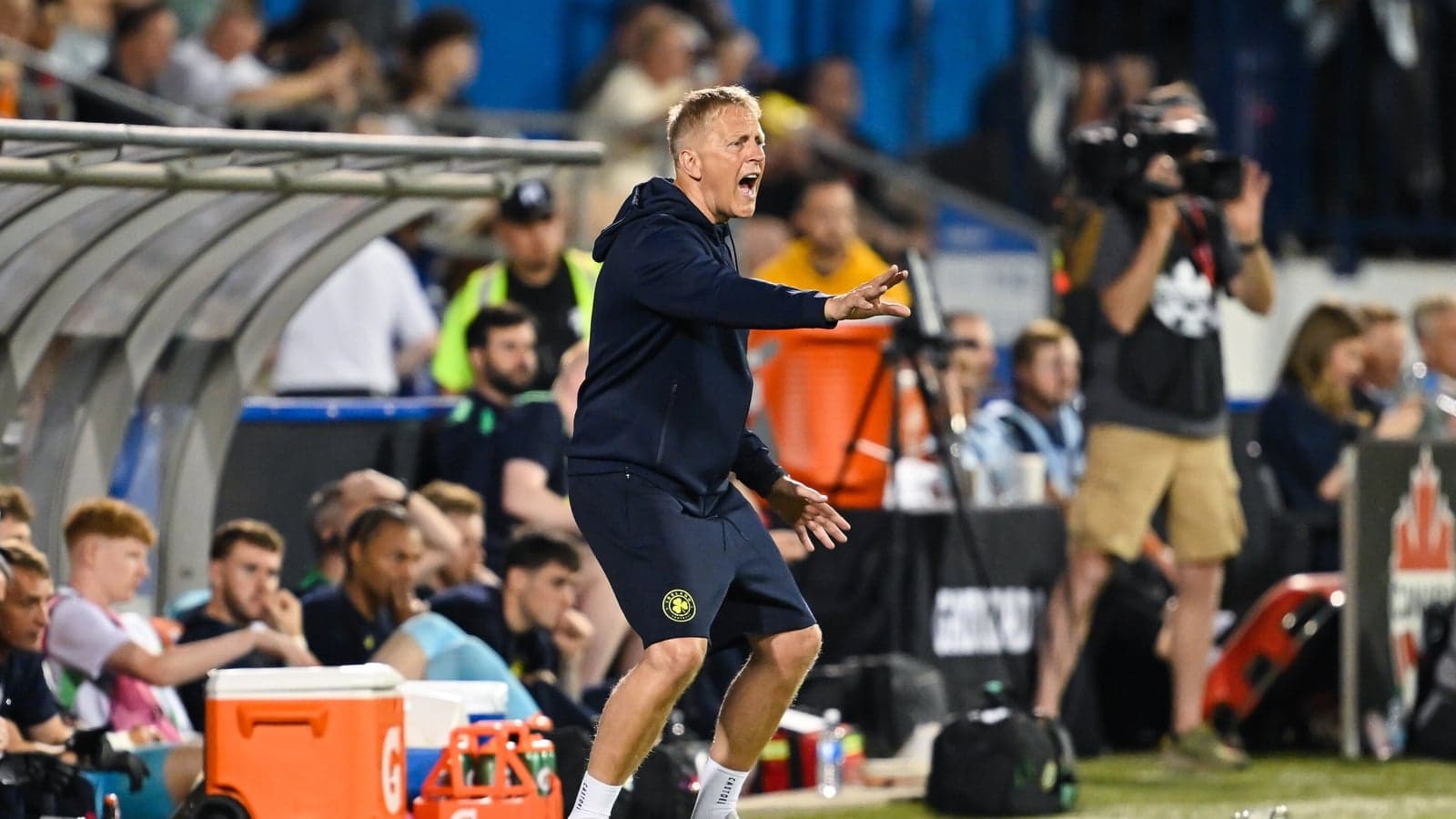
Heimir Hallgrimsson does not rattle easily. Since taking the Republic of Ireland job, he has largely projected calm, even in defeat. Montreal was different.
For the first time in his tenure, there was a sharp edge to his post-match reflections. The 1-1 draw with Canada may read like a decent away friendly on paper, but that opening 45 minutes cut deep.
Ireland trailed at the break to a Jake O’Brien own goal, and the scoreline flattered them. The performance certainly didn’t.
“It was unlike everything we have done in recent games,” Hallgrimsson told RTÉ Sport, his words clipped, his irritation obvious. The experimental XI he had sent out looked exactly that: disjointed, hesitant, reactive. Ireland waited to see what Canada would do and then followed along, a beat behind every phase.
Everything felt off. The manager even traced it back to the warm-up, where he had sensed something he didn’t like: players moving heavily, the spark missing.
“Maybe it was the humidity, the heat, or maybe our training has been too tough,” he said. Whatever the cause, Canada seized on it. “They deserved to score,” Hallgrimsson admitted, adding that Ireland were “lucky to go 1-0 down at half-time.”
That luck bought him 15 precious minutes in the dressing room.
The interval became a line in the sand. The message was blunt: be braver, press higher, move quicker, make decisions. Stop waiting. Start dictating.
The response came.
Ireland emerged after the break looking like a side with a point to prove. The introduction of Liam Scales and Jamie McGrath gave the team a better balance, a cleaner structure. The passes went forward earlier, the press bit harder, the tempo finally matched the occasion.
“As much as I was unhappy with the first half, I was much happier with the second, really happy,” Hallgrimsson said. The contrast was “black and white” in his mind.
The equaliser arrived in suitably scrappy fashion, but it was born out of the very urgency he had demanded. Troy Parrott stepped up to take a penalty and saw his effort saved, but Chiedozie Ogbene had read the moment perfectly.
Stationed on the edge of the box, he copied Parrott’s run-up, timing his own movement to attack any rebound. When the ball spilled, he was already on the move, sweeping it in from close range.
“I had confidence that Troy was going to score,” Ogbene said. “I was outside the box, mimicked his run up, I was fortunate the ball landed on my feet and I was able to tap it in.”
Fortune favours those who think quickly. Ogbene did, and Ireland were level.
From there, the game opened up. Ireland suddenly looked capable of stealing it, even if their manager knew that would have been harsh on Canada. Dawson Devoy and Mason Melia both had big chances late on, the sort that swing friendlies and spark headlines.
“We could have stolen it but I think it would have been a theft,” Hallgrimsson said, content to call it “a good draw” in the circumstances. Canada had their moments too; this was no one-sided second half. But Ireland had at least rediscovered their pulse.
Behind the scoreline, this night in Montreal carried a different kind of significance. It was a statement about where Hallgrimsson wants to take his squad and who he is willing to trust to get them there.
Devoy, straight into the starting XI, became the first League of Ireland player to be capped at senior level since Jack Byrne in November 2020. It was not a token gesture. It was a clear sign that domestic form matters, that the pathway is open.
As the game wore on, the door opened wider. Portugal-based Joe Hodge came on, joined by St Pat’s attacking midfielder Kian Leavy and Shamrock Rovers teenager Adam Brennan, both handed their debuts. Recent newcomers Jaden Umeh and Corrie Ndaba were given first starts.
This was not a tired end-of-season kickabout. It was a 24-day project.
Hallgrimsson made that plain. “We had 21 involved in Spain, 27 in these camps,” he said. “It would have been easy for us to make it a joke camp after a long season, players are tired, and after that defeat in Czechia. We used this as 24 days in camp; we used it to think about the future and to deepen the squad.”
That future is the Nations League in the autumn, and beyond that a qualifying campaign that will demand more than a settled XI. It will demand depth, resilience, and competition in every position. Montreal, for all its flaws, fed that plan.
“This camp will not only benefit us now but also in the future,” Hallgrimsson insisted. On this evidence, he is not simply paying lip service to the idea of a broader pool. He is building it, piece by piece, and willing to accept some rough edges along the way.
For the players on the fringes, the message is just as clear. Perform in training, and there is a route in. Ogbene, now an established figure after his loan spell at Sheffield United, has watched that new wave arrive and liked what he has seen.
“All these guys deserve to be here, they showed well in training and there was a good feeling about this camp,” he said. Then came the line that will echo longest: “I have goose bumps in my stomach for the future of Ireland. I’m just so excited.”
From a flat warm-up to a flat first half, from a manager’s sharpest criticism yet to a second-half revival and a string of debuts, this was a night of contrasts. It exposed flaws, but it also revealed character and hinted at depth.
If Ireland can bottle the urgency of that second half and marry it to the talent Hallgrimsson is dragging into the light, the real question is not what went wrong in Montreal, but how far this refreshed squad can go when the games start to matter again.