.svg&w=384&q=75 "GoalGist logo")
Harry Kane's Future: Can He Lead England in 2030?
Harry Kane has spent a decade making the extraordinary look routine. Goals, records, responsibility – he has carried them all with the air of a man born to lead the line.
But even for England’s greatest goalscorer, time does not stop.
By the summer of 2028, the plan is clear. Having captained England to a third-place finish at the 2026 World Cup, Kane is expected to stride into a home European Championship as the standard-bearer once again, the focal point of a side built around his presence and his brain. That is the vision. A nation’s hopes, on familiar turf, resting on the shoulders of a centre-forward who will be deep into his thirties.
By then, the numbers will be even more imposing. Kane already sits alone at the top of England’s scoring charts with 85 goals. He is closing fast on Peter Shilton’s all-time caps record as well, just four appearances shy of the goalkeeper’s 125. Barring injury or a dramatic change of heart, he will own that piece of history too.
At club level, Thomas Tuchel will keep turning to him. Bayern Munich’s No.9 remains the first, second and third name in their search for goals. There are not many alternatives in that role, not at his level, and Tuchel knows it. Yet Kane has just turned 33. Even for elite professionals, there is a point where the legs argue with the mind.
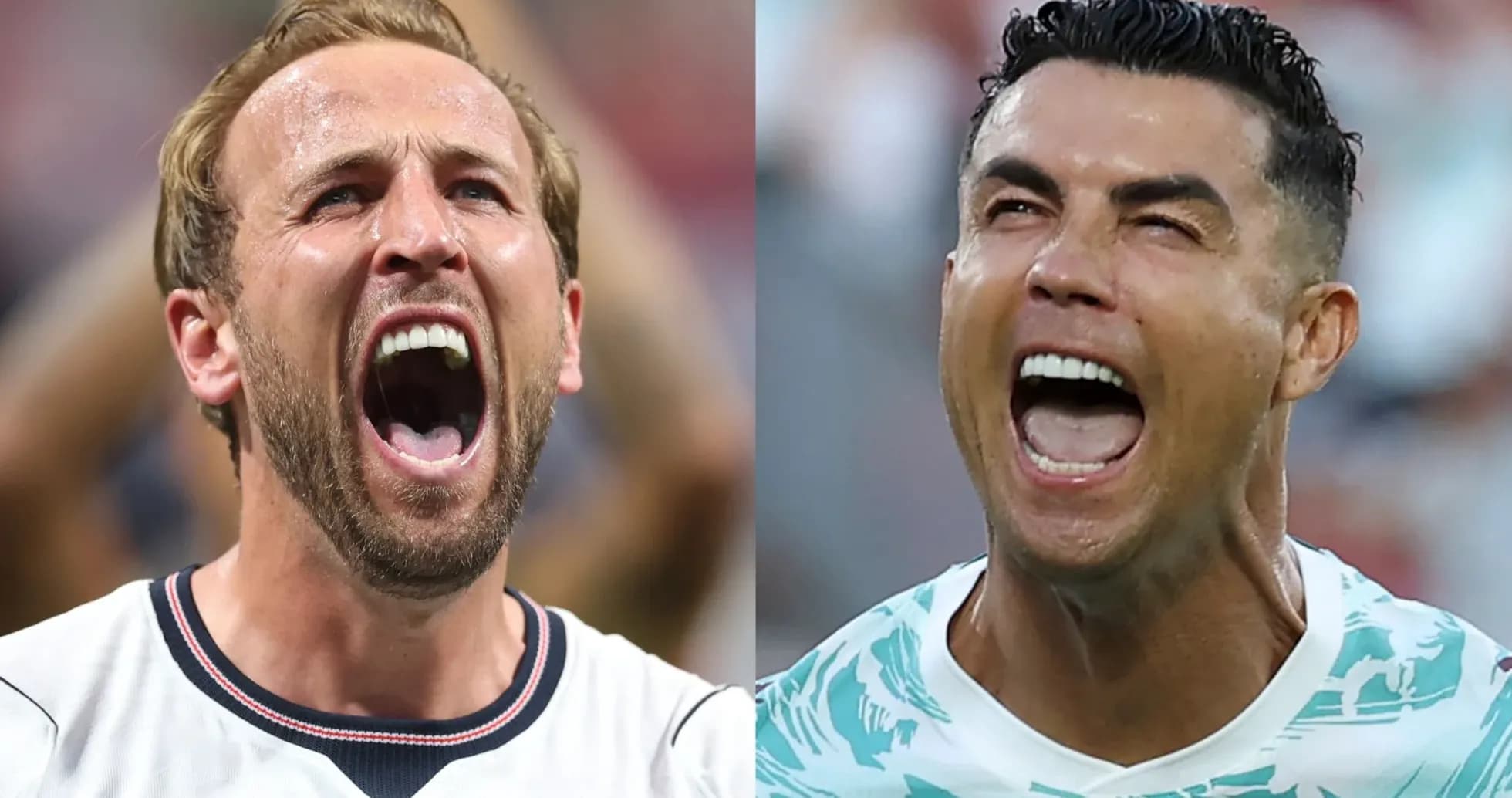
The modern game has been distorted by two freaks of nature. Cristiano Ronaldo played at a World Cup at 41, Lionel Messi at 39. They stretched the lifespan of the superstar to breaking point and beyond, and every great player who follows them gets measured against that impossible standard.
Can Kane do the same? Can he push himself through another four-year cycle and still be leading the line at the 2030 World Cup?
Chris Waddle is not so sure. The former England winger, speaking to GOAL in association with BetBrain, framed the debate in simple terms: talent versus time.
“Fitness is a great thing to have,” he said. Some players grow with age, he argued. They adapt, learn, see the game more clearly. For a while, that compensates for what the body starts to take away. Kane, he pointed out, has key advantages. He is naturally fit. He has never relied on raw pace. He thinks quicker than most.
Even so, Waddle circled the 2028 Euros as a checkpoint. Two years from now, he suggested, the questions will become louder. How are the legs? How does he cope with the tempo? Does he still dominate, or does he start to chase games that once bent to his will?
Waddle has seen the tipping point before. He looked at Ronaldo’s last World Cup with Portugal and saw a legend struggling to match the intensity of the stage. The instincts were still there, the ego too, but the explosiveness had gone. Messi, by contrast, still produced flashes of genius, even as chaos swirled around him and team-mates lost their discipline.
There is a lesson in those contrasting images. Superstars can still shine when the stage is scaled to their powers. Messi now operates in Miami, at a level that suits his age and rhythm. Ronaldo scores freely in Saudi Arabia, where the demands differ from the peak of European football. They have found environments that allow them to remain themselves, just in a different light.
Waddle wonders when that moment will arrive for Kane. At some stage, he believes, the Bundesliga’s relentless speed will become too much. When that happens, the question will not be whether Kane can still play football – of course he can – but where he plays, and at what level.
That feeds into the biggest call of all: the next World Cup. Waddle did not dress it up. For Kane to lead England into that tournament, he said, would be “a big ask”. Not impossible, but a stretch. The danger, in his eyes, is that great players cling on for too long, chasing one more tournament, one more shot at glory, until the image on the pitch no longer matches the legend in people’s minds.
There is, though, a trust in Kane’s judgement. Waddle is convinced the striker will recognise the moment when international football demands more than his body can give. That he will step away on his own terms, not be nudged towards the exit.
At some point, the man who has carried England for so long will have to decide that the shirt passes to someone else. The real intrigue now is whether that decision comes after a farewell on home soil at Euro 2028 – or after one last roll of the dice on the World Cup stage.