.svg&w=384&q=75 "GoalGist logo")
Steven Gerrard's Best Night: The Istanbul Miracle and Its Aftermath
Steven Gerrard calls it the best night of his life. Yet within weeks of lifting the European Cup in Istanbul, he was ready to walk away from Liverpool.
That contradiction sits at the heart of a new Netflix documentary on the miracle of 2005, and it peels back the layers on a captain who, at the height of his powers, felt mentally shredded and emotionally adrift.
Istanbul’s high – and the crash that followed
In May 2005, Gerrard stood on the Ataturk pitch having just led Liverpool to one of the most extraordinary comebacks the Champions League has seen. Three goals down to AC Milan at half-time, level within 15 chaotic minutes, European champions again after penalties. The club’s fifth European Cup. His legacy, in the eyes of supporters, sealed forever.
That night, many assumed, would end any doubt about his future. Real Madrid wanted him. Chelsea, the newly crowned Premier League champions under Jose Mourinho, wanted him even more. Liverpool fans believed Istanbul would be the moment that tethered him to Anfield for life.
Six weeks later, he announced he was leaving. Then, overnight, he changed his mind.
Inside that swing lay a storm.
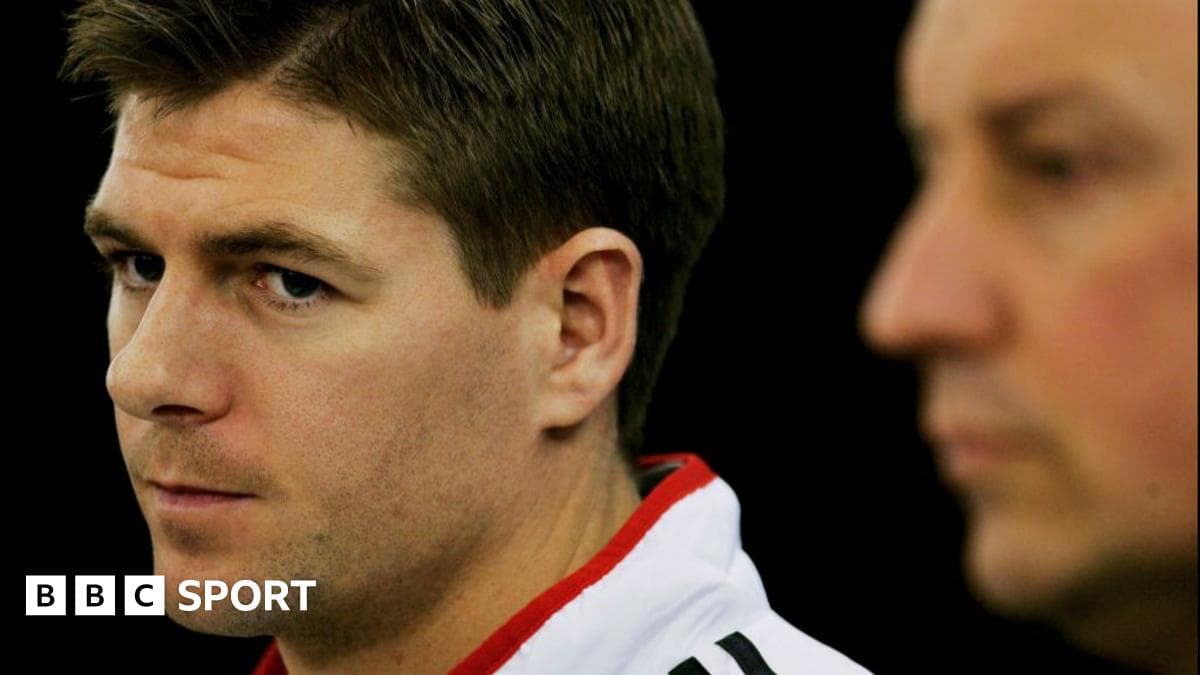
“I was in a bad place,” Gerrard admits in the film, describing his head as “a box of frogs”. The offers were huge. The pressure even bigger. And the relationship with his manager, Rafael Benitez, was strained enough to make the unthinkable feel possible.
“Mourinho was on the phone – the best manager in the world at the time, offering silly contracts, which would naturally turn your head. Chelsea were spending fortunes, he was guaranteed success there,” Gerrard says.
“I can't park my relationship with Liverpool. When they came, I didn't know which way to go. Mentally, I was in a bad place. My head was like a box of frogs.”
Cold Rafa, emotional captain
Benitez’s personality did little to soothe the turmoil.
“I felt like he didn't rate me, he didn't trust me, he didn't want me,” Gerrard, now 45, recalls. For a local captain whose game fed off feeling, that cut deep.
“I've always been clear that I want to be a Liverpool player and a Liverpool player only, but with that doubt and with that coldness and being part of a team where you don't believe that you can compete at the top, that's when your head gets turned.”
Jamie Carragher, who shared a dressing room and a childhood with Gerrard, saw it too.
He believes Gerrard “probably needed an arm round his shoulder”. Benitez was never going to provide it. “He's very unemotional,” says the Sky Sports pundit.
The documentary is littered with similar recollections. Former players talk about a manager obsessed with detail, relentless with criticism, often distant with praise. For Gerrard, that hit hardest.
“My game... was about emotion, passion, desire, commitment, for the badge, for the bird, for the family,” he says. “It was in me and I felt like he wanted to really remodel me.
“Nothing would ever satisfy him.”
Benitez, now 66, offers a very different reading of his approach.
“When I joined Liverpool, there was a culture based on emotion,” he says. “Football requires more than that. If you're really emotional, you don't find the way to success.”
The clash was obvious: a manager trying to strip the game back to logic and structure; a captain who played as if every tackle and every run carried the weight of a city. That tension almost broke the bond between Gerrard and his boyhood club.
Time, though, has softened the edges.
“I look back at Rafa and think he's the best coach I have worked with,” Gerrard concedes. The respect for the methods survived, even if the methods nearly pushed him out.
Owen, Madrid and a warning sign
Gerrard’s crisis was not the first major fault line of the Benitez era. A year earlier, another Liverpool academy product had already decided he’d had enough.
Michael Owen, Ballon d'Or winner in 2001 and still one of Europe’s most feared strikers, had grown disillusioned as Liverpool drifted under Gerard Houllier. The club finished 30 points behind champions Arsenal in 2003-04. Houllier was sacked. Benitez arrived from Valencia with a reputation for tactical precision and hard edges.
His first major job was clear: convince Owen and Gerrard to stay.
He flew to Portugal to meet them and Carragher during Euro 2004. For players expecting charm and reassurance, what followed was something else entirely.
“He was on me tactically,” Gerrard remembers. “‘I don't want this, I don't want that. You can't play in this team unless we trust you.’ It was intense. And I was thinking to myself, ‘I guarantee you, you'll need me before I need you.’”
If Gerrard left that meeting bristling, Owen walked away unconvinced he should remain at Anfield at all.
Carragher recalls Benitez telling Owen he needed to learn to “turn on the ball quicker”.
“That's absolutely what I was probably the best in the world at, at the time,” says Owen, now 46. “He certainly didn't go any way to convincing me to stay, put it that way.”
By August 2004, Owen was gone, sold to Real Madrid for £8m. It was the first sign that Benitez’s cool, demanding manner could cost Liverpool more than it gained.
The Spaniard, though, insists his memory of that meeting is very different.
“You can see when you talk with someone if he's happy with the conversation,” he says. “I think they were quite happy.”
A fragile bond that somehow held
That disconnect runs through the story of Benitez and his stars. A manager certain his methods would deliver. Players who often felt picked apart rather than built up.
Yet from that uneasy alliance came a fifth European Cup, a night that Gerrard still calls the best of his life, and a legacy that continues to define modern Liverpool.
He almost walked away from it all in the afterglow. He didn’t. The club and the captain stayed together, shaped in no small part by a coach who never quite spoke their language, but still found a way to win.