.svg&w=384&q=75 "GoalGist logo")
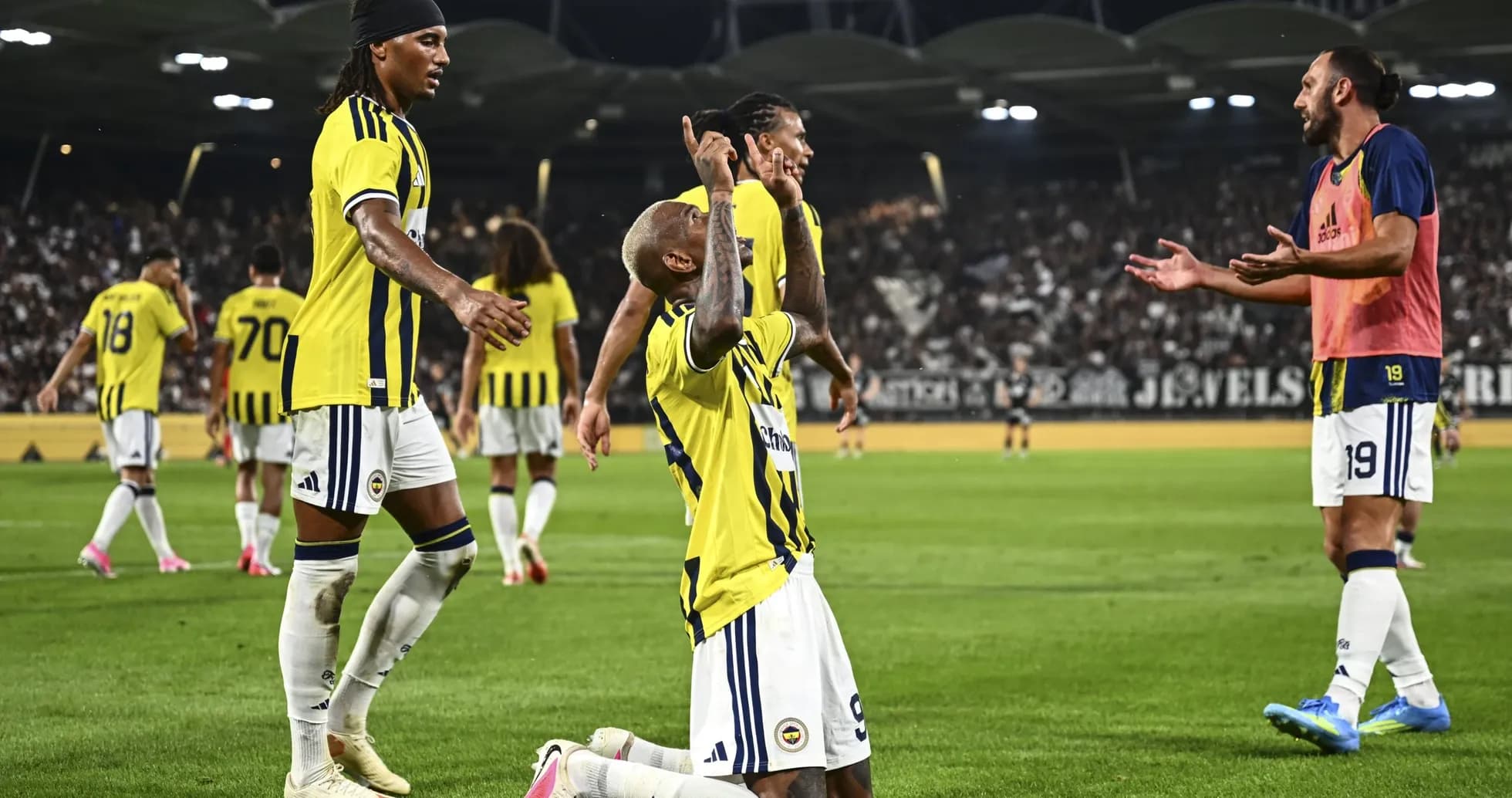
Fenerbahçe vs Lyon: UEFA Champions League Play-Off Preview
At Chobani Stadium Fenerbahce Sukru Saracoglu in Istanbul, Fenerbahçe host Lyon in a UEFA Champions League play-off that will go a long way to defining their 2026 European trajectory: for Fenerbahçe, it is a chance to confirm they belong in the main Champions League field after an unbeaten start to this campaign; for Lyon, it is an early-season threshold match that will shape whether their strong attacking numbers translate into sustained Champions League participation.
Head-to-Head Tactical Summary
The recent competitive reference between these sides is fresh: on 23 January 2025 in the UEFA Europa League League Stage (Round 7), Fenerbahçe and Lyon drew 0-0 in Istanbul at Ülker Stadyumu Fenerbahçe Şükrü Saracoğlu Spor Kompleksi. The half-time score was also 0-0, underlining a tight, controlled contest in which Fenerbahçe’s home structure limited Lyon’s threat, but Fenerbahçe were similarly unable to convert territorial advantage into goals. That single goalless draw suggests a matchup where Fenerbahçe’s defensive organisation at home can neutralise Lyon’s attack, but where breaking down Lyon’s block is not straightforward.
Global Season Picture
- League Phase Performance: There is no group-stage standings data available yet for the 2026 UEFA Champions League, so current rank, goals for and against, and points in the group phase cannot be quantified from the standings block. The play-off therefore serves as a gateway into those group-stage numbers rather than a reflection of them.
- Season Metrics: In the league phase so far, Fenerbahçe have played 4 Champions League matches, winning 3 and drawing 1, with 5 goals scored and just 1 conceded. They average 1.3 goals scored and 0.3 conceded per match, with 3 clean sheets and no failures to score, indicating a highly efficient two-way profile. Their typical setup has been a 4-2-3-1 across all four matches, combining a solid double pivot with a stable attacking line. Discipline-wise, their yellow cards are concentrated in the 31–45 and 76–105 minute ranges, suggesting a team that becomes more aggressive around key game-management phases. Lyon, over 2 Champions League matches, have 1 win and 1 loss, scoring 4 and conceding 2, for an average of 2.0 goals scored and 1.0 conceded per match. They have 1 clean sheet and have scored in both games, with their biggest win a 3-0 home victory and their defeat a 2-1 away loss. Lyon have alternated between a 3-4-3 and a 4-2-3-1, indicating tactical flexibility but also a side still calibrating its optimal shape. Their card profile shows a single yellow in the 46–60 minute range, implying relatively low card volume but a need to manage intensity just after half-time.
- Form Trajectory: Fenerbahçe’s form string in this Champions League campaign is WDWW, reflecting an unbeaten run with three wins and one draw. The early draw has been followed by consecutive victories, pointing to upward momentum and increasing control over matches. Lyon’s form string is LW, a win followed by a loss, which indicates an inconsistent early pattern: they have shown they can dominate at home but have yet to prove they can reproduce that level away in this competition.
Tactical Efficiency
Across the available season metrics, Fenerbahçe project as a defensively robust, structurally consistent side whose 4-2-3-1 has delivered both control and protection. Conceding just 1 goal in 4 Champions League fixtures, while maintaining a steady scoring rate and never failing to score, points to a high defensive efficiency and a reliable baseline in attack. Their repeated use of the same formation suggests clear automatisms and a stable pressing and build-up scheme, which typically boosts both their attack and defense indices in comparison models.
Lyon’s profile is more volatile but with a higher attacking ceiling. Averaging 2.0 goals per game in this Champions League sample, they have already produced a 3-0 win, showing they can overwhelm opponents when their attacking structure clicks. However, conceding 2 goals across just 2 matches, and suffering a 2-1 away defeat, highlights that their defensive efficiency, especially away from home, is less settled. Tactical flexibility between 3-4-3 and 4-2-3-1 gives them tools to adapt to Fenerbahçe’s shape, but it also suggests they are still searching for the optimal balance between front-foot aggression and defensive stability.
In a comparative framework, Fenerbahçe’s defensive index is likely to outstrip Lyon’s at this stage, driven by their clean-sheet volume and minimal goals conceded, while Lyon’s attack index is boosted by their higher scoring average and capacity for multi-goal performances. The key tactical hinge is whether Fenerbahçe’s structured, low-concession model can dampen Lyon’s attacking spikes without sacrificing their own ability to create chances, particularly in a home environment where they have already shut Lyon out once in European competition.
The Verdict: Seasonal Impact
This play-off carries substantial seasonal weight for both clubs. For Fenerbahçe, an aggregate success built on a strong first-leg result would confirm that their early Champions League metrics are not just a small-sample anomaly but the foundation of a full group-stage campaign in 2026. Progress would enhance their European coefficient trajectory, strengthen their financial and recruitment position, and reinforce a tactical identity built on defensive reliability and controlled attacking output. Failure, by contrast, would recast their impressive early numbers as play-off-only form and force them to recalibrate ambitions towards secondary European objectives.
For Lyon, the tie is a fork in the road for their European relevance. A positive result in Istanbul, especially if it showcases their attacking strength while stabilising their away defending, would signal that they can translate domestic or isolated attacking performances into sustained Champions League participation. It would also validate their tactical flexibility and give them a platform to refine their preferred structure in the group stage. A defeat, particularly if it again exposes away defensive vulnerabilities, would push them towards a season framed more around domestic consolidation and potential Europa-level campaigns rather than a full Champions League run.
In seasonal terms, this match is less about immediate titles or relegation and more about access: access to the Champions League group stage revenue, exposure, and competitive level that can shape each club’s trajectory for the rest of 2026 and beyond. Fenerbahçe enter with the more stable platform; Lyon arrive with the higher attacking volatility. The result will determine which profile is rewarded with a full Champions League season and which is pushed back into a secondary European or purely domestic focus.