.svg&w=384&q=75 "GoalGist logo")
England’s Selection Dilemmas and Ronaldo’s Team Dynamics
The international break should be about tactics, form and who can actually trap a ball under pressure. Instead, it has once again become a playground for wild hypotheticals, overcooked outrage and headlines that wilt the moment you read the quotes underneath them.
England’s Fantasy Back Four
Thomas Tuchel, we’re told, could win England the World Cup with one simple trick: borrow Arsenal’s back four.
“If Tuchel could bring in the Gunners’ back four of Jurrien Timber, William Saliba, Gabriel and Riccardo Calafiori, England would win the World Cup because their midfield and attack is so strong,” writes Charlie Wyett in The Sun.
If that’s the game, why stop at Arsenal? Throw in David Raya. Rotate Kylian Mbappé and Lionel Messi off the bench with Djed Spence as the chaos option. At some point, it stops being analysis and turns into a Football Manager save.
Wyett’s wider point is that England finally looked like a side playing “without the handbrake on”, yet he cannot shake the idea that their defence will undo them. The full-back situation, he claims, “is a mess” and could have been “partially corrected” by replacing the injured Tino Livramento with a like-for-like option.
Livramento, who was unlikely to be more than a bit-part figure, has become the hinge on which the entire defensive debate apparently swings. Replacing a player who probably wouldn’t play with another player who probably wouldn’t play is hardly structural collapse. It’s the 25th man in the squad, not the cornerstone of a World Cup bid.
Instead of another full-back, Tuchel opted for centre-back Trevoh Chalobah, leading Wyett to conclude that England “do not have a fully fit, in-form, natural full-back”.
That takes some verbal gymnastics. It neatly sidesteps the two full-backs who actually started the win over Croatia and leans heavily on caveats to sustain the argument. Reece James’ fitness is always a talking point, fair enough, but declaring an outright shortage when there are functioning full-backs on the pitch stretches the premise.
And then comes the line on Nico O’Reilly:
“Nico O’Reilly has been playing well but he is a midfielder who is being squeezed in at the back.”
He is, in reality, Manchester City’s starting left-back. Pep Guardiola has decided he can patrol that flank for a treble-chasing side. If he’s good enough there for City, he’s probably not a makeshift emergency for England.
There’s also the small matter that this dream back four of Timber, Saliba, Gabriel and Calafiori contains precisely zero “natural full-backs” in the traditional sense. If we’re going to be purists about the role, Arsenal’s template doesn’t exactly fit the argument.
The Luke Shaw ‘Ridiculous’ That Wasn’t
Wyett pushes on to Luke Shaw:
“It was ridiculous that Tuchel did not pick Luke Shaw for the squad after a good season at left-back for Manchester United but he has not featured for the Three Lions since the Euro 2024 final. So, his omission was not a surprise.”
That’s quite the pivot. If his absence “was not a surprise”, it’s hard to maintain that it was “ridiculous”. You can’t have it both ways: either the manager has been phasing him out for a while, or he has committed a shocking selection crime. The logic trips over itself.
Ronaldo, ‘Blasted’ Into Being Just Another Player
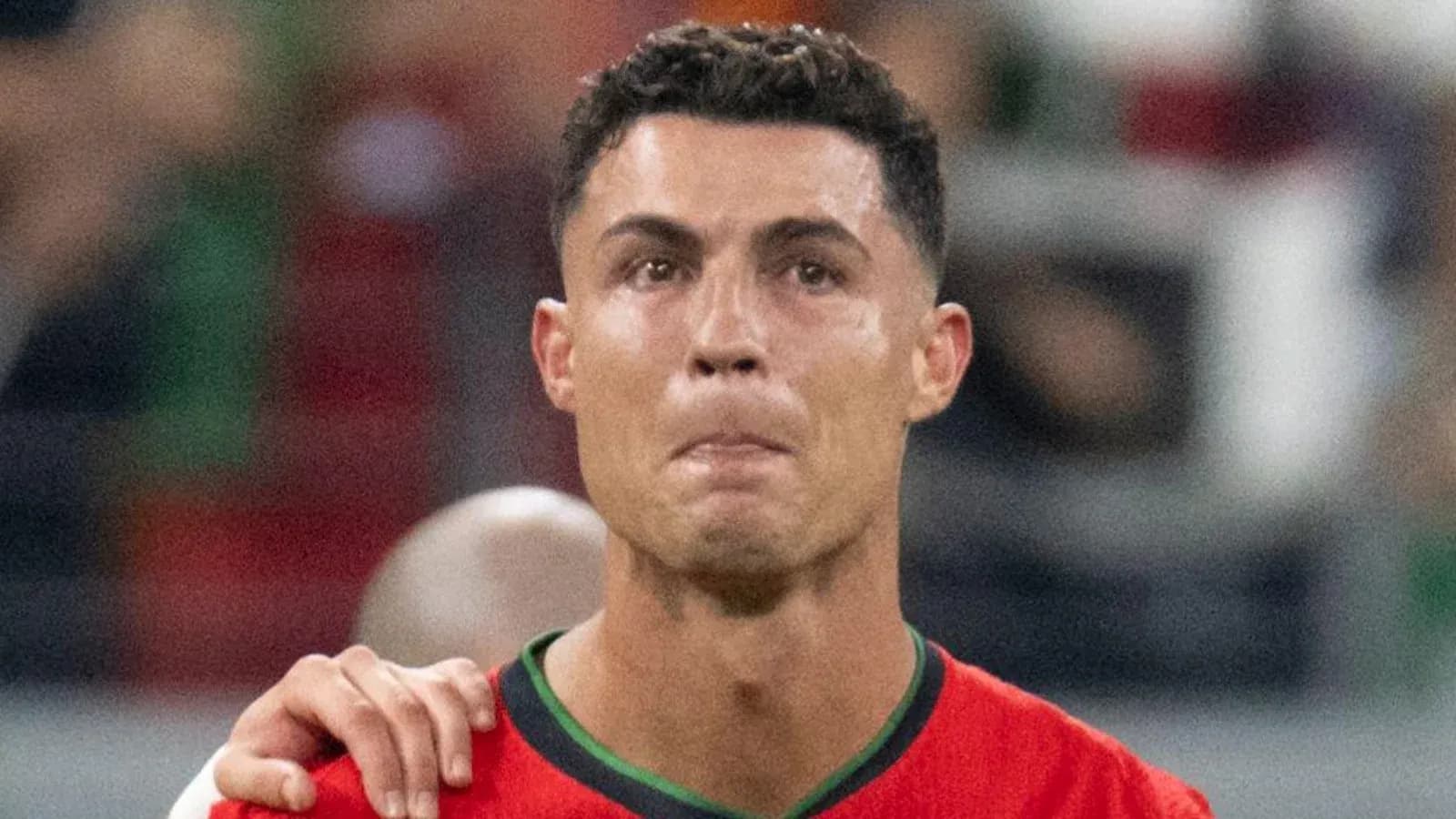
On to Portugal, where Cristiano Ronaldo has apparently been “blasted” by a “brutal” team-mate, with a “storm” brewing over his status in the national team.
“JUST ANOTHER PLAYER: Portugal World Cup star sparks storm with brutal comments on Ronaldo,” screams one Sun headline. Another adds: “‘He’s just another player’ – Cristiano Ronaldo blasted by Portugal World Cup team-mate after DR Congo horror show.”
You brace yourself for a full-scale mutiny. A dressing room revolt. A former Ballon d’Or winner taken apart by his own side.
Then you read what João Neves actually said:
“We know what Cristiano has done for us, for our national team, and for the world of football. But at this moment, he and we know that he is no different. He is just another player here to help. He is no different from the others. He is here to contribute, just like all of us.”
That’s it. That’s the “brutal” blast.
This is a young midfielder, acknowledging Ronaldo’s legacy and then reinforcing the idea that, within this squad, everyone has the same job: contribute. It’s the kind of line managers love. Level the hierarchy, keep egos in check, stress the collective.
Yet it’s repackaged as a revolt. A “storm” that, in reality, amounts to some excitable social media accounts firing off outrage posts because someone dared to describe a 39-year-old forward as part of the group rather than above it.
The only thing brutal here is the gap between the headline and the quote.
Cole Palmer, Jet2 and Selective Outrage
Cole Palmer, meanwhile, earns praise as a “humble star” for flying with Jet2. Same basic act: a highly paid footballer takes a budget airline.
When Raheem Sterling did something similar, he was described as “penny pinching” and “slumming it on the budget airline” EASYJET, despite earning “a staggering £200,000 a week”.
Same behaviour, wildly different framing. One is endearing thrift; the other, a stick to beat a player with. The contrast doesn’t need spelling out. It speaks for itself.
The MOTD ‘Unwritten Rule’ That Never Was
Even Match of the Day gets dragged into the drama.
“BBC host Mark Chapman makes feelings perfectly clear after World Cup clash as he breaks unwritten MOTD rule,” announces The Sun.
An “unwritten rule” at the BBC sounds grand. You imagine some sacrosanct code of broadcasting conduct. No swearing. No bias. No dead air.
Instead, after Czechia drew with South Africa, Chapman signed off with:
“Sometimes a game does not deserve a really clever closing link. Goodbye.”
That’s it. That’s the breach. The “unwritten rule” is apparently that there must always be a clever sign-off line at the end of match coverage.
Two issues. First, “good broadcasting” probably shouldn’t be filed under “unwritten rule” as though it’s some mystical internal doctrine. Second, that line is, in itself, a clever link. It acknowledges the spectacle, or lack of it, and cuts away with a wink. Job done.
If that’s a scandal, the bar has been set subterranean.
Emma Hayes and the ‘Tiny Blackboard’
Finally, Emma Hayes. A coach who has spent years proving her tactical acumen at the highest level is now the subject of outrage because of a studio prop.
“Hayes was forced to do her tactical analysis on a tiny blackboard on a set that looked like a little kitchen, sparking outrage online,” reports The Sun.
“Forced” is doing a lot of heavy lifting there. As if some shadowy TV executive dragged her into a mock kitchenette and handed her a chalk stick under duress. The “tiny blackboard” has become a symbol of disrespect in some corners, as though the size of the prop defines the weight of the analysis.
It’s hardly Michael Scott’s prized plasma TV being yanked off the wall. It’s a visual aid. Hayes’ insight doesn’t shrink because the board does.
Amid the noise, a pattern emerges. England’s defence is a “mess” because the 25th squad member isn’t a like-for-like full-back. A respectful, team-first line from João Neves becomes a “brutal” takedown of Ronaldo. A throwaway Chapman sign-off is framed as a breach of sacred BBC lore. A blackboard becomes a battleground.
The football keeps trying to speak for itself. The headlines keep shouting over it.

