.svg&w=384&q=75 "GoalGist logo")
England vs New Zealand: Final World Cup Warm-Up Clash
England and New Zealand step into the heat of Tampa on Saturday night knowing there is no more rehearsal time left. This is it. The final tune‑up before the World Cup curtain goes up, and for Thomas Tuchel, it comes with a demand: a reaction.
England’s shock defeat to Japan in March still lingers. It was historic for all the wrong reasons – the first time an Asian nation had beaten the Three Lions at senior men’s level. That result turned what should have been a gentle glide into the tournament into something far edgier. Tampa, and the Raymond James Stadium, now become a proving ground.
England: Tuchel juggling absences and expectations
Tuchel has to shape his side without a sizeable chunk of his Arsenal core. Bukayo Saka, Declan Rice, Eberechi Eze and Noni Madueke are all missing after their Champions League final exploits, stripping England of creativity, control and direct running in one hit.
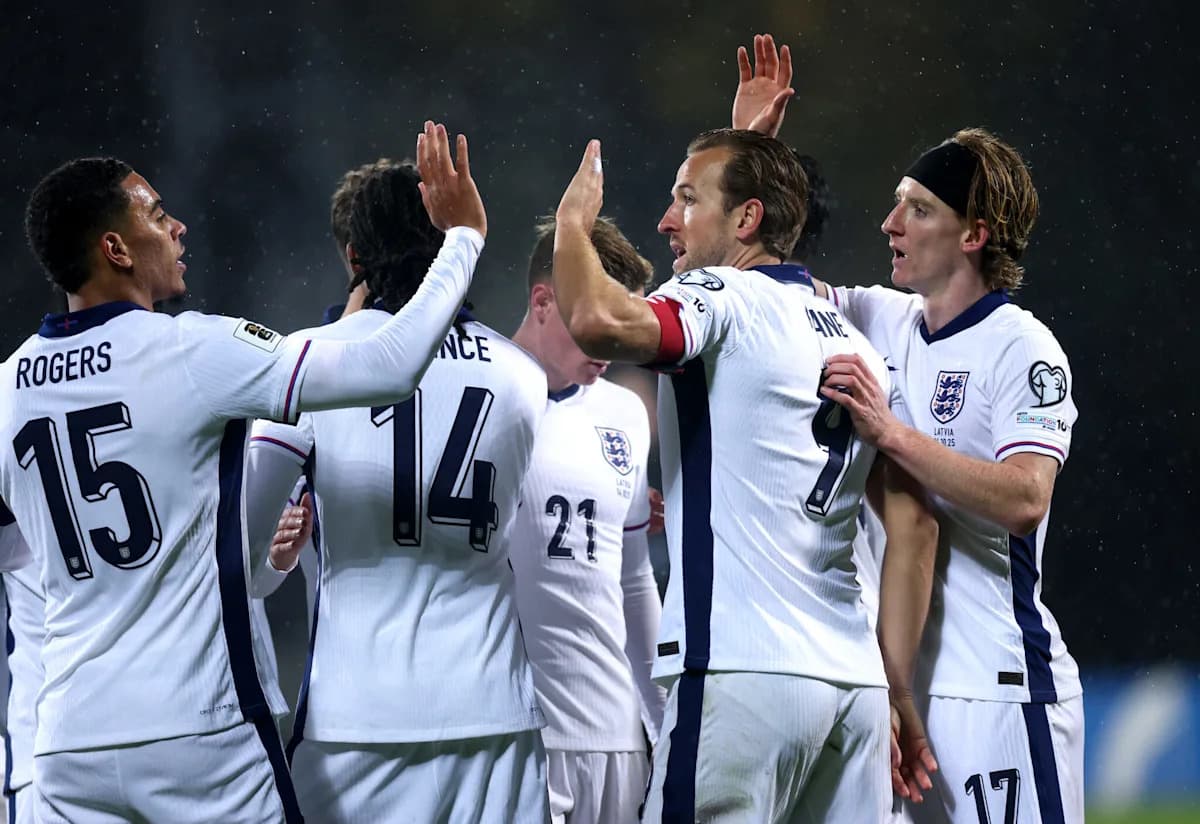
So the spotlight shifts. Morgan Rogers and Jude Bellingham will scrap for the most influential territory on the pitch: that advanced midfield role behind Harry Kane. Bellingham’s authority and timing of runs make him the obvious choice, but Rogers has the chance to turn a warm‑up into a statement.
Out wide, Marcus Rashford and Anthony Gordon are likely to trade flanks as Tuchel searches for balance and a solution on the right. Both bring pace and aggression, both can attack the far post, both know this is a rare window to lock down a starting berth before the real thing starts.
There is movement in goal too. Dean Henderson has flown in from Crystal Palace after his Conference League triumph to join the group in Florida, adding pressure and experience to the goalkeeping department, even if Jordan Pickford remains the favourite to start.
Around them, the future has been training in the shadows. Ethan Nwaneri, Josh King, Rio Ngumoha, Jason Steele and Alex Scott have all been working with the senior squad but will not travel to the World Cup. For now, they are sparring partners rather than participants, helping sharpen those who will carry the flag.
Tuchel’s likely XI reflects both necessity and experimentation: Pickford; James, Konsa, Guehi, O’Reilly; Anderson, Mainoo; Rogers, Bellingham, Rashford; Kane. It is a side built to dominate the ball and feed a captain in outrageous form.
Kane arrives in Florida with numbers that barely look real: 61 goals for Bayern Munich in his club season and 10 in his last 10 games for England. When the debate swirls around systems and selections, he is the fixed point. Give him chances and he scores. That simple, that ruthless.
England’s broader record against lower‑ranked opponents offers comfort. They have strung together 37 straight wins against nations ranked 85th or below in the FIFA standings. On paper, New Zealand should not be the side to extend this mini‑crisis. On grass, with World Cup selection and rhythm on the line, complacency is not an option.
New Zealand: All Whites chasing credibility
Across the halfway line, New Zealand arrive with something more basic at stake: respect. They swept through Oceania qualifying but have been exposed whenever they step outside their confederation. Eight defeats in their last 10 internationals tell that story clearly enough.
Their latest setback, a heavy loss to Haiti in Fort Lauderdale, underlined the problem. New Zealand matched Haiti for total shots but crumbled defensively, leaving coach Darren Bazeley wrestling with his options at the back and in goal.
That is where Max Crocombe comes in. The Millwall goalkeeper is pushing hard to take the gloves from Alex Paulsen after that collapse. A change between the posts would be no surprise as Bazeley searches for stability.
In midfield, the medical bulletin is mixed. Ryan Thomas and Joe Bell both missed the Haiti game with leg injuries. Bell still has a slim chance of returning to the matchday squad on Saturday, which would give the All Whites a much‑needed screen in front of their defence.
Up front, there is no debate. Chris Wood leads them. He always does. The 45‑goal striker became his country’s outright leading male appearance maker with his 89th cap last time out and expects to start again at the tip of the attack. Nine goals in qualifying underlined his enduring importance; if New Zealand are to trouble England, the ball will almost certainly have to find him in the box.
Bazeley’s predicted XI looks like this: Crocombe; Payne, Surman, Bindon, Cacace; Stamenic, Rufer; Just, McCowatt, Randall; Wood. It is a familiar spine, but one weighed down by an ugly statistic: New Zealand are winless in their last 16 matches against European opposition. Their last success over a UEFA nation came way back in May 2010, a 1–0 friendly victory over Serbia. Sixteen years is a long time to wait for a repeat.
A rare meeting, a late test
These two have barely crossed paths. The last meeting came in June 1991, an international friendly that England won 2–0. Thirty‑five years on, the world has changed, the World Cup has expanded, but the stakes for both feel sharp.
For England, this is about snapping a two‑game winless run, flushing away the Japan defeat and walking into the World Cup with some conviction. For New Zealand, it is about proving that their Oceania dominance can translate into resistance, and perhaps more, against elite opposition.
The stage is set: Saturday 6 June 2026, 21:00 BST, under the lights at Raymond James Stadium. In the UK, ITV1 carries the game live. In the United States, Prime Video streams every minute.
One side is chasing momentum, the other credibility. With the World Cup almost upon them, which will find what they need in the Florida heat?