.svg&w=384&q=75 "GoalGist logo")
Dusan Vlahovic's Transfer Dilemma: A No 9 Without a Club
Every summer has its transfer riddle. This year, it wears the No 9 shirt and is still unemployed.
At a stage of the window when the better free agents are usually long gone, tied down to fresh projects and glossy unveiling videos, Dusan Vlahovic is training alone and waiting for the phone to ring. August is almost here. He is still without a club.
On paper, that makes no sense.
Eight full seasons in Serie A. Three-and-a-half with Fiorentina, four-and-a-half with Juventus. Double figures for league goals in each of the last six campaigns. Twenty-six years old, the age when most strikers begin to sharpen rather than fade. Transfermarkt rates him as the most valuable free agent on the market, a £30 million forward available for nothing but wages and a signing-on fee.
And yet there is no queue at his door. Only rumours.
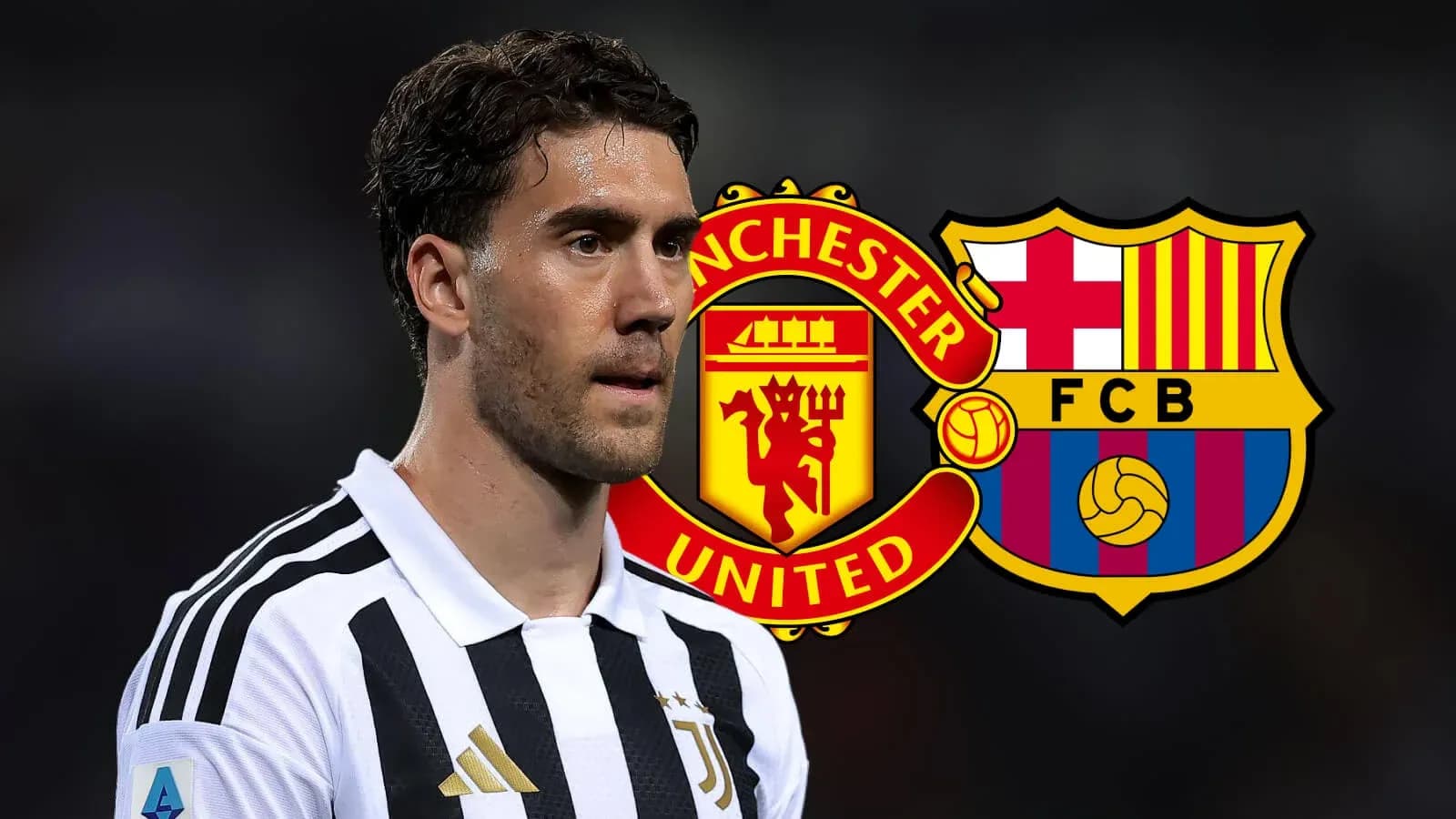
Manchester United’s name has been floated. Barcelona’s too. Both are in the market for a striker, both have looked at more complicated, more expensive deals than this one. But for Vlahovic, there are no medicals scheduled, no agreements in principle, no “here we go”.
Just silence, and the occasional whisper.
It is not because he cannot play. Vlahovic is a heavyweight presence at centre-forward, the kind of striker who looks like he should dominate a penalty area by simply walking into it. He can finish with either foot, attack crosses, score from free kicks. He can carry the ball as well as pin a defender to his back.
He is, however, short of complete. His link-up play is functional rather than refined. His pressing is intermittent. His form can drift. The raw tools are there, the polish less so.
That gap between what he is and what he was supposed to become is exactly where his career now sits.
At Fiorentina, he looked like the next great Serie A No 9, a modern heir to the line of ruthless penalty-box forwards the league has always adored. Arsenal chased him. Juventus went further, committing up to €80m for a player just turning 22, betting that his ceiling was world-class.
He never quite smashed through it.
His best full-season return in Turin was 18 goals in 2023-24. Last season, he slipped to 10. Across his Juventus spell, he averaged around 15 a year. Solid numbers, respectable numbers, but not the 20-plus returns that kind of fee and that kind of billing demand.
For a club of Juventus’ scale, paying superstar money, “solid” was never going to be enough.
And this is where the problem truly lies. Not in his right foot or his movement, but in his payslip.
Last season, Vlahovic was Juventus’ top earner. Not just theirs, but the highest-paid player in all of Serie A. Twenty-two players on lower salaries outscored him. The wage packet reflected the player he was forecast to be. The performances reflected the player he currently is.
That mismatch has cooled the biggest clubs. When his name came up for Barcelona, a team openly searching for a striker, the hesitation said plenty. They need a reliable finisher; they cannot afford another gamble on a maybe.
The tier just below – the Manchester Uniteds of this moment, the ambitious but imperfect giants – are wary too. They know what committing to a wage structure for a not-quite-elite striker can do to a squad. They have scars to prove it.
Even Juventus might have kept him, had he not held firm on his demands. According to Tuttosport, Vlahovic wanted €8m a year, roughly £132,000 per week. For a player whose output had plateaued, that was a stretch too far. Giorgio Chiellini, now a Juventus director and once his team-mate, was blunt about the situation: with those figures, he would not remain in Italy. If he wanted that money, he would have to look elsewhere.
The Premier League can live in that financial neighbourhood. For some English clubs, £132,000 a week is what a promising full-back earns. The question is not whether they can pay it. It is whether they believe it represents value.
Until that doubt lifts, Vlahovic will keep waiting.
There is, of course, an obvious escape route. Swallow some pride. Cut the demands. Go where the football is, and rebuild from there. Those close to the situation suggest he is prepared to do that – but only for the right badge.
The logic is easy to follow. He would accept less from Barcelona than from Besiktas, one of the other names hovering in the background. Prestige has its own currency. Yet that is exactly what makes clubs pause. If they compromise on the salary, are they also compromising on the level of striker they truly need?
Because this is the other side of the market: there are not many truly elite No 9s around, and even fewer that their clubs are willing to sell. Erling Haaland does not move. Harry Kane has already moved. Victor Osimhen costs a fortune. The list is short.
In that landscape, a forward like Vlahovic – good, proven, but not quite top shelf – should become more tempting, especially as the clock ticks down and sporting directors start to sweat. He is free. He is available after the window closes, too. There is no rush on paper.
But football seasons are not played on paper. A striker needs a pre-season, team-mates, patterns of play. He needs to feel trusted, wanted, central. A forward who starts the campaign without a club starts it behind.
Right now, that is where Vlahovic is heading: into a new season without a stadium to call home, without a shirt to pull on, without a platform to prove that those early years in Florence were not a false dawn.
The talent has never really been the question. The price – in expectations and in wages – always has.