.svg&w=384&q=75 "GoalGist logo")
Cristiano Ronaldo and the Saudi Pro League's Future
Cristiano Ronaldo starts this Saudi Pro League season without Mohamed Salah in sight and without much sign that his era is ready to end. At 41, he is still the league’s looming figure. He sits on 976 career goals, 24 short of the mythical 1,000, and his record of 102 strikes in 107 league games for Al-Nassr suggests that, barring injury, the milestone should fall in the months ahead.
It would be a staggering individual achievement. How it fits into the league’s wider plan is far less clear.
From spending spree to soul‑searching
This is year four of the Saudi project since that wild summer of 2023, when clubs spent $957m (£710m) and turned the global spotlight on to the SPL. The cash brought a blizzard of headlines, a raft of international TV deals and a sea of yellow CR7 shirts from Riyadh to Rio.
The mood has shifted. The chequebook is still open, but the question inside boardrooms now is value. Not just for clubs chasing titles, but for Saudi football as a whole.
Saudi Arabia’s early World Cup exit triggered uncomfortable conversations. On paper, it was not a disaster: draws against Uruguay and an impressive Cape Verde, plus a single defeat to eventual champions Spain. The bigger issue lay elsewhere. Had all that domestic spending actually produced better Saudi players?
So far, the answer looks like no.
The league is not yet a talent exporter. Of the 26-man World Cup squad, only right-back Saud Abdulhamid of Lens plays outside the country. Everyone agrees that has to change. The concern runs deeper: too many homegrown players barely see the pitch. Foreign stars often crowd out locals in the most decisive roles – creators, scorers, goalkeepers. Saudi clubs have become stronger in Asian competition, but the national team has not cashed in on that rise.
Salah stays away, the strategy shifts
That backdrop framed the long-running Salah saga. Many expected the Liverpool forward to swap Europe for the Red Sea and Saudi riches rather than head to Trabzonspor on the Black Sea. The appetite to land the biggest name in Arab football, though, cooled in recent months – assuming he ever truly had Saudi Arabia at the top of his list.
At 34, Salah would still have been a colossal draw. Yet he no longer fits the preferred template: younger, high-ceiling players who can be sold back to Europe for serious money.
Enter Crysencio Summerville.
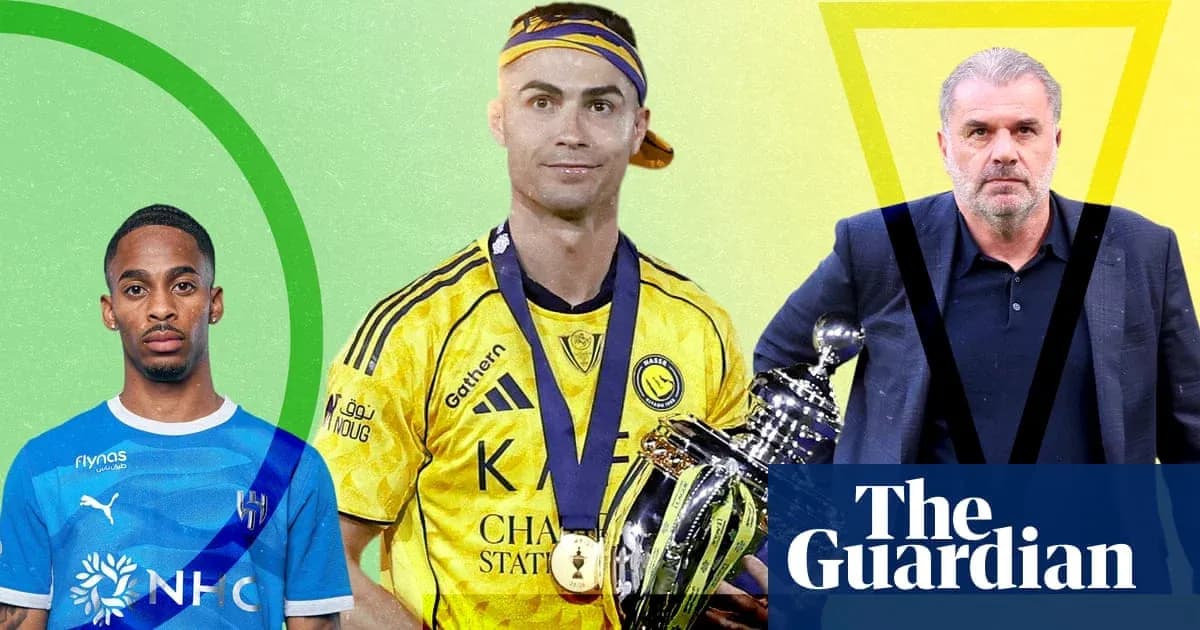
Al-Hilal have made the Dutch winger the headline signing of the summer so far, paying around €80m (£68m). At 24, he is the prototype. If his spell in Riyadh goes to plan, he can return to Europe later for another hefty fee, giving Hilal both a star in his prime and a future asset.
The move has drawn the usual accusations of choosing money over ambition. Those who know Hilal’s history push back hard on that. Ambition is baked into the club. Nineteen league titles. Four Asian crowns. Last season they went unbeaten and still finished second. Nobody in blue considers that acceptable.
The club, sold by the Public Investment Fund in April, still boast a heavyweight core: Karim Benzema, Rúben Neves, Theo Hernández, Yassine Bounou, Kalidou Koulibaly and others. Simone Inzaghi walks into a dressing room built to win now. The brief is brutally simple: rip the title back from the yellow half of Riyadh.
Ronaldo, Postecoglou and the hunt for Asia
Al-Nassr, of course, are the current champions after Ronaldo lifted the trophy in May. That success triggered a coaching domino effect. Jorge Jesus departed soon after to take charge of Portugal, leaving a sizeable void on the touchline.
Ange Postecoglou has stepped in. The former Tottenham Hotspur manager inherits Ronaldo and a front line that includes Sadio Mané, Kingsley Coman and João Félix. On paper, it looks terrifying. Off the pitch, the picture is tighter. Financial constraints have limited new arrivals and forced a more cautious approach to the market.
Domestically, defending the title is non-negotiable. But the real itch at Al-Nassr is continental. The club have never won the Asian Champions League. Delivering that first crown would define Postecoglou’s tenure more than anything else.
Al-Ahli rocked, Al-Ittihad reset
That particular trophy currently sits in Jeddah. Al-Ahli claimed their second successive Asian title in April and were poised to turn fully towards the league, chasing only their second SPL championship since 1984. The path looked clear. Then chaos arrived on the eve of the new season.
Head coach Matthias Jaissle walked away to take over at Newcastle. Both clubs share PIF ownership, but the timing infuriated many at Al-Ahli. It felt like a raid on the very project Saudi fans had been told to embrace.
The response underwhelmed. Marino Pusic, formerly Arne Slot’s assistant, has taken the job. He is respected, but not the kind of appointment that sends pulses racing in Jeddah.
Jaissle’s departure also stunned neighbours Al-Ittihad, who endured a difficult campaign last time out. Just days earlier, they had followed Al-Ahli’s model by appointing their own 38-year-old German coach, Jens Wissing, whose playing career ended early through injury and who also has RB Salzburg on his CV.
Wissing walks into a rebuild. Expectations at Al-Ittihad rarely soften, but the scale of the task is obvious.
A new “big five” – and a local dilemma
Completing the emerging power bloc are Al-Qadsiah. Backed by Aramco and guided by Brendan Rodgers, they finished fourth last season. The brief now is clear: improve on that position and end a trophy drought stretching back to 1984. Achieve both and Qadsiah will be fully entrenched in what is fast becoming a genuine “big five”.
That rise brings problems for everyone else. Smaller clubs must navigate a league where five giants hoard talent, money and attention. One route out of that squeeze is hiding in plain sight: play local players more. Trust them in key roles. Give them minutes that cannot be bought on any transfer market.
For the league’s long-term health, that shift might prove more important than any marquee signing. Even one named Mohamed Salah.