.svg&w=384&q=75 "GoalGist logo")
Chelsea's Barco Gamble: A Strategic Recruitment Move
Chelsea finally announced on Sunday what had been an open secret for months: Valentín Barco is a Blue. A deal engineered in the spring, completed in the summer, and inherited by a head coach who did not ask for it.
Xabi Alonso has arrived at Stamford Bridge with clear ideas and a clear shopping list. He pushed hard for Sunderland’s Granit Xhaka. He signed Brentford’s Jordan Henderson. He has pressed for a specialist left back in Pep Chavarría. Barco, though, sits in a different category entirely.
This one belongs to the old guard of Chelsea’s recruitment machine.
A Signing From a Different Timeline
The Barco move was effectively set in motion before Alonso had even unpacked his bags in London. Back in early April, when Liam Rosenior was still in charge, reports emerged that Chelsea and Barco had already shaken hands on a summer switch. Two days after Alonso’s appointment in May, Barco publicly said goodbye to Strasbourg, despite no official confirmation from Chelsea.
By then, the deal was too far gone to reverse. If Alonso was consulted, it was for a final nod rather than a fresh idea.
This transfer is the work of co-sporting directors Paul Winstanley and Laurence Stewart, alongside recruitment figures Joe Shields and Sam Jewell. The same group whose aggressive, scattershot spending has piled pressure on themselves and suspicion on every new arrival.
Supporters had welcomed Alonso’s growing influence over transfers, a sign that football logic might finally overrule portfolio-building. Barco, however, feels like the last echo of the previous strategy: buy young, buy early, keep it in the BlueCo family.
Why Barco? Because He Can Play
Strip away the noise, and the basic point remains: Barco is a good footballer.
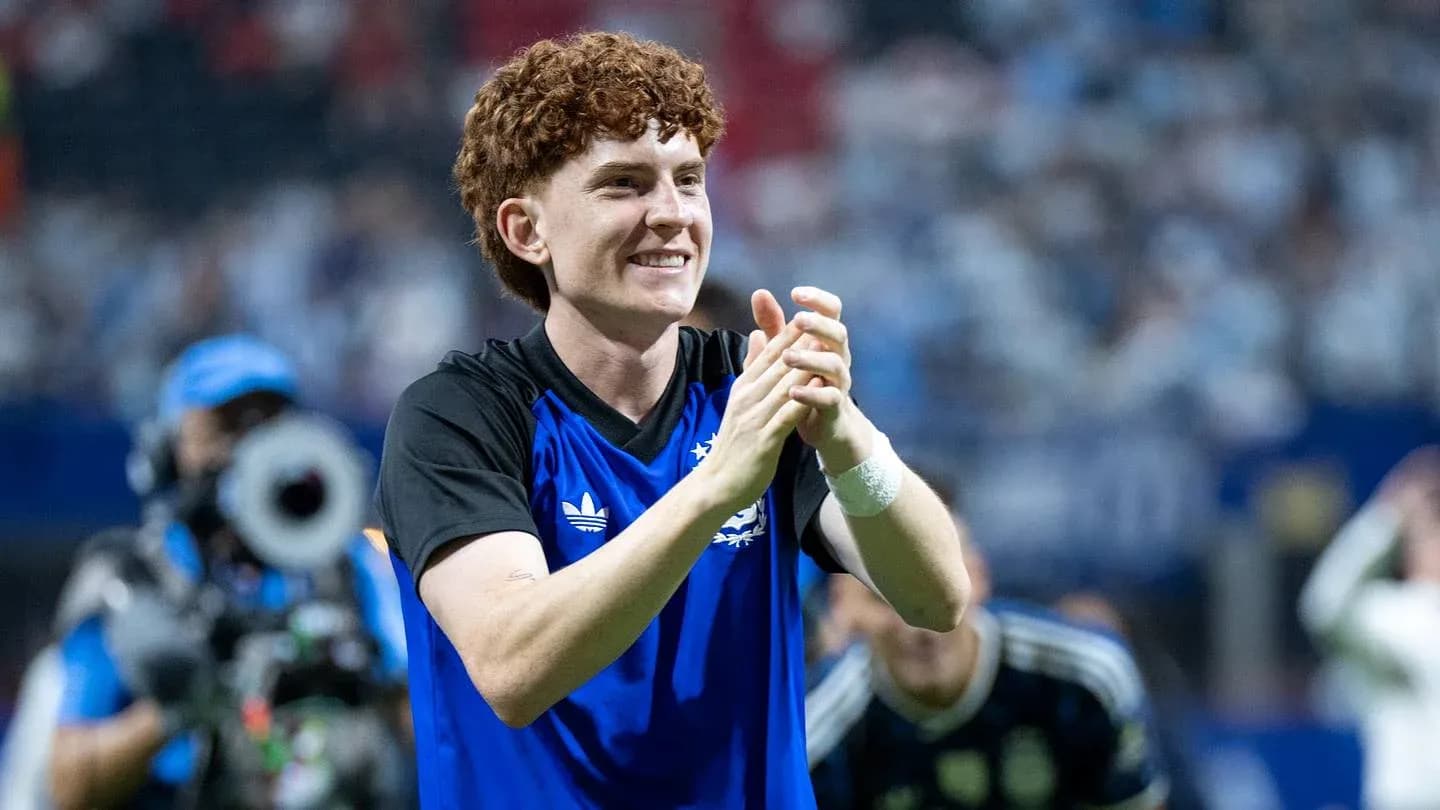
Premier League fans may remember a raw, red-haired left back at Brighton & Hove Albion in 2023–24, a teenager who struggled across seven appearances and looked overwhelmed in a back line that demanded instant reliability. That version of Barco no longer exists.
In Strasbourg, from early 2025 onward, he rebuilt himself as a midfielder. Not a converted full back filling in, but a genuine all-phase operator. He has been asked to drive the ball forward, to knit play, to protect his defense, to press. A do-it-all role in the middle of the pitch, and he has handled it with authority.
It always felt like a big move was coming. The only question was where.
Cynics will argue Chelsea’s motivation is as much financial as footballing: keep a promising asset inside the BlueCo structure, control his development, inflate his value. That argument will not go away. Still, the 22-year-old has earned another shot at a higher level on merit alone.
His biggest selling point is obvious: versatility. As a teenager, he was framed as the archetypal modern full back, stepping into midfield to overload central areas. Now the perception has flipped. He looks like a midfielder first, who can cover the left flank if needed, rather than a defender dabbling in midfield work.
For a manager, that flexibility is gold. For a squad, it is insurance.
Chelsea do not have European football this season, so the calendar will not rip their squad apart. But the club expects to be back playing twice a week in 2027–28. If that happens, players like Barco – able to plug gaps, change shapes, and cover multiple roles – become invaluable.
Alonso’s Puzzle: Where Does Barco Fit?
This is where the tension lies.
Alonso has been targeting exactly the zones where Barco looks strongest. Henderson has arrived to add experience and control in midfield. Chavarría is close, a left back specifically requested by the new manager. On paper, Barco lives in the space between those two signings.
Is he depth behind Henderson? A rotation option in a double pivot? An inverted left-sided option when Alonso wants to tweak the build-up? Or does he become the odd man out, trapped between positions and ideas?
All eyes now turn to how Alonso profiles him. If Barco is seen as a genuine midfielder, he will have to elbow his way into a crowded group. If he is framed as a left-sided utility player, he risks becoming a jack-of-all-trades, master of none. For a 22-year-old who has just rebuilt his reputation in France, that balance will be delicate.
Strasbourg to Stamford Bridge: A Troubling Pattern
Barco is not the first to walk the Strasbourg–Chelsea corridor. He is the third. The previous two cases hardly inspire confidence.
In the summer of 2025, Chelsea brought in center back Mamadou Sarr. He featured at the Club World Cup, then went straight back to Strasbourg on a season-long loan. There, he thrived: a key figure, often wearing the captain’s armband, the kind of presence you build a back line around.
Then came the twist. When Rosenior arrived at Stamford Bridge in January, he requested a new center back. Chelsea responded by terminating Sarr’s loan and recalling him immediately.
The logic never quite surfaced.
Across the next five months, Sarr played fewer than 300 minutes. He drifted to the fringes of matchday squads, his momentum broken, his development stalled. A leader in Strasbourg, a spectator in London.
The pattern continued up front. Striker Emmanuel Emegha had his move to Chelsea confirmed as early as September 2025, then joined Alonso’s squad this summer. Before he could even settle, reports emerged that the club were open to offers.
He finds himself in a four-man striker group with João Pedro, Nicolas Jackson and Liam Delap, not counting Dastan Satpayev, the 17-year-old who has impressed in preseason and will only officially join once he turns 18 later this month.
Emegha’s situation raises an awkward question: were Chelsea signing players for the squad, or for the spreadsheet?
Barco steps into that same corridor now, with the same doubts swirling. He arrives as a talent, but also as a test case. Can Chelsea finally turn a Strasbourg recruit into a core piece of their first team, rather than another name shuttled between projects?
The answer will not come from a press release or a scouting report. It will come when Alonso picks a team in a tight game, looks at his bench, and decides whether Valentín Barco is a solution or an afterthought.

